


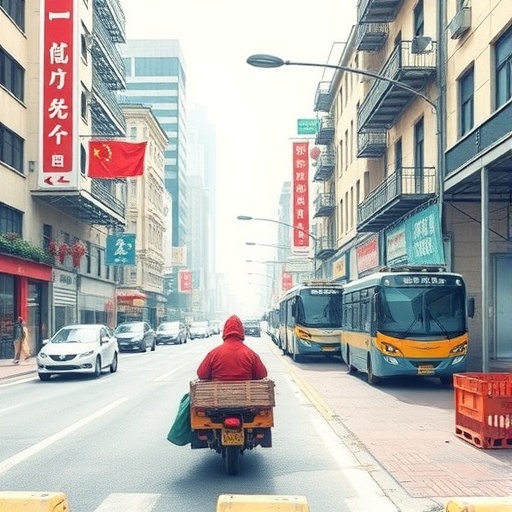
In the rapidly urbanizing landscapes of modern China, the battleground for achieving work-life balance has become increasingly complex, particularly among dual-earner households. Recent research sheds light on the intricate dynamics that govern the mental well-being of these families, focusing on how gendered workloads and family support structures intertwine. This study delves into the multifaceted relationship between career demands and family responsibilities, emphasizing the ripple effects these factors have on mental health within the urban Chinese context.
The phenomenon of dual incomes in urban China is not merely an economic necessity but a social shift that dramatically redefines traditional family roles. With both partners engaged in employment outside the home, the distribution of household labor emerges as a critical factor influencing psychological health. The investigation reveals that despite progress towards gender equality in the workplace, domestic responsibilities remain disproportionately shouldered by women, perpetuating a gendered division of labor that exerts considerable mental strain.
Analyzing the workload through a gender lens highlights persistent inequalities at the core of work-family dynamics. Women tend to accumulate a ‘second shift,’ engaging in more unpaid labor such as childcare, eldercare, and household chores. This compounded workload exacerbates stress and reduces opportunities for rest and personal development. Men, conversely, often experience societal norms that prioritize their breadwinning role, with less expectation to contribute to domestic work, shaping a divergent set of pressures and mental health challenges.
The study further emphasizes the concept of “linked lives,” where the experiences and burdens within a household do not exist in isolation but are interconnected across family members. Stress or support for one partner can directly influence the other’s psychological state. This interdependence underscores the importance of adopting a household-wide perspective when examining mental well-being, rather than focusing solely on individual experiences.
Family support structures emerge as crucial moderators in the interplay between workload and mental health. Emotional support, practical assistance, and shared responsibilities can buffer the negative impacts of high workloads. However, urban environments often erode traditional extended family networks, diminishing access to such support. This structural change necessitates alternative coping mechanisms and social policies that facilitate support within nuclear families or through community resources.
The nuanced role of family support also varies with gender. Women receiving adequate assistance from their partners or relatives are better positioned to manage their dual roles effectively, experiencing less psychological distress. In contrast, inadequate support can compound feelings of isolation and overwhelm, disproportionately affecting women’s mental health in dual-earner households.
Mental well-being in this context is measured not only by the absence of mental illness but also through indicators of psychological resilience, perceived stress levels, and overall life satisfaction. The research employs robust methodologies to capture these dimensions, offering a comprehensive picture of how work-family dynamics contribute to well-being across gender lines.
Importantly, the urban Chinese setting presents unique cultural and socioeconomic factors influencing these dynamics. Rapid modernization, shifting societal expectations, and evolving gender roles create a complex environment where traditional customs coexist and sometimes clash with contemporary realities. These tensions manifest in the ways dual-earner families negotiate roles and responsibilities, with significant implications for mental health outcomes.
The implications of this research extend beyond academic discourse, offering actionable insights for policymakers, employers, and social planners. For instance, the data suggest the need for workplace flexibility policies that acknowledge and accommodate family responsibilities. Family-friendly work environments, such as flexible hours and remote work options, could alleviate some of the pressures contributing to mental strain.
Moreover, social policies that strengthen family support mechanisms — including caregiving services, community programs, and mental health resources — stand to enhance the well-being of dual-earner households. These interventions must carefully consider gender disparities to ensure equitable benefits for both men and women within families.
Workplace culture also plays a pivotal role. Ingrained attitudes towards gender and caregiving responsibilities must evolve to foster a more supportive environment. Encouraging paternal involvement in domestic tasks, recognizing caregiving in performance evaluations, and combating stigmas associated with flexible working arrangements are critical steps.
The intersectionality of these issues – encompassing gender, family dynamics, mental health, and urbanization – highlights the complexity of addressing work-family balance in a holistic manner. Future research could build upon these findings by exploring longitudinal trends and incorporating comparative analyses across different cultural contexts or socioeconomic groups within China.
In essence, the study presents a compelling narrative of how linked lives and gendered labor interact to influence mental well-being among urban Chinese dual-earner households. By unraveling these connections, it provides both a diagnostic framework and a blueprint for interventions aimed at fostering healthier family environments amid the pressures of modern urban life.
This exploration contributes to the broader understanding of equity in health by foregrounding the subtle yet pervasive influences of gendered work distribution and family support on mental health. It challenges simplistic notions of dual-income households as purely economic units, instead framing them as dynamic systems where emotional and social factors are deeply entwined with economic realities.
To truly address mental well-being in these families, an integrated approach recognizing the symbiotic relationships within households is essential. Policies and practices enhancing shared responsibilities and reinforcing supportive networks have the potential to transform the lived experiences of millions navigating the demands of work and family in contemporary China.
In conclusion, as China continues its trajectory of economic growth and social transformation, the mental health of its urban dual-earner households demands urgent attention. This research offers a critical lens through which to view and ameliorate the challenges posed by gendered workloads and evolving family support structures, aiming to promote a more equitable and healthy society for future generations.
Cite Scienmag News
Glenn Wilkins. (November 28, 2025). Gendered Workloads Impact Mental Health in Urban China. Scienmag. https://scienmag.com/gendered-workloads-impact-mental-health-in-urban-china/
Glenn Wilkins. "Gendered Workloads Impact Mental Health in Urban China." Scienmag, 28 November 2025, https://scienmag.com/gendered-workloads-impact-mental-health-in-urban-china/. Accessed 4 September 2026.
Glenn Wilkins. "Gendered Workloads Impact Mental Health in Urban China." Scienmag. November 28, 2025. https://scienmag.com/gendered-workloads-impact-mental-health-in-urban-china/


