


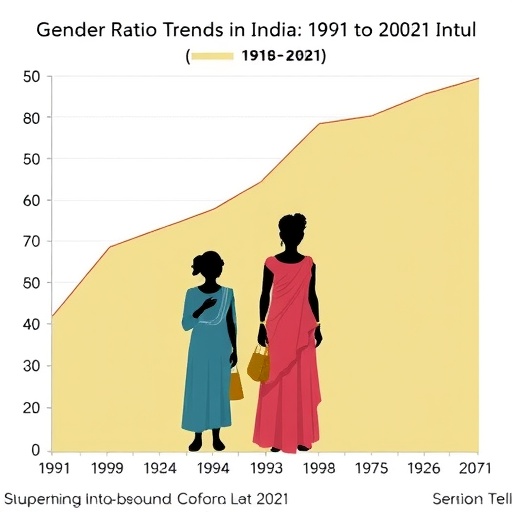
The ongoing demographic shifts within India showcase a historical and sociocultural narrative that profoundly influences the fabric of the nation’s society. A compelling study by A.R. Chaurasia titled “Male–female imbalance in the Indian population: 120 years perspective, 1901–2021,” published in the Journal of Population Research, sheds light on this intricate issue. It explores the male-to-female ratio, which significantly deviates from the natural balance due to various social, economic, and cultural factors that have evolved over an extended period.
The research encompasses a wide range of statistical analysis pertaining to the male-to-female gender ratio recorded in India since 1901. By examining census data over 120 years, Chaurasia meticulously articulates trends that have emerged, reflecting the persistent preference for male children in certain regions of India. This cultural inclination, augmented by socio-economic pressures, can lead to detrimental consequences that ripple throughout society. The year 1901 serves as a starting point in this exploration, allowing the author to dissect the social mores surrounding gender during this formative time.
Chaurasia delves into the concept of gender imbalance and its ramifications for familial structure and societal roles in India. The report highlights that this imbalance is not merely a number but a portent of potential social instability. Families that face pressure to produce male heirs may resort to sex-selective practices, which raises ethical concerns about human rights and gender equality. Tracing the roots of such a cultural phenomenon reveals how deeply entrenched patriarchal norms distort the family dynamics within Indian society.
Geographically, the imbalance displays significant regional variability. Northern states such as Punjab and Haryana often report steep disparities, with the male-to-female ratios revealing a stark division. Chaurasia patterns these regional differences against socio-economic indicators like urbanization, education levels, and economic status. For instance, higher educational attainment among women correlates positively with a more balanced gender ratio, illustrating how educational empowerment can shift cultural perspectives and potentially reverse age-old biases.
The study also examines government interventions aimed at rectifying this imbalance. Initiatives such as the “Beti Bachao Beti Padhao” (Save the Girl Child, Educate the Girl Child) program represent steps taken by authorities to promote female child welfare. However, Chaurasia emphasizes that policy implementation must be comprehensive and culturally sensitive. Mere promotion of female literacy or health care may not suffice unless deep-rooted societal transformations are also actively pursued.
Moreover, this demographic study anticipates future trends based on historical data. As urbanization levels rise and more women enter the workforce, there’s potential for a gradual improvement in the male-to-female ratio. The confidence and independence fostered through economic participation may contribute to shifting societal attitudes that favor the birth of girls. However, Chaurasia warns that this transition is not guaranteed; persistent resistance from traditional structures could hinder progress.
The implications of gender imbalance are multifaceted, affecting everything from marriage markets to economic implications, with a surplus of males potentially leading to increased societal unrest. Such trends could cause a competitive culture where desperate attempts to secure potential partners lead to rising instances of violent crime or social unrest. Awareness of these emerging trends is critical for policymakers seeking to ensure stability, harmony, and gender equity.
In recent years, social media and advocacy groups have played a notable role in amplifying conversations around gender imbalance. Increasingly, public discourse shifted towards the need for gender equality, urging societal introspection about longstanding biases against females. Chaurasia’s article situates these contemporary discussions within the long arc of Indian history, emphasizing how shifts in public consciousness can align with statistical trends in gender balance over time.
While the study primarily uses quantitative data to present findings, qualitative insights provide a richer contextual understanding. Interviews conducted with families and community leaders reveal the nuanced perspectives that shape attitudes toward child gender. Many express ambivalence, acknowledging deep-seated traditions while also wanting to evolve. Such insights remind readers that while numbers tell a vital story, the voices behind those numbers are equally important.
Moving forward, Chaurasia posits that the solution resides not just in rectifying gender ratios, but also in fostering a holistic view of gender roles that transcends mere biological differences. Educational campaigns that shift perceptions about the value of women, both economically and socially, would potentially extend their reach far beyond singular interventions. Change requires collective effort from both men and women to dismantle patriarchal structures that perpetuate the cycle of imbalance.
In sum, Chaurasia’s profound examination of male-female imbalance offers crucial insights into a persistent issue within the socio-political landscape of India. His research illustrates the complex interplay between culture, economics, and public policy, underscoring the necessity for a multi-faceted approach to achieve gender equity. The historical perspective, coupled with a forward-looking view, allows for a comprehensive understanding of this critical issue, making it imperative for all stakeholders to engage in the dialogue towards a more balanced future.
Chaurasia, A.R. Male–female imbalance in the Indian population: 120 years perspective, 1901–2021. J Pop Research 42, 34 (2025). https://doi.org/10.1007/s12546-025-09381-2
Cite Scienmag News
Courtney Benton. (August 25, 2025). Gender Ratio Trends in India: 1901 to 2021. Scienmag. https://scienmag.com/gender-ratio-trends-in-india-1901-to-2021/
Courtney Benton. "Gender Ratio Trends in India: 1901 to 2021." Scienmag, 25 August 2025, https://scienmag.com/gender-ratio-trends-in-india-1901-to-2021/. Accessed 6 September 2026.
Courtney Benton. "Gender Ratio Trends in India: 1901 to 2021." Scienmag. August 25, 2025. https://scienmag.com/gender-ratio-trends-in-india-1901-to-2021/


