


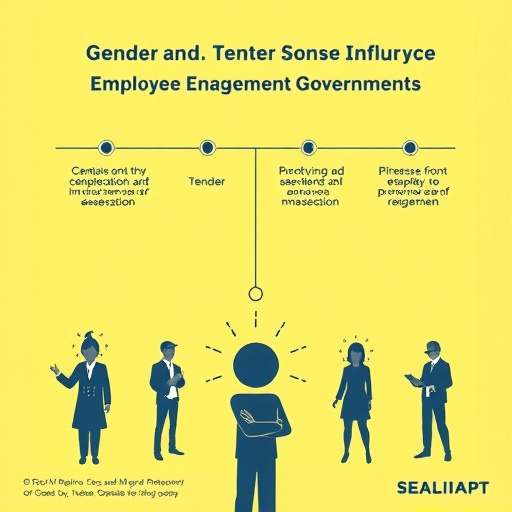
In a groundbreaking study that dives deep into the intricacies of workforce dynamics, researchers Rami, Khairi, Ahrari, and their colleagues reveal critical insights about employee engagement within local government sectors. Their research, soon to be published in ‘Discover Psychology,’ emphasizes the pivotal role of both gender and tenure in influencing engagement levels among employees. This exploration seems timely and relevant, considering the growing emphasis on enhancing productivity and morale in organizations faced with unprecedented challenges.
The study identifies employee engagement as a complex construct that significantly impacts organizational outcomes, including productivity, job satisfaction, and employee retention. Despite recognizing the importance of this construct, organizations often overlook the nuanced factors that contribute to it. Rami and his team meticulously peel back layers of this phenomenon to focus on how gender and the length of tenure can alter the pathways leading to greater engagement.
In their analysis, the researchers distinguish between the antecedents of employee engagement, uncovering variables such as leadership style, organizational culture, and work-life balance. These factors interplay with individual differences like gender and tenure to create a unique engagement landscape within local governments. This nuanced perspective is significant because it challenges the conventional one-size-fits-all approach that many organizations adopt regarding employee engagement strategies.
A particularly striking aspect of the research is its focus on gender dynamics. Previous studies have suggested that men and women may have different experiences and expectations in the workplace. Rami et al. corroborate these assertions and expand on them, revealing that gender can serve as a moderating factor that influences how employees perceive engagement drivers. For instance, women may place a higher premium on supportive leadership and inclusive practices, while men may respond more favorably to recognition and competitive incentives. The implications of these findings demand a rethinking of engagement strategies that cater specifically to the diverse needs of a mixed-gender workforce.
Tenure is another critical lens through which the researchers evaluate employee engagement. The length of time an employee spends within an organization often correlates with their level of engagement. Long-term employees may have developed a deeper emotional connection with the organization, but this is not universally true. The study suggests that recent hires might bring fresh perspectives and a high degree of enthusiasm to their roles, presenting organizations with both challenges and opportunities in fostering engagement across different tenure groups.
A striking revelation of this research is how organizational culture can either bolster or hinder engagement across gender and tenure spectrums. Local governments often have deeply entrenched cultures that may not be conducive to modern engagement strategies. The researchers emphasize that creating an inclusive and supportive culture is imperative in harnessing the full potential of their workforce. This realization calls for a concerted effort from leaders to actively shape a culture of engagement that resonates with diverse employee needs.
Additionally, the role of leadership emerges as a significant theme in this research. Effective leadership practices can act as a catalyst for enhancing employee engagement, particularly when they align with employees’ preferences related to gender and tenure. The findings advocate for adaptive leadership styles that are flexible and responsive to individual differences, making it clear that a cookie-cutter approach to leadership is outdated and ineffective.
Moreover, the research highlights the crucial role of communication in fostering employee engagement. Open and transparent communication channels are necessary for understanding employee sentiments, especially in a diverse workforce. Gender and tenure can affect how employees communicate their needs and concerns; therefore, organizations must cultivate an environment where everyone feels empowered to voice their opinions without fear of repercussions.
The study’s ultimate aim is to provide actionable insights for local governments experiencing low levels of employee engagement. The researchers advocate for strategically aligning engagement initiatives with their findings. It is not enough to implement generic engagement tools; rather, a tailored approach that considers these moderating effects is essential for generating meaningful change.
While the study’s findings are primarily focused on local governments, the implications stretch far beyond this sector. Organizations across various industries can benefit from adopting these insights, particularly in understanding the complex interplay of gender and tenure. With a workforce that is increasingly diverse, the adaptability of engagement strategies becomes not just beneficial but essential for long-term success.
As the world evolves and workplaces become more integrated, understanding the determinants of engagement will become ever more critical. This research provides a foundational framework for ongoing discussions and further studies that may unravel the complexities of employee engagement even further. As employers and human resource professionals tap into these insights, it is hoped that employee satisfaction and organizational productivity will follow suit, creating a healthier work environment for everyone involved.
In conclusion, the study by Rami, Khairi, and Ahrari illuminates the moderating effects of gender and tenure on employee engagement kinetics. The insights gleaned from this research should incite a wave of change in how leaders approach employee engagement strategies. Recognizing the diverse needs of their workforce can help organizations not just survive, but thrive in the face of challenges that lie ahead.
Rami, A.A.M., Khairi, E.R., Ahrari, S. et al. The moderating effects of gender and tenure on the antecedents of employee engagement in local governments. Discov Psychol 5, 122 (2025). https://doi.org/10.1007/s44202-025-00370-3
Cite Scienmag News
Glenn Wilkins. (October 15, 2025). Gender and Tenure Influence Employee Engagement in Governments. Scienmag. https://scienmag.com/gender-and-tenure-influence-employee-engagement-in-governments/
Glenn Wilkins. "Gender and Tenure Influence Employee Engagement in Governments." Scienmag, 15 October 2025, https://scienmag.com/gender-and-tenure-influence-employee-engagement-in-governments/. Accessed 5 September 2026.
Glenn Wilkins. "Gender and Tenure Influence Employee Engagement in Governments." Scienmag. October 15, 2025. https://scienmag.com/gender-and-tenure-influence-employee-engagement-in-governments/


