

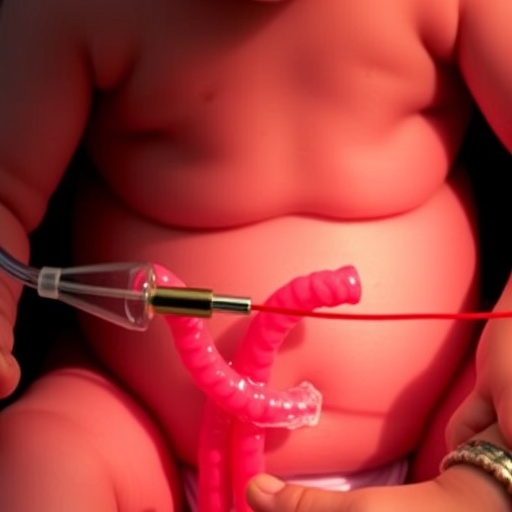
In the complex realm of neonatal care, hydrocephalus remains a challenging condition, often necessitating the placement of ventriculoperitoneal shunts (VPS) to alleviate intracranial pressure. Alongside this, gastrostomy tubes (GT) are frequently required to ensure adequate nutrition in these vulnerable infants, creating a clinical conundrum due to the heightened risk of infections. The intersection between these two life-sustaining interventions propels a critical inquiry: how does the timing and sequencing of GT placement relative to VPS surgery influence the incidence of shunt-associated meningitis?
A groundbreaking study led by Limpose et al., recently published in the Journal of Perinatology, delves deeply into this very issue. The researchers undertook the ambitious task of dissecting the relationship between GT insertion and VPS infection rates, particularly focusing on neonatal patients with hydrocephalus. This investigation bridges a significant knowledge gap by exploring not just the occurrence rates but also identifying the responsible pathogens and, importantly, recommending an optimal timeline for these invasive procedures to reduce life-threatening complications.
Central to this study was a cohort of infants diagnosed with hydrocephalus requiring VPS placement. Historically, the presence of a GT has been implicated as a risk factor for VPS infection, yet comprehensive data specifying the meningitis incidence in this particular population remained sparse. Limpose and colleagues’ meticulous work establishes the infection rate percentages by comparing infants who had both devices implanted against those with VPS alone. The results unequivocally confirmed that the concomitant presence of a GT significantly elevates the risk of meningitis, underscoring the necessity for precision in clinical decision-making.
Beyond just quantifying infection rates, the team pursued the crucial task of pathogen identification. Comprehensive microbial analysis was undertaken to catalog the meningeal invaders responsible for VPS infections in the context of GT presence. Intriguingly, this research revealed a predominance of gram-negative organisms, a finding that challenges previous assumptions centered mostly on gram-positive cocci such as Staphylococcus epidermidis. This revelation has profound implications for surgical prophylaxis protocols and antibiotic stewardship in neonatal intensive care units.
The study’s analytical depth extended to evaluating whether the sequence of device placements—whether the GT precedes the VPS or vice versa—bears influence on infection rates. The data emerged with compelling evidence supporting the notion that delaying GT placement until a significant postoperative window following VPS insertion notably reduces infection risk. Conversely, placing a GT prior to VPS installation was associated with a marked increase in meningitis incidence, suggesting the former order as suboptimal for patient outcomes in this sensitive demographic.
Understanding the mechanistic rationale behind these findings, the authors postulate that early GT insertion disrupts the peritoneal environment crucial for VPS function and infection resistance. Additionally, GT placement potentially facilitates bacterial translocation and biofilm formation around the VPS catheter, a critical pathway to infectious complications. These biological insights reinforce the clinical recommendation for strategic scheduling of these procedures to optimize neonatal care and reduce morbidity.
The implications of this study ripple across clinical protocols worldwide. Neonatologists and neurosurgeons are urged to integrate these findings into multidisciplinary care plans, emphasizing cautious scheduling and rigorous monitoring of post-procedural infection signs. The study further advocates for stringent infection control measures during and after both surgeries to mitigate identified risks. Enhanced surveillance for meningitis pathogens and tailored antimicrobial therapies based on identified organisms must become part of the standard care regimen.
Importantly, this research also highlights the vital need for parental counseling and interdisciplinary communication. Families of infants requiring VPS and GT should be apprised of the infection risks and the rationale behind procedural timing, thus aligning expectations and fostering participatory decision-making. Beyond the immediate clinical impact, this approach promotes comprehensive care models enhancing both short-term recovery and long-term neurological outcomes.
Critically, the study encourages future research avenues, such as exploring novel antimicrobial-impregnated VPS catheters or investigating alternative nutritional support methods that might obviate or delay GT necessity. Temporal and spatial mapping of biofilm formation dynamics on implanted devices could yield transformative insights into preventative strategies. Moreover, expanding cohorts with diverse demographic characteristics and multi-center collaborations could validate and generalize these findings globally.
While this study significantly advances our understanding, it acknowledges inherent limitations in patient selection bias and retrospective data interpretation. Hence, ongoing prospective, randomized controlled trials are warranted to refine these recommendations further. The intricate balance between managing hydrocephalus and providing nutritional support in neonates remains a delicate clinical puzzle, but this research lights a promising path toward safer interventions.
In essence, Limpose et al.’s work represents a seminal advance in neonatal neurosurgical care paradigms. By rigorously delineating the association between GT placement timing and VPS-associated meningitis, it equips clinicians with vital evidence to reduce devastating infectious complications. The translation of these findings into practice holds the promise of enhancing survival rates and quality of life for neonates navigating the dual challenges of hydrocephalus and nutritional compromise.
As neonatal intensive care continues to evolve with technological and procedural innovations, studies like this stand at the forefront, reminding us that even subtle modifications in surgical timing can yield profound clinical dividends. The impact of gastrostomy tube placement on the neurological and overall health trajectories of infants with VPS cannot be overstated, and safeguarding these infants through informed procedural strategies is now an attainable goal fostered by this landmark research.
The medical community awaits further validation studies to consolidate these findings, but the current evidence empowers a shift toward more nuanced, evidence-based scheduling of device placements. This shift promises to attenuate the burden of VPS infections—one of the most feared complications in this high-risk group—thereby transforming clinical outcomes and reinforcing the commitment to precision medicine in neonatal care.
In conclusion, this pioneering investigation couples detailed microbiological insights with pragmatic surgical timing recommendations, marking a crucial step forward in managing infants with hydrocephalus who require both VPS and GT. The interplay between device-associated infection risk and procedural strategies elucidates a path to safer, more effective care, ultimately striving to improve survival and developmental prospects for our most fragile patients.
Subject of Research: The impact of gastrostomy tube placement on the rate and microbial profile of meningitis in neonates with hydrocephalus implanted with ventriculoperitoneal shunts, focusing on timing and sequence of device insertion to reduce infection risks.
Article Title: Impact of gastrostomy tube placement on meningitis in infants with hydrocephalus requiring ventriculoperitoneal shunt.
Article References:
Limpose, K.L., Piazza, A.J., He, Z. et al. Impact of gastrostomy tube placement on meningitis in infants with hydrocephalus requiring ventriculoperitoneal shunt. J Perinatol (2026). https://doi.org/10.1038/s41372-026-02625-w
Image Credits: AI Generated
DOI: 10.1038/s41372-026-02625-w (19 March 2026)
Keywords: hydrocephalus, ventriculoperitoneal shunt, gastrostomy tube, meningitis, neonatal infection, surgical timing, neonatal care, device-associated infection, shunt infection, microbial pathogens


