


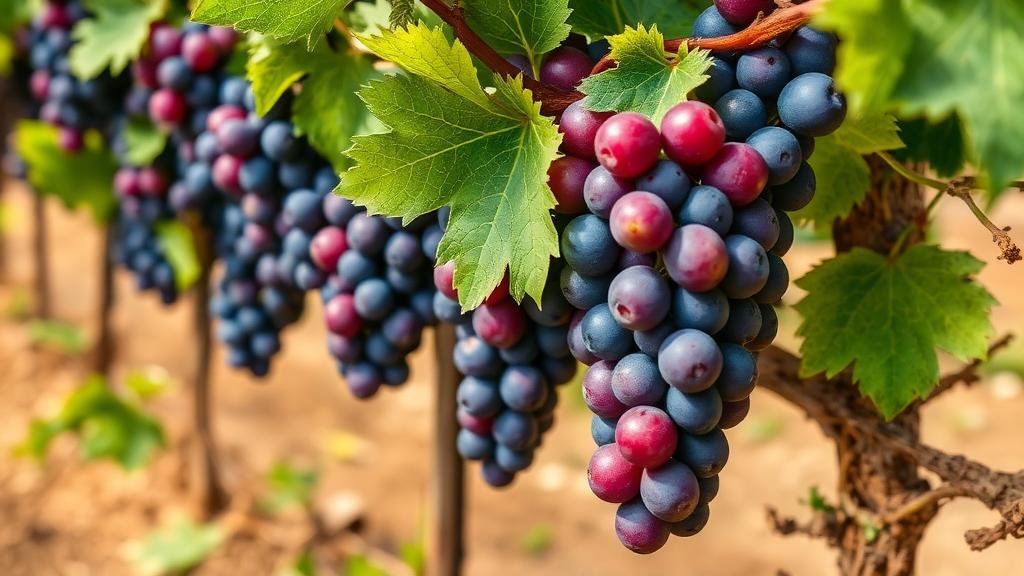
A dose of gamma radiation may be the unexpected ingredient that turns ordinary cattle manure into a powerhouse fertilizer for vineyards. In a multi-year field trial conducted in Egypt, researchers found that grapevines fed with irradiated manure combined with a microbial biofertilizer produced heavier clusters, sweeter berries, and greener, more nutrient-rich leaves than vines receiving conventional organic treatments. The best-performing combination, manure exposed to 15 kilograys of gamma radiation paired with a commercial biofertilizer called microbein, lifted cluster weight and yield per vine by 21 percent, increased berry weight by 20 percent, and cut acidity by 25 percent compared with untreated manure alone. The findings, published in BMC Agriculture, suggest that a technology more often associated with sterilizing medical equipment could help farmers grow more food with fewer synthetic chemicals.
The study focused on Superior Seedless, one of Egypt’s most economically important table grape varieties, prized for its early maturity, high market price, and strong demand in European and Arabian export markets. Egypt is the world’s fourth-largest producer of table grapes, and its grape exports grew eighteenfold between 2001 and 2016, a boom that has intensified pressure on growers to raise both yields and fruit quality. Yet vineyards in recently reclaimed desert areas face mounting challenges, including declining soil organic matter, reduced soil permeability after years of continuous cultivation, and the environmental toll of heavy mineral fertilizer use. Nitrogen, phosphorus, and potassium are the workhorses of grapevine nutrition: nitrogen drives the synthesis of proteins, enzymes, chlorophyll, and phenolic compounds; phosphorus underpins cell division, DNA and RNA synthesis, and energy metabolism; and potassium governs photosynthetic activity, water uptake, long-distance transport in the xylem and phloem, and stress tolerance.
The research team, led by Mohamed Farouk Ahmed of the Egyptian Atomic Energy Authority together with Noha Eid Eliwa and Shimaa M.M. El-Mogy of the Agricultural Research Center, set out to test whether radiation treatment could unlock more of the nutritional value locked inside municipal cattle manure. The experiment took place in a private vineyard in El-Khatatba, Menoufiya governorate, on ten-year-old Superior Seedless vines grown in sandy loam soil under drip irrigation and cane-pruned to a double Y trellis with a bud load of 72 buds per vine. Over three consecutive seasons beginning in 2020, with the first season serving as an introductory period to clear residual effects of previously applied fertilizers, the researchers applied manure at 5 kilograms per vine as a soil drench around the roots in late January.
The key innovation was the radiation step. Batches of cattle municipal manure were exposed to gamma rays from a cobalt-60 source at the National Centre for Radiation Research and Technology, receiving doses of 0, 5, 10, or 15 kilograys. Previous work has shown that gamma irradiation accelerates the decomposition of organic material in compost, increasing its degree of maturity. As the radiation dose rises, the compost’s organic carbon content falls while total nitrogen increases, lowering the carbon-to-nitrogen ratio, a key indicator of compost readiness. Irradiated compost also shows elevated phosphorus and potassium levels. In essence, the radiation pre-digests the organic matter, making nutrients more readily available for mineralization in soil and, ultimately, for uptake by plant roots.
To this irradiated manure the researchers added, in some treatments, microbein, a biofertilizer produced by Egypt’s Ministry of Agriculture containing three beneficial bacterial species: Azotobacter and Azospirillum, which fix atmospheric nitrogen in a non-symbiotic form that plants can use, and Bacillus megaterium, a potassium-solubilizing bacterium that excretes organic acids capable of dissolving rock potassium minerals such as micas, illite, and orthoclases. These microbes also release growth-promoting substances including indole acetic acid, gibberellins, thiamine, and sugars that improve soil quality. The biofertilizer was applied at 30 grams per vine two weeks after the manure, in a circle around each vine, then covered with soil and irrigated. The trial followed a randomized complete block design with eight treatments, three replicates, and three vines per replicate, and the data were analyzed by one-way analysis of variance with means separated using Duncan’s multiple range test at the 0.05 probability level.
The results painted a striking picture of synergy between radiation and microbes. Non-irradiated manure combined with microbein improved vegetative growth, increasing shoot length and diameter as well as leaf number and area, but left yield attributes, cluster and berry characteristics, and leaf mineral content largely unchanged. Irradiated manure, by contrast, whether applied alone or with microbein, significantly improved nearly every measured trait. Shoots grew longer and thicker, vines carried more leaves with larger blade areas, and berries grew longer, wider, and heavier. The berries also accumulated more total soluble solids, the sugars measured in degrees of refractometer reading, while titratable acidity expressed as tartaric acid declined, pushing the TSS-to-acid ratio upward, a reliable proxy for table grape eating quality. Clusters became longer, wider, and heavier, and yield per vine climbed accordingly.
The magnitude of the response scaled with radiation dose, and the highest dose combined with microbein delivered the most dramatic numbers. The winning treatment increased leaf nitrogen by 14 percent, phosphorus by a remarkable 66 percent, and potassium by 11 percent, while raising leaf number, shoot length, and shoot diameter by 11 percent each. Total soluble solids rose 9 percent, berry weight 20 percent, and cluster weight and yield 21 percent, all while acidity dropped 25 percent. Leaf chlorophyll content, measured nondestructively with a Minolta SPAD-502 meter, also rose with both irradiation dose and microbein addition, reflecting the improved nitrogen status of the foliage. Notably, the effect of irradiation at 10 and 15 kilograys was more pronounced than the effect of the biofertilizer itself: manure irradiated at 15 kilograys and applied alone outperformed manure irradiated at 10 kilograys combined with microbein, underscoring how powerful the radiation pretreatment is on its own.
Why does zapping manure with gamma rays make it such a better fertilizer? The researchers attribute the effect to the way ionizing radiation accelerates the breakdown of complex organic compounds in the compost, hastening decomposition and increasing maturity. More mature compost mineralizes nitrogen and carbon faster, releasing nutrients in forms roots can absorb during the critical early growing season. Humic substances within the compost further enrich the soil with calcium, phosphorus, potassium, and nitrogen, and improved soil physical, chemical, and biological properties, including better drainage, moderated pH, and enhanced nutrient availability, create a more hospitable rhizosphere. When microbein is added to this irradiated substrate, the benefits compound: the improved physicochemical conditions of the soil support larger and more diverse communities of beneficial microbes, while the bacteria themselves fix nitrogen, solubilize phosphorus and potassium, produce growth regulators, and suppress root pathogens. Organic fertilization also raises soil organic carbon as microbial activity increases, buffering soil pH toward neutral and expanding the pool of available macro- and micronutrients.
The findings align with earlier studies showing that irradiated compost and biofertilizers can improve growth, yield, and fruit quality in other crops, including previous work on Superior Seedless grapevines and Valencia oranges, where fertilization with irradiated compost enhanced fruit physical and chemical characteristics, vegetative growth, and leaf mineral content, with effects intensifying at higher radiation doses. Comparable research on French Black grapes found that combining organic fertilizer with biofertilizers such as Bacillus megaterium and mycorrhizal fungi significantly increased yield and cluster number, length, and weight relative to organic fertilizer alone. Studies on Thompson Seedless and Flame Seedless grapes similarly reported that biofertilizers added to integrated mineral and organic programs boosted cluster weight, soluble solids, and petiole nitrogen, phosphorus, and potassium while reducing acidity, although responses vary with the type of organic material, the irradiation dose, and the microbial strains involved.
For a world searching for ways to feed a growing population without degrading its soils, the study offers a compelling template. Organic and microbial fertilizers improve the physical, chemical, and biological fertility of the soil while reducing dependence on synthetic fertilizers and the pollution risks they carry, and long-term viticulture in particular demands careful soil management to prevent the organic matter losses that erode yields. The Egyptian team concludes that 15 kilogray-irradiated cattle municipal manure applied with microbein is a viable alternative to chemical fertilization for seedless grapevines, one that ensures better fruit quality, higher yield, and improved nutritional status of the vines. If the approach proves scalable and economical beyond the research plot, the humble manure pile, given a brief trip through a gamma irradiator and a sprinkle of nitrogen-fixing bacteria, could become a cornerstone of sustainable viticulture in Egypt’s expanding desert vineyards and, perhaps, far beyond them.
Subject of Research: Effects of gamma-irradiated cattle manure and microbein biofertilizer on the growth, yield, and fruit quality of Superior Seedless grapevines
Article Title: The synergistic effect of irradiated manure and bio fertilizer on growth and fruit quality of superior seedless grapevines
Article References: Ahmed, M. F., Eliwa, N. E., & El-Mogy, S. M. (2025). The synergistic effect of irradiated manure and bio fertilizer on growth and fruit quality of superior seedless grapevines. BMC Agriculture, 1(1), Article 15. https://doi.org/10.1186/s44399-025-00009-7
Image Credits: AI Generated
DOI: 10.1186/s44399-025-00009-7
Keywords: grapevines, gamma irradiation, cattle manure, biofertilizer, microbein, Superior Seedless, compost maturity, viticulture, organic fertilization, plant nutrition, Egypt, sustainable agriculture
Cite Scienmag News
Alan Morgan. (October 2, 2026). Gamma-Zapped Manure and Microbes Boost Grape Yields by 21 Percent. Scienmag. https://scienmag.com/gamma-zapped-manure-and-microbes-boost-grape-yields-by-21-percent/
Alan Morgan. "Gamma-Zapped Manure and Microbes Boost Grape Yields by 21 Percent." Scienmag, 2 October 2026, https://scienmag.com/gamma-zapped-manure-and-microbes-boost-grape-yields-by-21-percent/. Accessed 4 October 2026.
Alan Morgan. "Gamma-Zapped Manure and Microbes Boost Grape Yields by 21 Percent." Scienmag. October 2, 2026. https://scienmag.com/gamma-zapped-manure-and-microbes-boost-grape-yields-by-21-percent/


