


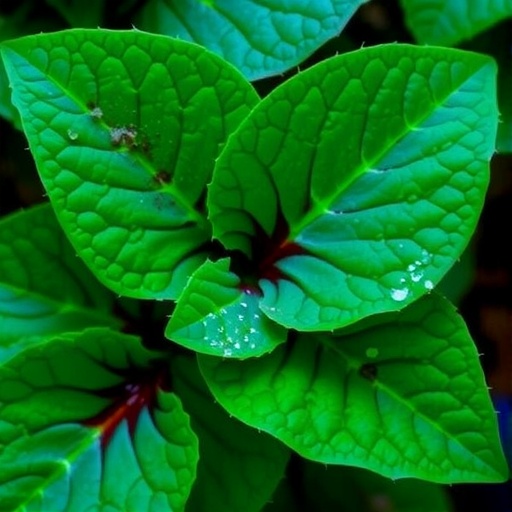
In a finding that could reshape how ornamental plant breeders harness radiation to create novel varieties, researchers in Iran have mapped the precise dose-dependent effects of gamma irradiation on two popular cultivars of Begonia rex, one of the world’s most beloved foliage plants. The study, published in BMC Plant Biology, provides the first detailed account of lethal dose thresholds, biochemical stress responses, and oxidative damage in in vitro-derived tissues of the “Jurassic” and “Silver King” begonia cultivars, and it offers practical guidance for scientists seeking to generate genetic variation in this species through induced mutagenesis.
The research team, led by Maryam Dehestani-Ardakani of Ardakan University together with colleagues at Yazd University and the Nuclear Science and Technology Research Institute in Karaj, exposed callus tissue derived from leaf explants to seven different doses of gamma radiation, ranging from a control of 0 Gy up to a substantial 100 Gy. The experimental design was a 2 × 7 factorial completely randomized layout with three replicates, allowing the investigators to disentangle the effects of radiation dose from inherent differences between the two cultivars. Data were subjected to two-way analysis of variance followed by Duncan’s multiple range test at a significance threshold of P < 0.05, a rigorous statistical framework that lends confidence to the dose-response relationships the team reports.
Gamma irradiation has long been a workhorse of mutation breeding, a technique that uses ionizing radiation to create random changes in DNA that can, on rare but valuable occasions, produce plants with novel flower colors, leaf patterns, growth habits, or stress tolerance. The central challenge for breeders is calibration: too low a dose produces few mutations, while too high a dose kills the plant material outright. Determining the lethal dose values — the doses at which 25, 50, and 75 percent of regenerated plantlets fail to survive (LD25, LD50, and LD75) — is therefore the critical first step in any mutation breeding program. The new study delivers exactly this calibration for Begonia rex, and the results reveal striking differences between the two cultivars.
For the “Jurassic” cultivar, the estimated LD25, LD50, and LD75 values were 43.05, 86.10, and 129.15 Gy, respectively. The “Silver King” cultivar, by contrast, proved considerably more radiosensitive, with corresponding values of 15.00, 60.00, and 105.00 Gy. This cultivar-specific variation is itself an important finding, underscoring that mutation breeding protocols cannot simply be transferred between varieties of the same species without re-optimization. The differences likely reflect underlying genetic variation in DNA repair capacity, antioxidant defenses, and cell-cycle dynamics between the two lines, though the study’s focus on survival-based dose estimation means the precise mechanistic basis remains an open question for future research.
Beyond survival, the researchers tracked a suite of morphological traits as radiation dose increased, and the pattern was consistently negative. Plant height, root number, root length, leaf area, leaf number, growth index, and proliferation percentage all declined as gamma dose rose. This dose-dependent suppression of growth is the classic signature of ionizing radiation stress in plants, arising from a combination of direct DNA damage, disruption of cell division in meristematic tissues, and oxidative injury to membranes and cellular machinery. For breeders, these growth reductions serve as a practical proxy for radiation stress in the weeks and months following treatment, before survival data can be fully assembled.
Perhaps the most intriguing portion of the study concerns the biochemical responses of the regenerated shoots. Total phenolic content (TPC) ranged dramatically across treatments, from a low of 0.02 milligrams of gallic acid equivalents per gram of dry weight in “Silver King” at 10 Gy to a peak of 0.54 mg GAE/g DW in “Jurassic” at both 40 and 100 Gy. Phenolic compounds are central players in the plant antioxidant arsenal, and their accumulation under radiation stress reflects the activation of secondary metabolic pathways, many of which are also responsible for the vivid leaf colors that make Begonia rex so commercially desirable. The fact that phenolic accumulation peaked at intermediate and high doses in the more radio-tolerant cultivar suggests a robust inducible defense system at work.
Anthocyanins, the pigments responsible for red, purple, and blue hues in plant tissues, followed a different pattern. The highest total anthocyanin content (TAC) ratios were observed in both cultivars at 40 Gy, where “Jurassic” and “Silver King” accumulated anthocyanins at 1.35 and 1.65 times control levels, respectively. This intermediate-dose peak is consistent with a hormetic response, in which moderate stress stimulates protective pigmentation while severe stress overwhelms biosynthetic capacity. For a plant prized for its ornamental foliage, this radiation-induced boost in anthocyanin accumulation hints at the possibility that carefully calibrated mutagenesis could yield not just hidden genetic novelty but also immediate, visible changes in leaf coloration.
Antioxidant capacity, measured by the widely used DPPH radical scavenging assay, told a nuanced story. In “Jurassic,” both control and treated regenerated shoots showed maximal scavenging activity at 10, 40, and 100 Gy, with values of 92.9, 92.6, 91.2, and 92.2 percent respectively — a remarkably flat response suggesting that this cultivar maintains strong baseline antioxidant defenses regardless of dose. “Silver King,” however, showed its maximum scavenging activity at 20 Gy and 100 Gy, reaching 88.2 and 87.0 percent. The cultivar difference again points to “Jurassic” as the more resilient genotype, better equipped to buffer the oxidative consequences of ionizing radiation.
To integrate these multiple biochemical signals into a single, interpretable measure of stress, the team employed the Integrated Biomarker Response version 2 (IBRv2) index, a multivariate approach originally developed in ecotoxicology that combines deviations of multiple biomarkers from control values into one holistic stress score. The results were unambiguous: the maximum IBRv2 values of 24.88 for “Jurassic” and 30.43 for “Silver King” were both recorded at 100 Gy, the highest dose tested. This indicates that at 100 Gy, both cultivars experienced substantial toxicity and oxidative stress, with the more sensitive “Silver King” registering the greater integrated burden. The application of IBRv2 to plant mutagenesis is a methodological innovation worth noting, as it offers breeders a quantitative framework for balancing mutation induction against collateral physiological damage.
Synthesizing the survival data with growth reduction measurements, the authors arrive at a clear practical recommendation: a gamma irradiation dose of approximately 60 to 80 Gy is optimal for in vitro mutagenesis of Begonia rex, based on the estimated LD50 and GR50 values. This dose range sits at the sweet spot familiar to mutation breeders — high enough to generate a meaningful mutation load for selection, yet low enough to preserve a workable population of surviving, regenerating plantlets. For commercial ornamental breeding programs, where novelty is currency and time to market matters, such precise dosing guidance can save years of trial and error.
The broader significance of the work extends beyond begonias. Begonia rex serves as a useful model for foliage ornamentals generally, and the study’s demonstration that IBRv2 can quantify cumulative oxidative stress in irradiated plant tissue opens the door to applying this ecotoxicological tool across a much wider range of mutation breeding programs, including those targeting medicinal plants, food crops, and bioenergy feedstocks. As global demand for novel ornamental varieties continues to grow — driven by houseplant booms and landscaping markets alike — radiation mutagenesis remains one of the few methods capable of generating truly new traits without genetic engineering, sidestepping regulatory hurdles in many jurisdictions.
The study also carries a cautionary note for researchers who assume that cultivars within a species will respond uniformly to mutagenic treatments. The roughly threefold difference in LD50 between “Jurassic” and “Silver King” (86.10 versus 60.00 Gy) is a vivid reminder that genetic background matters profoundly. Protocols optimized for one variety could easily prove either wastefully mild or lethally harsh for another. The authors’ cultivar-by-cultivar approach, combining survival-based lethal dose estimation with morphometric tracking and a panel of biochemical biomarkers, provides a template that other laboratories can adapt.
As the houseplant industry continues its remarkable expansion and consumers clamor for ever-more-exotic foliage, the marriage of nuclear science and plant tissue culture exemplified by this research is likely to become increasingly visible. Gamma irradiation, a technology with roots in the mid-twentieth century’s atomic age, is finding new relevance in the boutique world of ornamental horticulture — and with studies like this one providing the roadmap, the next striking new begonia on a garden-center shelf may well owe its existence to a precisely calibrated blast of gamma rays.
Cite Scienmag News
Alan Morgan. (September 8, 2026). Gamma irradiation alters regeneration and oxidative stress in two Begonia rex cultivars. Scienmag. https://scienmag.com/gamma-irradiation-alters-regeneration-and-oxidative-stress-in-two-begonia-rex-cultivars/
Alan Morgan. "Gamma irradiation alters regeneration and oxidative stress in two Begonia rex cultivars." Scienmag, 8 September 2026, https://scienmag.com/gamma-irradiation-alters-regeneration-and-oxidative-stress-in-two-begonia-rex-cultivars/. Accessed 8 September 2026.
Alan Morgan. "Gamma irradiation alters regeneration and oxidative stress in two Begonia rex cultivars." Scienmag. September 8, 2026. https://scienmag.com/gamma-irradiation-alters-regeneration-and-oxidative-stress-in-two-begonia-rex-cultivars/


