


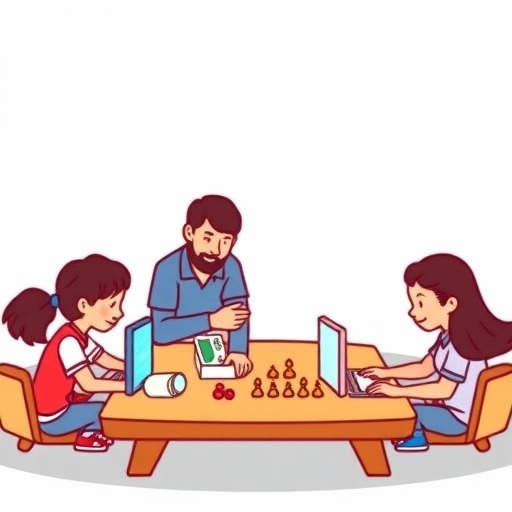
In the rapidly evolving landscape of education, the integration of gamification into programming assessments is emerging as a remarkable catalyst for enhancing student engagement and learning outcomes. The research conducted by Balla, Kiraly, and Kiraly delves into the art and science of crafting SQL programming assessments that not only test students’ technical proficiencies but also immerse them in a fun and interactive learning environment. Their innovative approach harnesses the power of educational games, a concept that has gained traction in recent years, as a means to motivate learners and improve their grasp of complex subjects like SQL.
SQL, or Structured Query Language, is a crucial skill in the realm of data management and analysis. As industries increasingly rely on data-driven decision-making, the ability to proficiently manipulate databases becomes vital for aspiring professionals. Traditional assessment methods often fall flat, failing to engage students or accurately gauge their abilities. This is where the researchers’ gamified approach comes into play, offering a fresh outlook on how to assess and enhance SQL programming skills.
The concept of gamification involves incorporating gaming elements into non-gaming contexts to boost engagement and motivation. By leveraging game mechanics such as scoring, competition, and rewards, educators can transform mundane assessments into thrilling challenges that capture students’ interest. In their study, Balla and his colleagues sought to find if such a transformative approach could lead to improved learning experiences in SQL education.
One of the pivotal aspects of their research lies in understanding how educational games can stimulate not just interest but also higher-order thinking skills. The mechanics of these games encourage learners to apply their knowledge actively rather than passively consume information. This active engagement fosters critical thinking and problem-solving, essential skills in digital literacy and data management fields. As students navigate through gamified SQL challenges, they are likely to develop a deeper understanding of relational databases and their management.
The researchers constructed various SQL challenges designed as levels within a game-like framework. Students were presented with real-world scenarios requiring them to write queries, retrieve data, and manipulate datasets. This immersion into practical problem-solving situations is invaluable, as it drives home the relevance of SQL skills in real-life applications. Furthermore, the affective experience of gaming—complete with achievement badges and leaderboards—instills a sense of competition that propels students to excel in their learning endeavors.
Evaluating the effectiveness of this approach involved comprehensive data collection and analysis. The researchers employed both qualitative and quantitative methods to gauge changes in student engagement, satisfaction, and skill acquisition. Preliminary results indicated a significant increase in participation rates, with students reporting an enhanced enjoyment of the learning process. Feedback from participants highlighted that the gamified assessments made learning SQL not just easier, but also more enjoyable, thereby increasing their motivation to learn.
An intriguing facet of the research is its implications for future pedagogical practices in programming education. As the demand for skilled workforce in technology continues to rise, educational institutions must innovate their teaching methodologies to prepare students effectively. The findings suggest that integrating gamified assessments could potentially bridge the gap between theoretical knowledge and practical application, fostering a generation of learners well-versed in technical skills essential for today’s job market.
Moreover, the research aligns with contemporary trends emphasizing the importance of soft skills alongside technical acumen. In the age of collaboration and teamwork, the competitive elements of gamified assessments could cultivate essential interpersonal skills. Encouraging students to cooperate, strategize, and challenge each other can foster a collaborative learning culture—one where students not only learn from their successes but also from their mistakes in a supportive environment.
As Balla and his team peered into the future of education, the potential for scaling this model became evident. Educational institutions could tailor their gamified assessments to suit various subjects beyond SQL, creating a more engaging curriculum across disciplines. This adaptability offers a glimmer of hope that the educational landscape might witness a significant overhaul in favor of more stimulating, game-based learning environments.
The research highlights significant potential, but also acknowledges challenges. Developers and educators must collaborate to design games that are both pedagogically sound and captivating. The fine balance between educational value and entertainment is crucial—neither aspect should overshadow the other. Thus, even as gamified assessments pave a promising path forward, the foundational principles of effective teaching must remain intact.
Another implication of this research revolves around the accessibility of gamified learning. As technology becomes more widespread, especially among younger generations, creating engaging and accessible educational content is imperative. The team advocates for developing platforms that are not only user-friendly but also universally designed, ensuring that students with diverse learning needs can benefit from these innovative assessment methods.
In conclusion, Balla, Kiraly, and Kiraly’s work sheds light on a transformative approach to SQL programming assessments. By examining the intersection of education, technology, and gameplay, they provide a blueprint for reshaping how programming skills are taught and assessed. As educational ecosystems evolve, embracing the principles of gamification may well be the key to unlocking a new chapter in engaging and effective learning. The implications for educators, students, and the industry at large are significant, suggesting that the path to a more engaged and skilled workforce could indeed begin in the classrooms of the future, equipped with the tools of gaming and innovation.
Balla, T., Kiraly, S. & Kiraly, R. Enhancing SQL programming assessments through educational games: a gamified approach.
Discov Educ 4, 365 (2025). https://doi.org/10.1007/s44217-025-00819-6
Cite Scienmag News
Courtney Benton. (September 26, 2025). Gamifying SQL Assessments: Boosting Learning Through Play. Scienmag. https://scienmag.com/gamifying-sql-assessments-boosting-learning-through-play/
Courtney Benton. "Gamifying SQL Assessments: Boosting Learning Through Play." Scienmag, 26 September 2025, https://scienmag.com/gamifying-sql-assessments-boosting-learning-through-play/. Accessed 4 September 2026.
Courtney Benton. "Gamifying SQL Assessments: Boosting Learning Through Play." Scienmag. September 26, 2025. https://scienmag.com/gamifying-sql-assessments-boosting-learning-through-play/


