


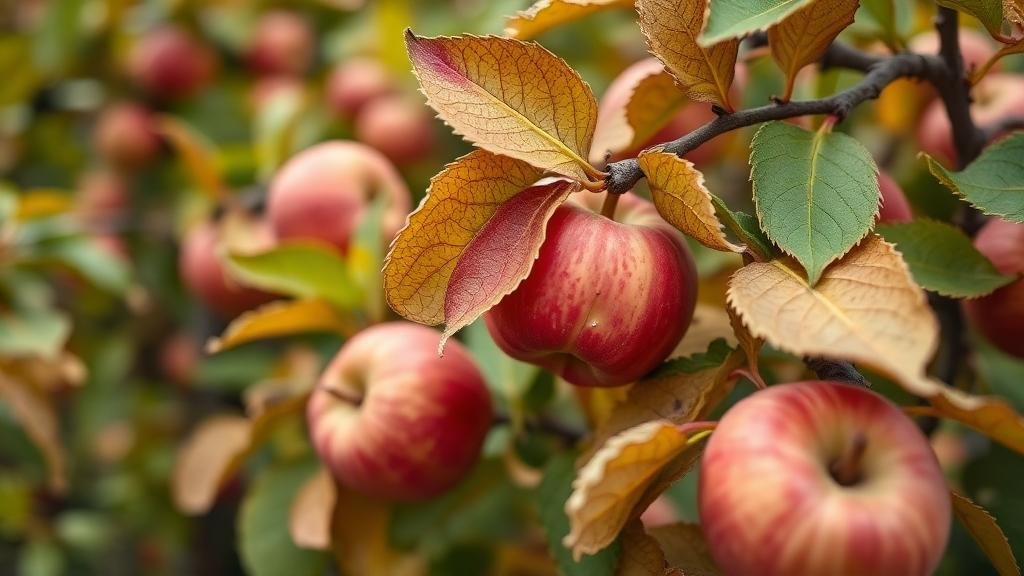
Apple orchards are among the most visually deceptive environments a computer vision system can face. A single leaf photographed in the field may be washed out by harsh midday sun, shadowed by a dense canopy, blurred by wind, or framed against a cluttered background of branches, soil, and neighboring foliage. Under these conditions, even the most powerful deep learning models can stumble, particularly when two diseases produce lesions that look almost identical to a camera. A new study published in the International Journal of Machine Learning and Cybernetics tackles this problem head-on, presenting a neural architecture that combines three complementary feature extractors with a mathematically grounded fusion mechanism borrowed from fuzzy set theory. The result is a classifier that reaches an accuracy of 0.9918 and a macro-F1 score of 0.9905 on apple leaf disease recognition, figures the authors attribute largely to its explicit handling of visual ambiguity.
The research, conducted by Vishal Thakur, Ravindara Bhatt, and R. S. Raja Durai of Jaypee University of Information Technology in Solan, India, begins from a premise that has become increasingly central to applied machine learning: no single neural backbone sees an image the same way. Convolutional networks excel at capturing local textures and edges, while vision transformers model long-range dependencies across an entire leaf. Rather than betting on one architecture, the team benchmarked three modern feature extractors as the backbones of their system: Swin Transformer-Tiny, MobileNetV3-Small, and ConvNeXt-Tiny. Each brings a distinct inductive bias to the task. The Swin Transformer partitions images into windows and computes attention hierarchically, MobileNetV3 offers a lightweight, mobile-friendly convolutional design, and ConvNeXt modernizes the classic convolutional formula with training techniques and block designs inspired by transformers. Together, they form what the authors call a multi-granular tri-backbone foundation, meaning the network inspects each leaf image at multiple levels of abstraction and through multiple computational lenses.
But stacking three backbones alone does not solve the core problem of field-deployed disease classification, which is ambiguity. When apple scab and frog-eye leaf spot produce similarly shaped lesions, or when a healthy leaf is partially discolored by nutrient stress, the feature vectors produced by different backbones may disagree. Conventional fusion strategies, which simply concatenate or average features, treat this disagreement as noise to be suppressed. The Indian team’s central innovation is to treat it as information. Their enhanced Intuitionistic Fuzzy Fusion (IFF) module draws on intuitionistic fuzzy set theory, a mathematical framework that extends classical fuzzy logic by assigning each element three interrelated quantities: a membership degree, a non-membership degree, and a hesitation degree that captures the residual uncertainty between the two.
In practical terms, the IFF module asks three questions of every feature it receives from the three backbones. How strongly does this feature support a given disease class? How strongly does it argue against it? And how much doubt remains? By modeling membership, non-membership, and hesitation explicitly, the module can calibrate features that would otherwise be misleadingly confident. A lesion photographed in dappled light might produce a moderate membership score for apple scab, a moderate non-membership score, and a high hesitation score, signaling to the classifier that this particular region of the image is genuinely ambiguous. The fusion process then weighs the contributions of the three backbones accordingly, leaning more heavily on whichever extractor provides the most decisive evidence for that specific input. This hesitation-aware calibration is what the authors credit for the model’s reduced misclassification rate across closely related disease classes, a failure mode that plagues many existing systems.
The experimental results reported in the paper are striking. With the IFF mechanism incorporated, the full framework achieved a classification accuracy of 0.9918 and a macro-F1 score of 0.9905, the latter metric being particularly important because it ensures that performance is balanced across all disease classes rather than dominated by the most common ones. The authors validated their claims through multiple complementary analyses. Learning curves demonstrated stable convergence without severe overfitting, confusion matrices revealed fewer errors between visually similar disease pairs, and ROC-AUC analysis confirmed strong discriminative capability across classes. Crucially, the team also showed that the IFF fusion framework consistently outperformed both the individual backbones operating alone and conventional fusion strategies, indicating that the gains come from the fuzzy calibration mechanism rather than simply from having three models to consult.
The significance of this work extends well beyond apple orchards. Plant diseases are responsible for enormous losses in global food production, with major studies estimating that pathogens and pests destroy a substantial fraction of the world’s most important food crops each year. For smallholder farmers, who dominate apple production in many regions, early and accurate disease identification can mean the difference between a profitable harvest and a devastating one. Traditional approaches rely on human scouts or laboratory analysis, both of which are slow, expensive, and often arrive too late to contain an outbreak. Smartphone-based diagnostic tools powered by deep learning have emerged as a promising alternative, but their real-world performance has been hampered by exactly the kind of environmental variability this new architecture is designed to withstand.
The choice of backbones also reflects practical deployment considerations. MobileNetV3-Small was designed from the ground up for resource-constrained devices, meaning the architecture has a pathway toward running directly on a farmer’s phone or an edge device in the orchard without requiring cloud connectivity. While the full tri-backbone system is heavier than any single component, the modular design suggests that the fuzzy fusion principle could be adapted to lighter configurations, or that the hesitation scores themselves could be used to decide when a low-power model should defer to a more capable one. The authors describe the framework as providing generalizable feature calibration suitable for practical agricultural deployment, a claim supported by the consistency of its improvements over baseline approaches.
The study also situates itself within a rapidly growing body of literature on deep learning for agriculture. Recent years have seen a proliferation of specialized architectures for apple leaf disease, including lightweight convolutional designs, attention-enhanced networks, transformer-based models, and semi-supervised frameworks that reduce the need for labeled data. Fusion strategies have appeared repeatedly in this literature, from bilinear pooling to evidence-based combination of multiple classifiers. What distinguishes the new work is its mathematical grounding in intuitionistic fuzzy sets, a framework previously applied to multimodal medical image fusion, where radiologists similarly confront ambiguous and noisy visual evidence. Translating that machinery into plant pathology represents a conceptual bridge between two fields that rarely share methods, and it may inspire similar approaches in other domains where classifiers must reason under genuine uncertainty rather than merely rank probabilities.
The authors trained and evaluated their system on publicly available apple leaf disease datasets, including a 13-class collection hosted on Kaggle, and their data availability statement indicates that no new datasets were generated during the study. The paper passed through peer review at the International Journal of Machine Learning and Cybernetics, with the manuscript received in December 2025, accepted in August 2026, and published on 7 September 2026 as volume 17, article 450. The work was carried out at Jaypee University of Information Technology, with Thakur and Bhatt affiliated with the Department of Computer Science and Engineering and Information Technology, and Raja Durai with the Department of Mathematics, a division of labor that mirrors the study’s blend of engineering implementation and formal fuzzy-set mathematics.
For the agricultural technology sector, the study offers a template for how to build classifiers that survive contact with the messy real world. The lesson is not simply to add more models, but to give the system an explicit vocabulary for doubt. By quantifying hesitation alongside belief and disbelief, the Intuitionistic Fuzzy Fusion module converts the vagueness of field imagery from a liability into a structured signal that the network can exploit. As artificial intelligence continues its march into farms, clinics, and other high-stakes environments where perfect images are the exception rather than the rule, architectures that know what they do not know may prove to be the most valuable kind. With apple leaf disease classification now approaching 99 percent accuracy under realistic conditions, the gap between laboratory benchmarks and orchard-floor reliability is narrowing, and fuzzy mathematics is helping to close it.
Subject of Research: Deep learning-based apple leaf disease classification using intuitionistic fuzzy feature fusion
Article Title: Intuitionistic fuzzy multi-granular tri-backbone neural architecture for apple leaf disease classification in complex field environments
Article References: Thakur, V., Bhatt, R., & Durai, R. S. R. (2026). Intuitionistic fuzzy multi-granular tri-backbone neural architecture for apple leaf disease classification in complex field environments. International Journal of Machine Learning and Cybernetics, 17(9), Article 450. https://doi.org/10.1007/s13042-026-03288-x
Image Credits: AI Generated
DOI: 10.1007/s13042-026-03288-x
Keywords: apple leaf disease, deep learning, intuitionistic fuzzy sets, feature fusion, Swin Transformer, MobileNetV3, ConvNeXt, precision agriculture, plant pathology, computer vision, neural networks, crop disease detection
Cite Scienmag News
Alan Morgan. (October 4, 2026). Fuzzy Fusion AI Reads Apple Leaves With Near-Perfect Accuracy in Messy Fields. Scienmag. https://scienmag.com/fuzzy-fusion-ai-reads-apple-leaves-with-near-perfect-accuracy-in-messy-fields/
Alan Morgan. "Fuzzy Fusion AI Reads Apple Leaves With Near-Perfect Accuracy in Messy Fields." Scienmag, 4 October 2026, https://scienmag.com/fuzzy-fusion-ai-reads-apple-leaves-with-near-perfect-accuracy-in-messy-fields/. Accessed 4 October 2026.
Alan Morgan. "Fuzzy Fusion AI Reads Apple Leaves With Near-Perfect Accuracy in Messy Fields." Scienmag. October 4, 2026. https://scienmag.com/fuzzy-fusion-ai-reads-apple-leaves-with-near-perfect-accuracy-in-messy-fields/


