


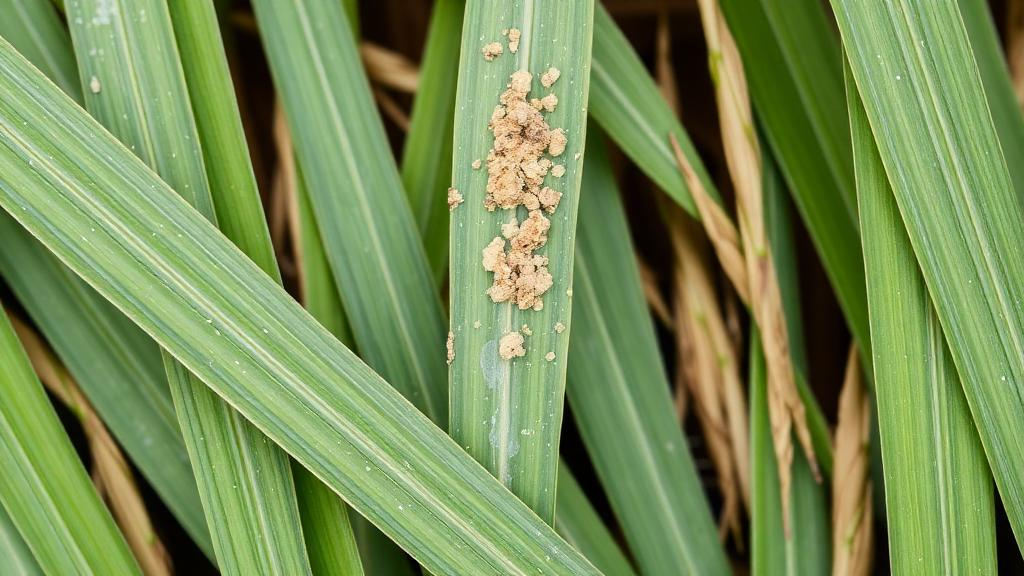
On the surface of every leaf lies a hidden ecosystem, a bustling community of bacteria, fungi, and other microorganisms collectively known as the phyllosphere. Far from being passive passengers, these microbes play a decisive role in plant health, influencing everything from nutrient uptake to resistance against devastating pathogens. Now, a wave of research highlighted in a recent commentary published in the journal Crop Health is drawing attention to a striking discovery: a small molecule produced by a leaf-dwelling fungus can protect rice and several other major crops from fungal disease, and the plant’s own genes may hold the key to recruiting such protective microbes in the first place. The findings, originally reported by Fan and colleagues in Nature Microbiology, are being hailed as a potential turning point in the quest for sustainable, microbiome-based crop protection.
The story begins with rice, one of the world’s most important staple crops, and one of its persistent enemies: Rhizoctonia solani, the soil-borne fungus responsible for sheath blight, a disease that can inflict serious yield losses across rice-growing regions. Researchers set out to understand why some rice cultivars withstand the pathogen better than others. By sterilizing the leaves of three representative rice varieties with differing levels of resistance to R. solani, the team made a crucial observation: once the native microbial community was removed, the cultivar-specific resistance disappeared. This result underscored that the plants’ apparent disease resistance was not solely an intrinsic property of their own cells, but depended critically on the microscopic partners living on their leaf surfaces.
To pinpoint which microbes were responsible, the researchers sequenced the phyllosphere microbiome of the rice varieties in the absence of pathogen inoculation. A clear pattern emerged: the abundance of fungi belonging to the genus Aspergillus correlated positively with the degree of disease resistance. This correlation led the team to a specific hypothesis, namely that particular metabolites produced by these Aspergillus fungi were the source of the protective effect. The hypothesis gained strong support when metabolites derived from one species, Aspergillus cvjetkovicii, were shown to suppress R. solani infection in laboratory assays.
The next step was a chemical detective story. Using metabolomic profiling combined with bioassay-guided fractionation, a technique in which candidate molecules are separated and tested step by step for biological activity, the researchers identified the active compound: 2,4-Di-tert-butylphenol, abbreviated as 2,4-DTBP. This small molecule, secreted by the phyllosphere-associated fungus, proved capable of suppressing R. solani on its own. Remarkably, the protective effect was not confined to rice. In experiments extending to other crops, including cucumber, maize, soybean, and tomato, 2,4-DTBP provided protection against the pathogen, and the benefits persisted even under real-world field conditions. That broad-spectrum activity, demonstrated outside the greenhouse, is what sets the finding apart from many earlier laboratory-only microbiome studies.
But how does a single fungal metabolite disarm such a formidable pathogen? The answer emerged from transcriptomic analyses of R. solani exposed to 2,4-DTBP. The researchers observed a significant downregulation of a gene called AMT1, which encodes an ammonium transporter. Follow-up experiments showed that overexpressing RsAMT1 in the pathogen promoted hyphal growth, sclerotia formation, the compact resting structures that help the fungus survive harsh conditions, and overall pathogenicity. In other words, AMT1 acts as a positive regulator of the pathogen’s virulence machinery. When 2,4-DTBP suppresses this gene, the fungus loses much of its offensive capability.
The mechanism runs even deeper, into the chemistry of cellular stress. The team found that 2,4-DTBP reduces the accumulation of reactive oxygen species, or ROS, within R. solani cells. Conversely, when the fungus was treated with hydrogen peroxide, a common reactive oxygen species, AMT1 expression was upregulated, and the same response was observed in another fungal pathogen, Fusarium fujikuroi. Taken together, these results suggest an elegant signaling chain: the fungal metabolite lowers ROS levels inside the pathogen, which dampens AMT1 expression, which in turn weakens hyphal growth, sclerotial development, and ultimately the pathogen’s ability to cause disease. It is a rare example of interspecies chemical signaling in the phyllosphere being traced all the way from molecule to mechanism to field-level protection.
The discovery also feeds into a broader conceptual shift in plant pathology. For decades, crop improvement programs have concentrated on disease resistance genes, known as R genes, which typically encode receptor-like proteins that act as molecular switches. These receptors sense isolate-specific pathogen effectors and trigger robust immune responses. The trouble with R genes is that their protection tends to be race-specific, effective against particular pathogen isolates but not others, and their activation often comes with a growth-immunity tradeoff, meaning plants that invest heavily in defense frequently sacrifice yield. Breeders have long wrestled with this dilemma, trying to stack resistance without penalizing harvests.
This is where the concept of microbiome-shaping genes, or M genes, enters the picture. The composition and structure of the plant microbiome are shaped by plant genotype, developmental stage, and nutrient uptake, reflecting the plant’s adaptation to its environment and influencing traits such as disease resistance beyond what innate immunity alone can achieve. M genes are defined as the genetic basis by which plants manipulate and reshape their associated microbial communities, selectively recruiting beneficial microbes that can then provide direct protection against pathogens. Because this strategy works through the microbiome rather than through costly internal immune signaling, M-gene-mediated resistance may mitigate the growth-defense tradeoff that plagues conventional R-gene approaches. In principle, it offers a route to broad-spectrum, durable disease resistance without compromising crop yield, a combination that has eluded breeders for generations.
Importantly, the new study demonstrated that the rice M gene is dispensable for the beneficial function of Aspergillus itself. In practical terms, this means that Aspergillus can be deployed on crops regardless of whether they carry the M gene, and indeed the researchers showed that the fungus confers disease resistance across multiple crop species. This opens two complementary avenues for disease management. One is biological: applying Aspergillus or its metabolite 2,4-DTBP directly, as a bioagent or a fungicide-like treatment, to reinforce plant defenses from the outside. The other is genetic: breeding or engineering crops whose M genes enrich protective phyllosphere microbes such as A. cvjetkovicii, so that the plant cultivates its own bodyguards. Future breeding programs could integrate both strategies, combining M-gene-mediated microbiome shaping with R-gene-mediated immunity to capture the advantages of each.
Significant questions remain before this vision becomes routine agricultural practice. Microbial communities vary enormously across environments, and future investigations will need to determine how different microbial communities are manipulated by M genes, and how those shifts translate into either broad-spectrum or species- and cultivar-specific resistance. Because the rice cultivars examined in the study exhibit stable resistance under various field conditions, identifying the causal microbes and probing the functional redundancy orchestrated by plant M genes should yield deeper insight into the genetic and ecological foundations of microbiota-driven disease suppression. Researchers have also proposed several hypothetical models of M gene action, ranging from one-to-one regulation of specific microbial species, to single genes with broad-spectrum regulatory reach, to networks of multiple M genes acting additively or redundantly on key microbial partners. Untangling which model prevails in different crops and tissues will be essential for translating the science into the field. Still, the trajectory is clear. By revealing how a leaf-dwelling fungus, a single small molecule, and the plant’s own microbiome-shaping genes converge to fend off one of rice’s worst pathogens, this line of research is turning the phyllosphere from an overlooked frontier into a designable platform for sustainable agriculture, one in which farmers might one day fight disease not with chemicals alone, but by cultivating the right microbial allies on every leaf.
Subject of Research: Phyllosphere microbiome engineering using Aspergillus metabolites and plant microbiome-shaping genes for sustainable crop disease resistance
Article Title: Harnessing Aspergillus and host M genes for sustainable phyllosphere microbiome engineering
Article References: Wang, Z., Yin, J., & Tsuda, K. (2025). Harnessing Aspergillus and host M genes for sustainable phyllosphere microbiome engineering. Crop Health, 3(1), Article 6. https://doi.org/10.1007/s44297-025-00046-3
Image Credits: AI Generated
DOI: 10.1007/s44297-025-00046-3
Keywords: phyllosphere, plant microbiome, Aspergillus cvjetkovicii, 2,4-DTBP, Rhizoctonia solani, rice, M genes, R genes, plant immunity, disease resistance, sustainable agriculture, microbiome engineering
Cite Scienmag News
Alan Morgan. (October 2, 2026). Fungal Molecule on Rice Leaves Reveals New Route to Disease-Resistant Crops. Scienmag. https://scienmag.com/fungal-molecule-on-rice-leaves-reveals-new-route-to-disease-resistant-crops/
Alan Morgan. "Fungal Molecule on Rice Leaves Reveals New Route to Disease-Resistant Crops." Scienmag, 2 October 2026, https://scienmag.com/fungal-molecule-on-rice-leaves-reveals-new-route-to-disease-resistant-crops/. Accessed 5 October 2026.
Alan Morgan. "Fungal Molecule on Rice Leaves Reveals New Route to Disease-Resistant Crops." Scienmag. October 2, 2026. https://scienmag.com/fungal-molecule-on-rice-leaves-reveals-new-route-to-disease-resistant-crops/


