


Amid the escalating threats posed by climate change, one of the world’s most beloved crops, cacao (Theobroma cacao), faces an uncertain future. The delicate beans of this tropical plant underpin the global chocolate industry and are also sources for various pharmaceuticals and nutritional products. However, the increasing prevalence of drought conditions in major cacao-growing regions, particularly in Colombia and neighboring countries, has intensified stresses on these plants, jeopardizing yields and, consequently, the broader agro-economic landscape tied to cacao production. Recently, innovative research points to a promising avenue by leveraging naturally occurring fungal endophytes—microbes that colonize plants internally without causing harm—as allies in fortifying cacao against drought stress.
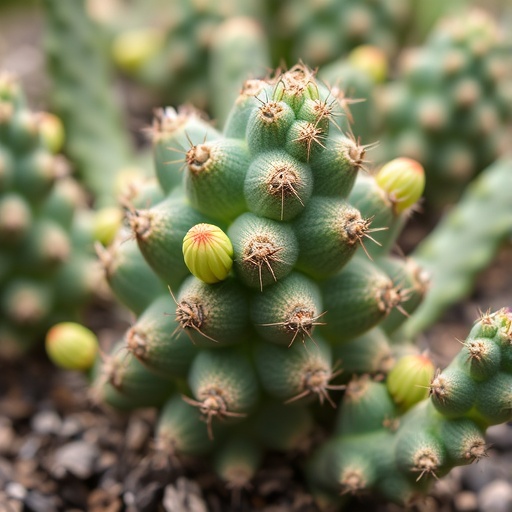
This breakthrough study, published in the microbiology journal mSphere, explores the intersection of plant microbiology and adaptive resilience to climate stressors. The research focused on fungal endophytes sourced from Stenocereus species, a genus of cacti native to arid Colombian environments. These cacti thrive in extreme heat and dryness, providing a natural reservoir of microorganisms exquisitely adapted to survive under persistent water scarcity. By isolating and screening fungal endophytes from these desert-adapted plants, scientists identified key fungal strains capable of maintaining notable biomass despite drought-like conditions imposed in the laboratory. This initial selection process highlighted five fungal isolates exhibiting exceptional resilience, priming them as candidates to confer drought tolerance when introduced into cacao rhizospheres.
Mechanistically, the incorporation of these fungal endophytes into the soil microbiome surrounding cacao roots initiated measurable physiological changes. Cacao seedlings receiving this microbial treatment demonstrated significantly improved leaf water potential under drought scenarios, indicating enhanced water retention and reduced cellular dehydration. This effect is believed to be mediated through finer regulation of stomatal conductance—the opening and closing dynamics of microscopic pores on leaf surfaces that balance CO_2 uptake for photosynthesis against water loss through transpiration. By modulating stomatal behavior, the endophytes indirectly optimize the plant’s water-use efficiency, allowing it to sustain critical metabolic functions even as external water availability declines.
Interestingly, while the height of the cacao plants remained unaffected by the fungal inoculation, there was a notable increase in leaf number and leaf size among treated groups. Such alterations suggest an improved overall vigor and potential photosynthetic capacity, even under drought-induced stress. Moreover, these plants exhibited superior recovery post-drought exposure, underscoring the functional benefits of endophyte-assisted stress tolerance. Certain genera of these fungi, including Fusarium and Phoma, were linked to enhanced growth not only in drought conditions but also under optimal watering, hinting at growth-promoting properties beyond mere stress mitigation.
Despite these encouraging phenotypic outcomes, the precise biochemical and molecular dialogues underpinning this symbiotic enhancement remain enigmatic. The researchers posit that fungal endophytes might produce signaling molecules or modulate host hormonal pathways to influence stomatal regulation, but advanced studies are required to decode these fine-scale interactions. Such insights could open doors for targeted bioengineering and formulation of endophyte-based amendments tailored for diverse crops facing climate-induced water stress.
The broader implications of this research extend beyond cacao cultivation. Given the conserved physiological responses in many plants to drought, similar microbial symbiont strategies could prove advantageous for staple crops like potatoes and tomatoes. Dr. Silvia Restrepo, senior study author and established plant pathologist affiliated with the Boyce Thompson Institute and Universidad de los Andes, envisions practical field applications where microbial bio-additives could become integral to climate-smart agriculture. These formulations, derived from robust fungal strains naturally adapted to extreme environments, present a sustainable, eco-friendly means to bolster crop resilience without reliance on chemical inputs or genetic modification.
This approach aligns with a paradigm shift in agronomy and plant sciences, where harnessing plant-microbe interactions and soil microbiome engineering gain prominence as vital responses to climatic perturbations. The global scientific community increasingly recognizes drought as a fundamental threat not only to food security but also to ecosystem stability. As such, expanding our grasp of microbial endophytes’ roles in plant health offers an avenue for innovation amid mounting ecological pressures.
In Colombia and similar cacao-producing nations, the adoption of such microbial inoculants could support local farmers confronting reduced rainfall patterns and prolonged dry spells. The ability of these endophytes to enhance water retention, promote growth, and accelerate recovery from drought episodes could translate into more consistent yields, improved livelihoods, and sustainability of cacao agriculture. This is particularly salient given the crop’s socio-economic importance across tropical regions, where smallholder farmers often grapple with the dual challenges of climate variability and limited access to agricultural inputs.
Moreover, the study exemplifies how insights derived from natural ecosystems, particularly those extremophile habitats like arid deserts, can spur innovation. The transfer of adaptive traits encoded in microorganisms from resilient wild species to vulnerable cultivated crops embodies a form of biological upcycling. It also underscores the need to preserve biodiversity, as these natural genetic and microbiological reservoirs could harbor solutions to future agricultural crises.
While the current findings offer optimism, the translation from controlled experiments to widespread agroecosystems entails further investigation. Scaling application methods, ensuring the persistence and efficacy of fungal endophytes under field conditions, and assessing potential ecological impacts constitute critical next steps. Additionally, understanding the interactions between introduced endophytes and the native soil microbiota will help optimize consortia for maximal crop benefit.
In essence, this trailblazing research elevates fungal endophytes as pivotal agents in the quest for climate-resilient agriculture. It demonstrates a novel biotechnological strategy to mitigate drought-induced stress on a crop whose beans are cherished worldwide. As climate patterns intensify and water scarcity becomes more pervasive, such innovations may be instrumental in maintaining food supply chains and supporting agro-ecological sustainability. The convergence of microbiology, plant physiology, and environmental science depicted in this work epitomizes the multidisciplinary efforts needed to confront the grand challenge of climate change.
News Publication Date: Not specified in the content provided.
Web References: https://journals.asm.org/doi/10.1128/msphere.00865-25
Cite Scienmag News
Alan Morgan. (April 13, 2026). Fungal Endophytes in Cacti Could Boost Cacao’s Drought Resilience. Scienmag. https://scienmag.com/fungal-endophytes-in-cacti-could-boost-cacaos-drought-resilience/
Alan Morgan. "Fungal Endophytes in Cacti Could Boost Cacao’s Drought Resilience." Scienmag, 13 April 2026, https://scienmag.com/fungal-endophytes-in-cacti-could-boost-cacaos-drought-resilience/. Accessed 4 September 2026.
Alan Morgan. "Fungal Endophytes in Cacti Could Boost Cacao’s Drought Resilience." Scienmag. April 13, 2026. https://scienmag.com/fungal-endophytes-in-cacti-could-boost-cacaos-drought-resilience/


