


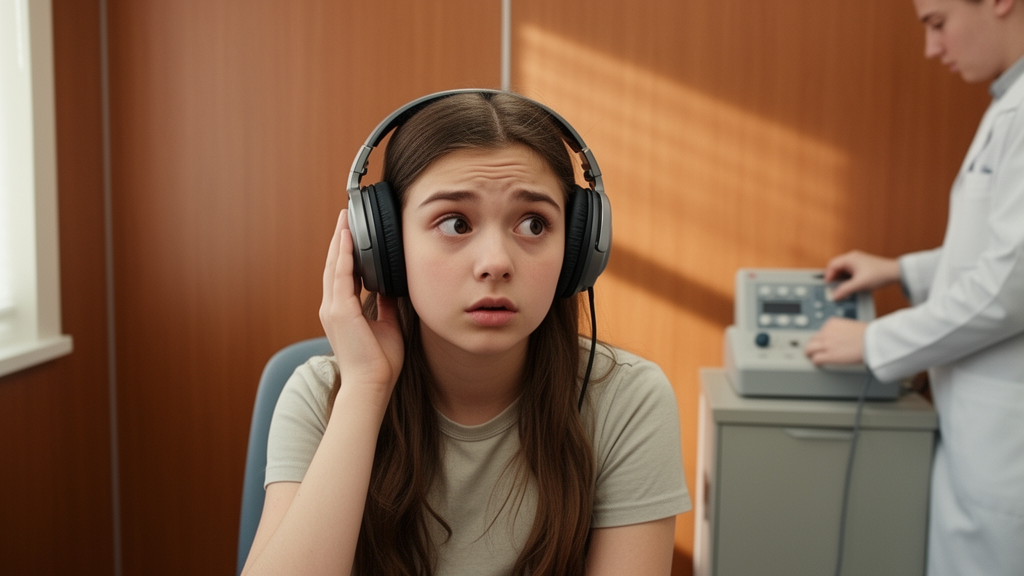
A three-year clinical case series described functional hearing loss in 21 adolescents treated at a single center. The abstract reports fluctuating or non-reproducible hearing thresholds on repeated audiometric evaluations, with 66.67% of cases involving one ear, a presentation that can resemble sudden deafness. Overall outcomes were favorable, with 95% of patients achieving complete recovery during a mean follow-up of 15.23 months.
The researchers summarized 21 cases treated at their center over three years. According to the abstract, functional hearing loss is a form of hearing impairment without identifiable organic damage to the auditory system, although the available publisher text provides no further details about how the diagnoses were established or the specific assessments and treatments used. The report therefore should be read as a descriptive clinical case series rather than evidence that a particular intervention caused recovery.
The reported factors associated with functional hearing loss included mental health issues such as anxiety and depression, reported by 23.81% of patients; academic stress, reported by 19.04%; violence by parents or teachers, reported by 14.29%; and interpersonal conflicts, reported by 4.76%. In addition, 47.62% of patients reported an unknown reason for their hearing loss. These percentages describe reported factors within the 21-case series and do not establish their prevalence among adolescents generally or demonstrate a causal relationship with functional hearing loss.
Psychological intervention was received by 55% of patients during the reported follow-up. The authors stated in the abstract that functional hearing loss should be considered in sudden-onset cases, particularly when psychological or behavioral abnormalities are present, and that early objective auditory assessment is important in unilateral hearing loss with inconsistent audiometric findings. They also emphasized accurate diagnosis and treatment and described timely, effective psychotherapy as favorable for children with dysthymic disorders. However, the abstract does not specify the intervention protocols, comparison groups, diagnostic criteria or analytic methods, and the findings are limited by the small, single-center sample and the absence of a control group.
Subject of Research: A descriptive case series of functional hearing loss and recovery in 21 adolescents treated at one center
Article Title: Unexplained sudden sensorineural hearing loss in adolescent: a warning for functional hearing loss
Article References: Zhang, K., Xin, X., Hou, B., Xu, X., Yan, T., Qiao, R., Han, X., & Zhang, H. (2026). Unexplained sudden sensorineural hearing loss in adolescent: a warning for functional hearing loss. BMC Pediatrics. https://doi.org/10.1186/s12887-026-07632-6
Image Credits: AI Generated
DOI: 10.1186/s12887-026-07632-6
Keywords: functional hearing loss, adolescent hearing, clinical case series, audiometry, mental health, psychological intervention, unilateral hearing loss, hearing recovery, Unexplained, sudden, sensorineural, hearing
Cite Scienmag News
Ophelia Keating. (October 20, 2026). Functional hearing loss in 21 adolescents: case series reports inconsistent hearing tests and favorable recovery. Scienmag. https://scienmag.com/functional-hearing-loss-in-21-adolescents-case-series-reports-inconsistent-hearing-tests-and-favorable-recovery/
Ophelia Keating. "Functional hearing loss in 21 adolescents: case series reports inconsistent hearing tests and favorable recovery." Scienmag, 20 October 2026, https://scienmag.com/functional-hearing-loss-in-21-adolescents-case-series-reports-inconsistent-hearing-tests-and-favorable-recovery/. Accessed 20 October 2026.
Ophelia Keating. "Functional hearing loss in 21 adolescents: case series reports inconsistent hearing tests and favorable recovery." Scienmag. October 20, 2026. https://scienmag.com/functional-hearing-loss-in-21-adolescents-case-series-reports-inconsistent-hearing-tests-and-favorable-recovery/


