


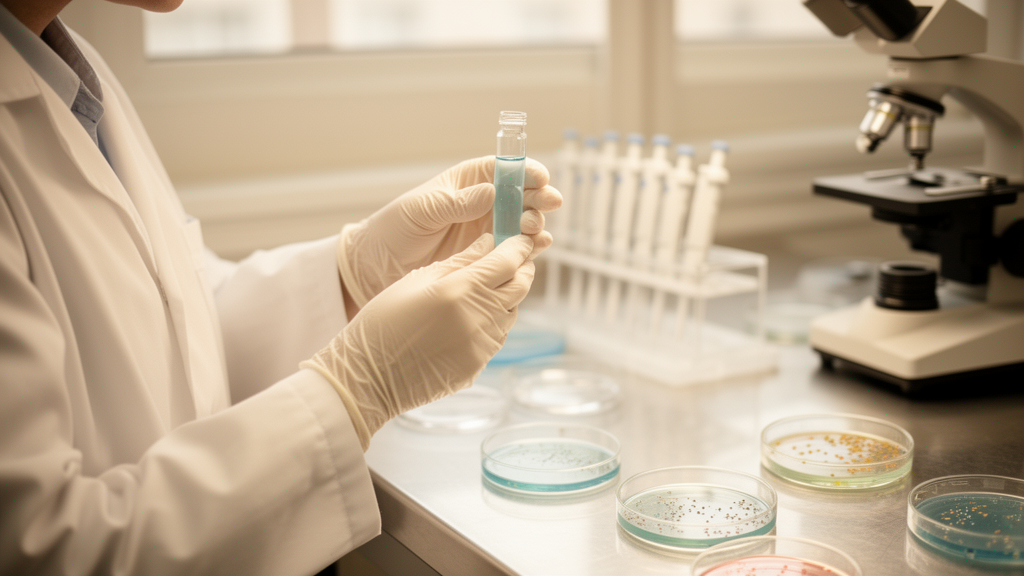
Chemical biology has quietly become one of the most consequential disciplines in modern science, and a newly published collection of research in Frontiers in Chemistry shows why. The special issue, assembled by John D. Wade of the Florey Institute of Neuroscience and Mental Health and the School of Chemistry at the University of Melbourne, gathers seven studies that together trace the arc of a field which no longer merely observes life at the molecular scale but actively rewrites it. By fusing chemical synthesis, recombinant technologies, biomolecular engineering, structural biology, proteomics, and advanced analytical chemistry, the contributors demonstrate how molecular insight can be converted into new technologies, mechanistic understanding, and therapeutic opportunities spanning neuroscience, natural products, medicinal chemistry, peptide science, antimicrobial research, and biomaterials.
The most striking example of the field’s translational power comes from Xu and colleagues, who attacked one of neuroscience’s most stubborn regulatory puzzles: the control of neuronal nitric oxide synthase, or nNOS, the enzyme that produces nitric oxide in nerve cells. Nitric oxide is a double-edged signalling molecule, critical for vascular and neural communication yet implicated in the excitotoxic damage that follows a stroke. Using an integrated pipeline of molecular modelling, peptide design, and animal studies, the team identified a specific lysine residue, K739, as a key regulatory site on the enzyme. This residue undergoes preferential deSUMOylation mediated by the enzyme SENP1, a post-translational modification event that alters the protein’s behaviour. The researchers then showed that engineered peptides derived from the calmodulin-binding domain of nNOS can influence neuroprotective outcomes after stroke, effectively demonstrating that a molecular modification identified at the atomic level can be leveraged to change physiology in a living organism.
The work exemplifies the defining ambition of chemical biology: to close the loop between mechanism and medicine. Rather than simply cataloguing that SUMOylation, the attachment of small ubiquitin-like modifier proteins, regulates nNOS, the study converts that knowledge into a designed molecular tool, a synthetic peptide, with demonstrable therapeutic relevance. It is a template for how computational prediction, rational peptide engineering, and in vivo validation can now be combined in a single research programme, and it suggests that targeting deSUMOylation pathways may open new avenues for neuroprotection that conventional small-molecule drugs have struggled to reach.
From the clinic to the herbarium, the collection also reaffirms the enduring value of nature’s chemical library. Kerroum and colleagues subjected Rheum officinale, a medicinal plant long used in traditional pharmacopoeias, to rigorous phytochemical and biological analysis. Their work identified quinic acid as a major constituent of the plant and revealed significant antioxidant, antimicrobial, and enzyme-inhibitory activities across its chemical profile. While quinic acid itself is a modest molecule, its prominence in the extract underscores a broader point: even well-studied medicinal plants continue to yield biologically active compounds and potential therapeutic leads when interrogated with modern analytical methods such as liquid chromatography coupled to mass spectrometry. The finding is a reminder that natural products research, far from being exhausted, remains a fertile hunting ground for drug discovery, particularly when paired with the sensitive detection and characterisation tools that contemporary chemical biology provides.
Medicinal chemistry takes centre stage in the contribution from Giorgi and colleagues, who reported a series of gold(I) complexes bearing N-heterocyclic carbene ligands, so-called gold(I)-NHC complexes, designed specifically for anticancer applications. Gold-based metallodrugs have attracted renewed attention as alternatives to platinum chemotherapeutics, but their clinical progress has been hampered by issues of toxicity and poor selectivity. The Italian team’s strategy hinged on structural modification, and most notably on conjugating thiosugar units to the complexes. This bioconjugation proved decisive: the thiosugar-bearing derivatives showed improved cellular uptake, greater potency, and enhanced selectivity in ovarian cancer models. The result illustrates how molecular design, bioconjugation chemistry, and biological evaluation can be integrated into a single iterative cycle, allowing chemists to tune the pharmacological properties of metal complexes with a precision that was unthinkable a generation ago.
A complementary review by Jain and Iwaoka surveys one of the hottest areas in contemporary drug design: covalent inhibitors that target cysteine and selenocysteine residues in proteins. Covalent drugs, once viewed with suspicion because of their potential for indiscriminate reactivity, have undergone a renaissance, driven in part by the success of covalent inhibitors in oncology. The review highlights both established and emerging warhead chemistries, the reactive functional groups that form the covalent bond with the target protein, and it pays particular attention to in situ activated warheads, which remain dormant until they encounter the right biochemical environment. The authors discuss the opportunities and challenges associated with achieving selectivity, reducing toxicity, and improving in vivo stability, three hurdles that determine whether a covalent strategy can survive the journey from the bench to the clinic. Their analysis underscores the growing importance of covalent approaches in precision medicine, where the ability to disable a single disease-relevant cysteine can spare an entire proteome.
Peptide science receives a provocative reassessment from Roque-Borda and colleagues, who examined lipidation, the attachment of fatty acid chains to peptides, and its influence on biological activity. Lipidation has become a fashionable strategy for improving peptide drugs, most famously in the GLP-1 receptor agonists that have transformed metabolic medicine. But the new analysis delivers a cautionary and clarifying message: improvements in potency frequently arise not from enhanced intrinsic target engagement but from altered membrane interactions, changed tissue distribution, and prolonged residence time in the body. In other words, the lipid tail often works by changing where the drug goes and how long it stays, rather than by making the drug bind its target more tightly. This distinction provides an important framework for the mechanistic interpretation and rational design of lipidated peptides, and it should inform how medicinal chemists interpret structure-activity relationships in this rapidly expanding class of molecules.
Two contributions confront antimicrobial resistance, arguably the most urgent public health challenge chemical biology faces. Baravkar and colleagues reviewed antimicrobial depsipeptides and cyclodepsipeptides, macrocyclic molecules in which peptide bonds are interspersed with ester linkages. These natural products, produced by bacteria and fungi as chemical weapons, demonstrate how subtle structural features, the stereochemistry of residues, the pattern of ester versus amide bonds, and the geometry of the macrocycle, govern interactions with bacterial membranes and with biosynthetic pathways. The review positions these macrocyclic peptides as both valuable molecular probes for dissecting bacterial biology and promising scaffolds for the development of new antibiotics, a pipeline that desperately needs replenishment as resistance genes spread across pathogens.
The final contribution, by Wilde and colleagues, extends the antimicrobial theme from molecules to materials. Inspired by natural antimicrobial peptides, the team examined the interactions of polymer-based materials with bacterial membranes, seeking the mechanistic rules that determine whether a synthetic surface kills bacteria on contact. By elucidating how polymer architecture, charge density, and hydrophobicity dictate membrane disruption, the authors provide mechanistic insight that supports the rational development of next-generation antimicrobial surfaces and coatings for healthcare and community settings. In an era of rising concern about hospital-acquired infections and contaminated surfaces, materials that resist bacterial colonisation by design, rather than by leached biocides, represent a compelling frontier.
Taken together, the seven articles collected in this Research Topic underscore the breadth and vitality of modern chemical biology. Spanning neurobiology, natural products, medicinal chemistry, peptide science, antimicrobial research, and biomaterials, they demonstrate how molecular-level investigation continues to generate fundamental biological insight while inspiring new therapeutic and technological opportunities. What unites them is a shared methodology: the deliberate integration of synthesis, computation, structural analysis, and biological testing to solve problems that no single discipline could address alone. As the field matures, the boundary between understanding biology and engineering it grows ever thinner, and the studies gathered here suggest that the next decade of chemical biology will be defined not by what researchers can observe, but by what they can design. Wade anticipates that the collection will stimulate further advances across the many disciplines that contribute to, and benefit from, contemporary chemical biology, a prediction that the quality of the underlying work makes easy to believe.
Subject of Research: Chemical biology research advances in neuroscience, natural products, medicinal chemistry, peptide science, and antimicrobial materials
Article Title: Editorial: Advancements in chemical biology
Article References: Editorial: Advancements in chemical biology. (n.d.). https://doi.org/10.3389/fchem.2026.2014579
Image Credits: AI Generated
DOI: 10.3389/fchem.2026.2014579
Keywords: chemical biology, neuronal nitric oxide synthase, deSUMOylation, gold(I)-NHC complexes, covalent inhibitors, natural products, lipidated peptides, depsipeptides, antimicrobial resistance, antimicrobial peptides, peptide science, bioconjugation
Cite Scienmag News
Cassandra Pierce. (October 16, 2026). From Stroke Recovery to Superbug Killers: Chemical Biology’s New Toolkit. Scienmag. https://scienmag.com/from-stroke-recovery-to-superbug-killers-chemical-biologys-new-toolkit/
Cassandra Pierce. "From Stroke Recovery to Superbug Killers: Chemical Biology’s New Toolkit." Scienmag, 16 October 2026, https://scienmag.com/from-stroke-recovery-to-superbug-killers-chemical-biologys-new-toolkit/. Accessed 16 October 2026.
Cassandra Pierce. "From Stroke Recovery to Superbug Killers: Chemical Biology’s New Toolkit." Scienmag. October 16, 2026. https://scienmag.com/from-stroke-recovery-to-superbug-killers-chemical-biologys-new-toolkit/


