


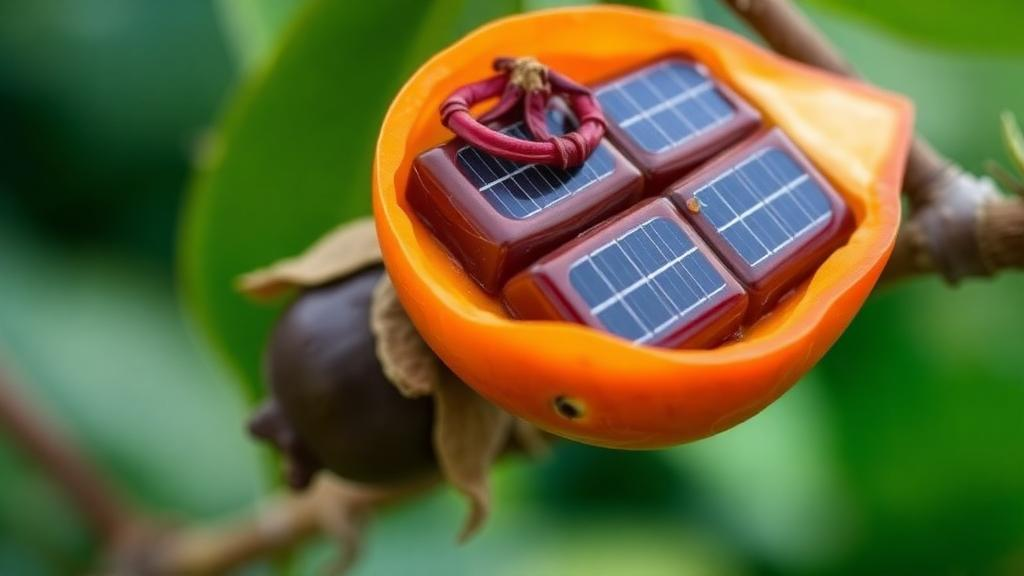
The mangosteen, Garcinia mangostana, has long been celebrated across Southeast Asia as the “queen of fruits,” prized for its sweet, juicy flesh. But according to a comprehensive new review published in Discover Chemistry by researchers at the National Institute of Fundamental Studies in Kandy, Sri Lanka, the real treasure may lie in the part that is usually thrown away. The thick, purple pericarp, which makes up more than 60 percent of the fruit’s weight, is loaded with bioactive xanthones, phenolic acids, anthocyanins, flavonoids and tannins, and is now being repurposed for applications that stretch far beyond traditional medicine, from wound dressings and anti-acne serums to solar cells, corrosion inhibitors and wastewater cleanup.
The phytochemistry alone is striking. The epicarp contains roughly 160 aromatic compounds, while the endocarp harbors about 105 distinct chemical constituents, including at least 70 identified xanthones. The pericarp’s antioxidant activity has been reported to be up to 20 times greater than that of the edible pulp. Among the star molecules are alpha-mangostin, gamma-mangostin, garcinone E and gartanin, prenylated xanthones whose biological effects are tightly linked to their structure. Studies of gamma- and alpha-mangostin analogues show that the C-6 and C-3 hydroxyl groups, together with the C-2 prenyl side chain of 1,3,6,7-tetraoxygenated xanthones, are critical for potent antibacterial activity, with gamma-mangostin inhibiting MRSA at a concentration of just 3.13 micrograms per milliliter.
On the therapeutic front, the review documents an unusually broad portfolio of activities. Mangosteen pericarp patches achieved wound-healing rates of up to 83 percent over 21 days in burn injuries, while a bacterial cellulose dressing loaded with 10 percent pericarp extract reduced wound area to just 3 percent by day 15 in a Wistar rat model. In dentistry, mouthwash containing pericarp extract significantly reduced gingival inflammation in a randomized controlled trial, and toothpaste formulations showed antifungal activity against Candida albicans. Liposomes loaded with pericarp extract displayed potent antibacterial effects against Staphylococcus species in a murine model of superficial skin infection, reducing bacterial load and lesion size without cytotoxicity to keratinocyte cells.
The molecular mechanisms are increasingly well mapped. Alpha-mangostin exhibits the lowest binding energy with COX-2 and NF-kappaB proteins in computational models, and in vitro it suppresses production of prostaglandin E2, nitric oxide and iNOS, while reducing the inflammatory cytokines TNF-alpha and IL-6 at concentrations of 8 and 14 micrograms per milliliter. In vivo, it markedly reduced leukocyte and neutrophil migration. The same compound shows anti-diabetic potential by modulating PPAR-gamma, DPP-4 and aldose reductase, with binding affinities comparable to clinically available drugs, and anticancer effects mediated through mitochondrial apoptosis, upregulation of the pro-apoptotic protein BAX and activation of caspases-3 and -9. Cholinesterase inhibition adds a neurodegenerative dimension: garcinone C emerged as the most potent acetylcholinesterase inhibitor with an IC50 of 1.24 micromolar, while gamma-mangostin most effectively inhibited butyrylcholinesterase.
The cosmetics industry has taken notice. A natural shampoo formulated with standardized pericarp extract showed effective cleansing, antimicrobial activity against the dandruff-associated fungus Malassezia furfur and antioxidant potential. An anti-acne facial serum built on mangosteen extract delivered strong antioxidant activity with an IC50 of 0.19 ppm and inhibited acne-causing bacteria including Staphylococcus aureus and Propionibacterium acnes. Alpha-mangostin is increasingly valued for anti-ageing and skin-hydration properties, and herbal face creams containing the extract exhibited both antioxidant and tyrosinase-inhibition activity. Even lip products are in on the act: hedonic testing suggests pericarp extract is a safe, consumer-accepted natural colorant.
Perhaps the most surprising application is in renewable energy. Anthocyanins such as cyanidin-3-sophoroside and cyanidin-3-glucoside, along with alpha-mangostin, can act as photosensitizers in dye-sensitized solar cells. A binary dye system combining anthocyanins and alpha-mangostin reached 1.32 percent efficiency, while alpha-mangostin sensitization achieved up to 1.78 percent in acidified acetone. Adding chenodeoxycholic acid as a co-adsorbent lifted efficiency from 0.36 to 0.56 percent, and co-pigmentation with benzoic acid raised anthocyanin-based cell efficiency from 0.2273 to 0.3709 percent. Most impressively, a cell using carbonized mangosteen peel as a natural counter electrode with an organic disulfide/thiolate electrolyte achieved 2.63 percent conversion efficiency, rivaling platinum-based designs.
Mangosteen is also becoming a feedstock for nanomaterials. Carbon dots, quasi-spherical fluorescent particles under 10 nanometers, have been synthesized from mangosteen pulp and pericarp using simple, reagent-free calcination or green hydrothermal methods. These dots detect ferric ions down to 52 nanomolar, label human colon cancer cells for bioimaging, catalyze the reduction of methylene blue, and enhance both the photostability and tensile strength of PVC films for UV-exposed packaging. Activated carbon derived from the pericarp delivered a specific capacitance of 274.5 farads per gram with 94.5 percent retention after 10,000 charge-discharge cycles, pointing toward sustainable supercapacitors. Meanwhile, pericarp extracts serve as natural reducing and capping agents for green synthesis of gold, silver and zinc oxide nanoparticles with antimicrobial and anticancer properties.
Environmental and agricultural uses round out the picture. Pericarp fibers removed 88.23 percent of crystal violet dye from alkaline wastewater, a chitosan composite with oxalic-acid-activated pericarp adsorbed 398.7 milligrams of the dye per gram, and MgO-TiO2-modified peel beads removed cadmium ions and methylene blue with over 87 percent efficiency across three reuse cycles. Green-synthesized copper nanoparticles removed roughly 92 percent of the antibiotic ciprofloxacin from water within a pH range of 6 to 7. In agriculture, zinc oxide nanoparticles made from pericarp extract inhibited the rice blight pathogen Xanthomonas oryzae while boosting chlorophyll content in rice plants, and a pericarp nano-emulsion improved growth, immunity and disease resistance in Nile tilapia farming.
The food industry, finally, is exploiting the whole fruit: pericarp powder enriches bread and cakes, pulp extract fills pastries, freeze-dried powder goes into cookie dough, and rind juice colors jams while raising anthocyanin and antioxidant levels. Yet the review’s authors are candid about the hurdles. Clinical studies remain scarce, most applications are confined to the laboratory, extraction and nanoparticle synthesis protocols lack standardization, and the bioavailability of key xanthones is limited, though nanomicelles have boosted alpha-mangostin solubility more than 10,000-fold. Reliable peel supply, preservation technologies and scalable green extraction methods will be essential. If those challenges are met, the thick purple husk of the queen of fruits could evolve from agricultural waste into one of the most versatile sustainable bioresources in modern chemistry.
Subject of Research: Multidisciplinary applications of bioactive compounds and nanomaterials derived from Garcinia mangostana pericarp
Article Title: Comprehensive review on applications of Garcinia mangostana
Article References: Bandara, Y. G. A. D. K., Piyasena, K. G. N. P., & Jayasinghe, L. (2026). Comprehensive review on applications of Garcinia mangostana. Discover Chemistry, 3(1), Article 545. https://doi.org/10.1007/s44371-026-00981-2
Image Credits: AI Generated
DOI: 10.1007/s44371-026-00981-2
Keywords: Garcinia mangostana, mangosteen pericarp, xanthones, alpha-mangostin, dye-sensitized solar cells, carbon dots, green synthesis, nanoparticles, corrosion inhibition, wastewater treatment, cosmetics, wound healing
Cite Scienmag News
Bethany Barker. (October 2, 2026). From Fruit Waste to Solar Cells: Mangosteen Peel Emerges as a Multitasking Bioresource. Scienmag. https://scienmag.com/from-fruit-waste-to-solar-cells-mangosteen-peel-emerges-as-a-multitasking-bioresource/
Bethany Barker. "From Fruit Waste to Solar Cells: Mangosteen Peel Emerges as a Multitasking Bioresource." Scienmag, 2 October 2026, https://scienmag.com/from-fruit-waste-to-solar-cells-mangosteen-peel-emerges-as-a-multitasking-bioresource/. Accessed 4 October 2026.
Bethany Barker. "From Fruit Waste to Solar Cells: Mangosteen Peel Emerges as a Multitasking Bioresource." Scienmag. October 2, 2026. https://scienmag.com/from-fruit-waste-to-solar-cells-mangosteen-peel-emerges-as-a-multitasking-bioresource/


