


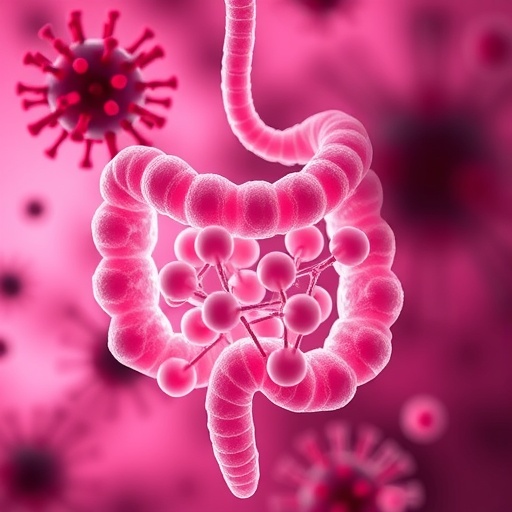
A new study published in Nature Communications reports that bacteria normally living alongside humans may help suppress viral infections by producing a metabolite derived from tryptophan, an amino acid obtained through the diet and used by cells to build proteins and signaling molecules. The work by Jiang, Soo, Tan and colleagues adds to growing evidence that the microbiome is not merely a passive community of organisms occupying the body. Instead, commensal bacteria can actively influence how tissues respond to invading viruses, potentially creating a biochemical layer of protection before the immune system mounts a full defensive response.
The finding places microbial metabolism at the center of antiviral biology. Viruses depend on host cells for nearly every stage of their life cycle, including entry, genome replication, protein production and the assembly of new viral particles. At the same time, host cells continuously monitor their surroundings for signs of infection and adjust their metabolism, gene activity and immune signaling accordingly. Metabolites produced by bacteria can affect these processes by acting as signaling molecules, altering cellular enzymes or changing the chemical environment in which infection takes place. The study suggests that one such molecule, generated from tryptophan by commensal bacteria, can interfere with viral infection through mechanisms that connect the microbiome to intracellular antiviral defenses.
Tryptophan metabolism is particularly important because it sits at the intersection of nutrition, immunity and cellular communication. In mammals, tryptophan can be processed through several biochemical routes, generating compounds that influence inflammatory signaling, barrier tissues and the activity of immune cells. Bacteria possess their own enzymatic pathways for transforming the amino acid, and the products of those reactions may reach nearby epithelial cells or circulate to more distant organs. By identifying a tryptophan-derived bacterial metabolite with antiviral activity, the researchers highlight how a dietary nutrient can be converted by the microbiome into a molecule capable of changing the outcome of viral exposure.
The biological significance of the result lies in its focus on commensal organisms rather than classical pathogens or laboratory-engineered probiotic strains. Commensal bacteria are members of the microbial communities that inhabit sites such as the intestine, airways and skin without normally causing disease. Their influence is often indirect: they compete with harmful microbes, strengthen physical barriers and educate immune cells. The findings described in the study suggest an additional role, in which bacterial chemistry directly modifies the susceptibility of host cells to viral infection. This expands the concept of colonization resistance, traditionally associated with protection against competing bacteria, to include a degree of resistance against viruses.
For a virus, the presence of an antiviral metabolite could affect infection at several points. A molecule may make host cells less permissive to viral entry, interfere with the cellular machinery required for genome replication or promote the expression of antiviral genes. It may also influence the balance between protective inflammation and tissue-damaging immune activation. The precise route depends on the chemical identity of the metabolite and the virus being studied, but the general principle is important: microbial products can act before, during or after infection to reshape the cellular environment on which a virus relies. Rather than attacking viral particles directly like a conventional antiviral drug, the metabolite may work by preparing the host cell to respond more effectively.
This distinction could prove valuable in antiviral research. Many antiviral medicines are designed against specific viral enzymes or structural proteins, making them highly effective in some infections but less useful when viruses evolve resistance or when a new virus emerges. A host-directed mechanism based on a microbial metabolite might target cellular pathways that viruses cannot easily change without compromising their own replication. It could therefore offer activity across related viruses, although such breadth would need to be demonstrated experimentally. Host-directed strategies also require careful evaluation, because the same pathways that limit viral replication can influence inflammation, metabolism and other physiological processes.
The study also raises questions about why individuals may differ in their vulnerability to infection. Microbiome composition varies widely between people and can be altered by diet, age, medication, illness, geography and immune status. Two individuals exposed to the same virus may therefore carry different populations of bacteria, with different capacities to produce antiviral metabolites. Antibiotics or disruptions to the intestinal community could potentially reduce the availability of protective compounds, while dietary patterns or targeted microbial interventions might increase it. These possibilities remain to be tested, but they provide a biological framework for understanding how the microbiome could contribute to variation in viral disease without replacing the established roles of vaccination, immune memory and direct antiviral treatment.
Translating the discovery into a medical intervention will require several stages of research. Scientists will need to determine how much of the metabolite is produced in humans, where it accumulates, how long it persists and whether its concentrations change during infection. They must also establish whether protection depends on a particular bacterial species, a broader microbial community or a defined combination of organisms. The safety profile will be equally important. A compound that suppresses viral replication in cultured cells may behave differently in living tissues, where metabolism, transport and immune responses can alter its effects. Clinical studies will be needed to establish whether manipulating this pathway can prevent infection, reduce disease severity or improve recovery.
For now, the work offers a significant conceptual advance in viral science: the body’s microbial residents can contribute to antiviral defense by transforming ordinary nutrients into biologically active signals. It presents the microbiome as a biochemical partner in host protection, not simply as a collection of organisms competing for space. As researchers continue to map the molecules produced by commensal bacteria, similar pathways may emerge linking microbial metabolism to resistance against a range of viral diseases. The discovery does not suggest that a single metabolite can replace existing public-health measures, but it points toward a future in which antiviral strategies may combine direct drugs with therapies designed to support the chemical defenses generated by the microbiome.
Cite Scienmag News
Kristina Jarvis. (August 13, 2026). Friendly gut bacteria curb viral infections with a tryptophan-derived metabolite. Scienmag. https://scienmag.com/friendly-gut-bacteria-curb-viral-infections-with-a-tryptophan-derived-metabolite/
Kristina Jarvis. "Friendly gut bacteria curb viral infections with a tryptophan-derived metabolite." Scienmag, 13 August 2026, https://scienmag.com/friendly-gut-bacteria-curb-viral-infections-with-a-tryptophan-derived-metabolite/. Accessed 3 September 2026.
Kristina Jarvis. "Friendly gut bacteria curb viral infections with a tryptophan-derived metabolite." Scienmag. August 13, 2026. https://scienmag.com/friendly-gut-bacteria-curb-viral-infections-with-a-tryptophan-derived-metabolite/


