


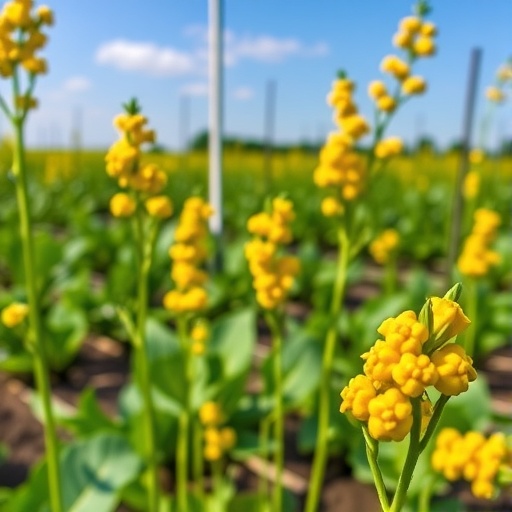
In recent years, the topic of heavy metal contamination in the environment has garnered significant attention, especially concerning its impact on agricultural productivity and human health. Among the various toxic elements, mercury stands out as one of the most hazardous. Its presence in soil can cause severe repercussions for crops, ecosystems, and the food chain. Naturally, researchers are exploring innovative approaches to mitigate mercury levels in soil, with one promising area being phytoremediation—the use of plants to absorb and detoxify contaminants. A recent study has shed light on the effectiveness of canola, specifically Brassica napus L., in the remediation of mercury-contaminated environments through the application of folic acid.
The study led by Naz, Ahmad, and Saleem meticulously investigates how folic acid can enhance the ability of canola plants to withstand and remediate mercuric chloride (HgCl2) stress. This research is crucial, given the increasing levels of mercury in agricultural soils, often a consequence of industrial activities and improper waste disposal. The researchers aimed to uncover the physiological and biochemical mechanisms behind canola’s adaptive responses when exposed to this toxic metal, providing insights that could lead to more effective environmental cleanup strategies.
Phytoremediation is not a new concept; however, the integration of folic acid—a B-vitamin known for its numerous physiological roles—into this process provides a novel approach. Folic acid has been observed to promote plant growth and development under stress conditions, suggesting it may serve as a protective agent against the detrimental effects of mercury toxicity. By enhancing the plant’s natural ability to resist metal stress, folic acid could significantly improve the efficiency of the phytoremediation process.
In this groundbreaking study, the researchers established a series of controlled experiments to evaluate canola’s response to varying concentrations of mercuric chloride. The introduction of folic acid in these experiments aimed to determine its potential to mitigate mercury’s oxidative stress on the plants. The findings revealed that plants treated with folic acid exhibited significantly better growth parameters compared to those that were not. This was particularly evident in terms of root length, biomass accumulation, and overall plant vigor, indicating that folic acid may bolster the plant’s ability to cope with mercury-induced stress.
At the biochemical level, the application of folic acid was found to induce the production of various antioxidants in canola plants. These antioxidants are crucial in neutralizing reactive oxygen species (ROS), which are harmful byproducts generated when plants are exposed to heavy metals like mercury. By modulating the antioxidant defense mechanism, folic acid helps to maintain cellular homeostasis and prevent oxidative damage, which is vital for plant survival under stressful conditions.
Furthermore, the study goes beyond mere plant physiology to explore the molecular mechanisms at play. Researchers identified specific genes that are upregulated in canola plants upon folic acid treatment and exposure to HgCl2. These genes are involved in detoxification processes and contribute to the plant’s enhanced ability to tolerate heavy metal stress. This genomic data provides a deeper understanding of the relationship between folic acid and mercury tolerance, paving the way for potential biotechnological applications in crop improvement.
The insights gained from this research not only contribute to the field of environmental science but also have practical implications for agriculture. As farmers strive to produce safe and nutritious food amid rising soil contamination, employing strategies like folic acid-assisted phytoremediation could offer a sustainable solution. It emphasizes the potential role of biofertilizers and natural compounds in enhancing crop resilience while simultaneously addressing soil health.
With the looming threat of heavy metal pollution, enhancing our understanding of phytoremediation methods becomes increasingly essential. Canola, a widely cultivated crop known for its oil production, serves as a vital candidate for exploring phytoremediation techniques. The utilization of folic acid in this context could revolutionize the way we approach soil decontamination and ensure a cleaner environment for future generations.
Moreover, the implications extend beyond agricultural applications. Cleaner soil translates to healthier plants, which in turn leads to safer food for consumers. This link is crucial as food safety has become a paramount concern globally, with heavy metals posing significant health risks. Effective remediation techniques could reduce the likelihood of mercury contamination in the food chain, thereby protecting public health.
The potential of this research triggers considerations for future studies, including field trials and large-scale implementations of folic acid-mediated phytoremediation systems. The advancement of such initiatives would demand collaboration among scientists, policymakers, and agricultural stakeholders to ensure that the findings translate into actionable strategies on the ground. By focusing on sustainable practices, we can achieve a dual goal of enhancing crop productivity and mitigating environmental pollution.
In summary, the recent findings elucidate the role of folic acid in improving canola’s ability to remediate mercury contamination in soils. As the world grapples with the challenges posed by heavy metals, this approach represents a beacon of hope for reclaiming polluted lands. By harnessing the natural strengths of plants in conjunction with scientifically informed interventions, we can pave the way for a more sustainable and healthy agricultural future.
In conclusion, the journey towards tackling soil contamination through innovative agricultural practices is crucial. The research highlights that with the right interventions, such as the application of folic acid, we can empower crops to not only survive but thrive in the presence of toxic elements. This radical shift in understanding how to utilize plants for environmental cleanup might be a key component in addressing one of the pressing issues of our time: soil and food sustainability.
As the narrative around agricultural sustainability continues to evolve, studies like this one play a critical role in informing best practices and promoting environmentally friendly methods that can make a significant difference in our quest for cleaner soils and healthier crops.
Naz, E., Ahmad, M.S.A., Saleem, M.A. et al. Folic acid-mediated phytoremediation by canola (Brassica napus L.) under mercuric chloride (HgCl2) stress. Discov Agric 3, 263 (2025). https://doi.org/10.1007/s44279-025-00282-9
Cite Scienmag News
Alan Morgan. (December 12, 2025). Folic Acid Enhances Canola’s Mercury Stress Resistance. Scienmag. https://scienmag.com/folic-acid-enhances-canolas-mercury-stress-resistance/
Alan Morgan. "Folic Acid Enhances Canola’s Mercury Stress Resistance." Scienmag, 12 December 2025, https://scienmag.com/folic-acid-enhances-canolas-mercury-stress-resistance/. Accessed 6 September 2026.
Alan Morgan. "Folic Acid Enhances Canola’s Mercury Stress Resistance." Scienmag. December 12, 2025. https://scienmag.com/folic-acid-enhances-canolas-mercury-stress-resistance/


