


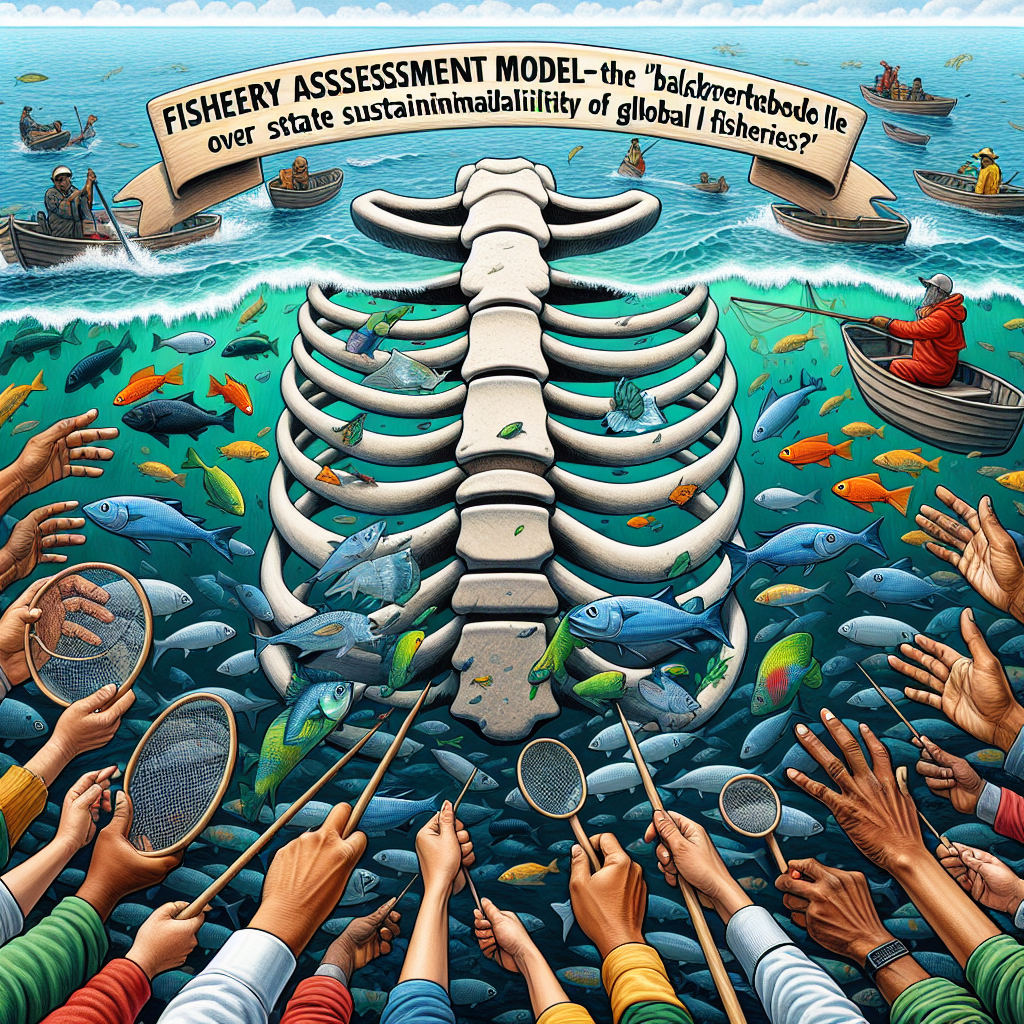
Fishery assessment models overestimate the sustainability of the world’s fisheries, according to a study of 230 fisheries worldwide, and populations of many overfished species are in far worse condition than has been reported. The findings highlight the need for much more cautious fisheries management strategies. To ensure fishery sustainability, managed catch limits should not exceed the productive ability of fish populations. They should also allow depleted stocks to rebuild. Fisheries management relies on complex stock assessment models that integrate extensive data related to fish biology, catch history, and management controls. These models, which can involve many different parameters, are prone to overfitting, increasing the uncertainties in their estimates. While simpler methods are often validated against these complex models, the true accuracy of the models remains unclear since actual fish biomass is difficult to assess and rarely directly observed. As such, global fisheries assessments, such as those by the Food and Agriculture Organization of the United Nations (FAO) – the international organization tasked with evaluating and ensuring fisheries sustainability – may be skewed by model estimations that mask true stock decline.
Fishery assessment models overestimate the sustainability of the world’s fisheries, according to a study of 230 fisheries worldwide, and populations of many overfished species are in far worse condition than has been reported. The findings highlight the need for much more cautious fisheries management strategies. To ensure fishery sustainability, managed catch limits should not exceed the productive ability of fish populations. They should also allow depleted stocks to rebuild. Fisheries management relies on complex stock assessment models that integrate extensive data related to fish biology, catch history, and management controls. These models, which can involve many different parameters, are prone to overfitting, increasing the uncertainties in their estimates. While simpler methods are often validated against these complex models, the true accuracy of the models remains unclear since actual fish biomass is difficult to assess and rarely directly observed. As such, global fisheries assessments, such as those by the Food and Agriculture Organization of the United Nations (FAO) – the international organization tasked with evaluating and ensuring fisheries sustainability – may be skewed by model estimations that mask true stock decline.
To evaluate the accuracy of stock biomass estimates, Graham Edgar and colleagues analyzed publicly available data on 230 of the world’s largest fisheries. Edgar et al. compared stock sizes reported to fisheries managers at the time of historical stock assessments with estimates from updated hindcast models for the same year using the most current and comprehensive data. The findings uncovered significant biases in stock biomass estimates, particularly for overfished stocks. Initial assessments often overstated stock sizes, leading to underestimations of how severely stocks had been depleted. According to the authors, 85% more stocks than are currently recognized have likely collapsed below 10% of maximum of their historical biomass. This bias was most pronounced near critical depletion thresholds, where reduced fishing pressure was required. “The findings of Edgar et al. underscore how systematic bias in stock estimates can lead to management advice that is not sufficiently conservative to sustain productive fish populations,” write Rainer Froese and Daniel Pauly in a related Perspective. “Efforts on several fronts are needed to improve the accuracy of stock assessment models that serve as the backbone of effective fisheries management.”
Journal
Science
Article Title
Stock assessment models overstate sustainability of the world’s fisheries
Article Publication Date
23-Aug-2024
Cite Scienmag News
Sloane Callahan. (August 22, 2024). Fishery assessment models – the “backbone” of fisheries management – overstate sustainability of global fisheries. Scienmag. https://scienmag.com/fishery-assessment-models-the-backbone-of-fisheries-management-overstate-sustainability-of-global-fisheries/
Sloane Callahan. "Fishery assessment models – the “backbone” of fisheries management – overstate sustainability of global fisheries." Scienmag, 22 August 2024, https://scienmag.com/fishery-assessment-models-the-backbone-of-fisheries-management-overstate-sustainability-of-global-fisheries/. Accessed 4 September 2026.
Sloane Callahan. "Fishery assessment models – the “backbone” of fisheries management – overstate sustainability of global fisheries." Scienmag. August 22, 2024. https://scienmag.com/fishery-assessment-models-the-backbone-of-fisheries-management-overstate-sustainability-of-global-fisheries/


