


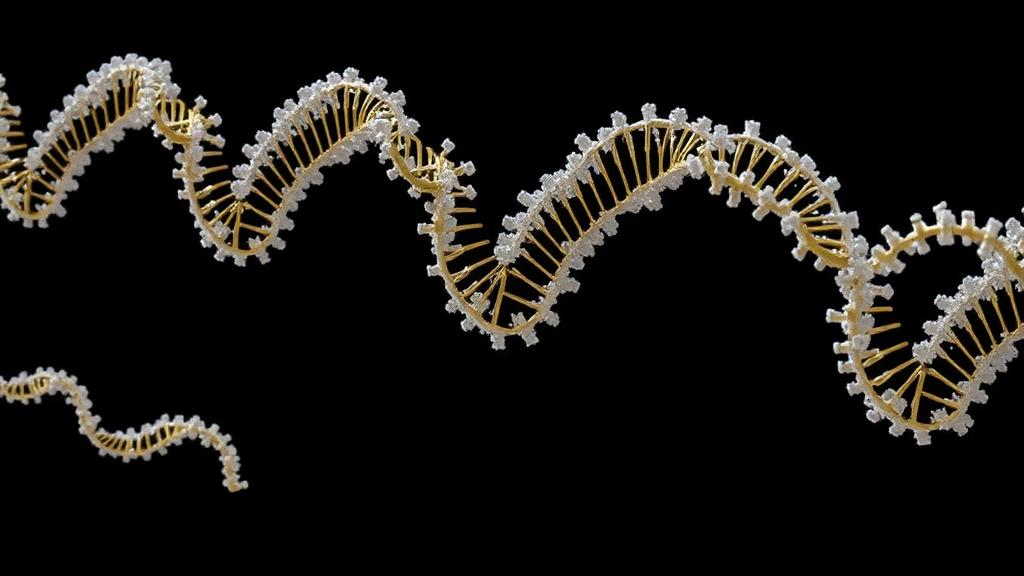
Licorice has been prized for thousands of years as a medicine, a sweetener and a flavoring agent, yet the genetic foundations of its most valuable chemistry have remained stubbornly obscure. Now a research team led by Professor Hongbin Li of Shihezi University in China has reported the first complete, gap-free telomere-to-telomere (T2T) reference genome of Glycyrrhiza uralensis, the most widely used licorice species in traditional medicine, together with high-quality chromosome-scale assemblies for the two other species officially recorded in the Chinese Pharmacopoeia, G. inflata and G. glabra. The study, published in Science China Life Sciences, also combines population genomics of 188 wild accessions with molecular experiments to identify a gene regulatory module that simultaneously governs the production of a key medicinal compound and tolerance to the harsh desert climates where licorice grows.
Telomere-to-telomere assemblies represent the current gold standard of genome sequencing. Rather than leaving gaps where repetitive DNA confounds reconstruction, a T2T genome traces each chromosome from one physical end to the other, capturing centromeres, telomeres and other tandemly repeated regions that earlier draft assemblies simply omitted. For licorice, this mattered because the genus had long lacked near-complete genome assemblies, limiting both the study of how bioactive metabolites such as glycyrrhizic acid, liquiritin, licochalcone A and glabridin are synthesized and the investigation of how these plants endure extreme aridity, salinity and heat. The new G. uralensis T2T assembly resolves all eight chromosomes with complete telomeres and fully characterized centromeres, providing a reference against which other licorice genomes and populations can be aligned with confidence.
A particularly striking technical achievement of the assembly is its characterization of centromeric DNA. The researchers identified two centromeric tandem repeat monomers, designated Cen60 and Cen307, with the latter appearing to be specific to chromosome 4 of G. uralensis. To confirm that these repeat sequences genuinely mark the centromeres rather than being assembly artifacts, the team performed oligo-fluorescence in situ hybridization (FISH) experiments using eight chromosome-specific painting probes together with probes for Cen60 and Cen307. The cytological results matched the sequence-based predictions, anchoring the computational assembly to physical chromosome structure. In parallel with the T2T effort, the consortium produced chromosome-level assemblies for all three pharmacopoeia species, enabling comparative analyses of synteny across the genus and a Circos-plot visualization of structural relationships among the genomes.
With high-quality references in hand, the team turned to natural diversity. They generated re-sequencing data for 188 wild licorice accessions collected across Xinjiang, a region in northwestern China where vast desert and semi-desert habitats harbor major wild licorice populations. From these data, the researchers constructed a large-scale genomic variation map that catalogues millions of single-nucleotide polymorphisms, insertions and deletions across the genus. Population-genomic analyses revealed a clear pattern of geographic and genetic differentiation shaped by the Tianshan Mountains, a massive range that divides Xinjiang into distinct ecological zones. G. uralensis was found mainly in the northern Xinjiang region (XJN), G. inflata dominates the hotter, more arid southern region (XJS), and G. glabra occurs across the whole region, a distribution that hints at different adaptive histories among the three species.
The population dataset allowed the researchers to move beyond simple cataloguing. They delineated core germplasm groups for G. uralensis and G. inflata, providing breeders with a structured picture of the diversity available for future crossing and selection programs. The analyses also detected extensive introgression between species, meaning that the genomes of wild licorice plants carry DNA segments exchanged through interspecies hybridization events. Such gene flow is scientifically significant because it can transfer adaptive alleles across species boundaries, and it is practically important for breeding programs that may seek to combine the chemical richness of one species with the environmental robustness of another.
To connect genome variation to the traits that make licorice valuable, the team performed selective-sweep scans across the genomes. These scans look for regions where genetic diversity has been unusually reduced, a signature that natural or artificial selection has favored certain haplotypes. In the licorice genomes, dozens of genes under selection were identified, many of them annotated with roles in triterpenoid and flavonoid biosynthesis, the two metabolic pathways that generate glycyrrhizic acid, liquiritin and the chalcone-type flavonoid licochalcone A. This observation suggests that the medicinal chemistry of licorice has been shaped by evolutionary pressures on its wild populations, and it gave the researchers a focused set of candidate genes for downstream validation.
The pivotal step was to integrate multiple layers of functional information. The team combined tissue-specific transcriptome data, RNA-sequencing experiments under abiotic stress treatments, correlation analyses between gene expression and climate variables at collection sites, and a genome-wide association study (GWAS) linking genetic variants to metabolite content. Converging evidence from all four approaches pointed to a single gene, 4CL5, as a major determinant of licochalcone A accumulation. This gene encodes a 4-coumarate-CoA ligase, an enzyme family that channels precursors into phenylpropanoid and flavonoid branches of plant metabolism. Licochalcone A is one of the most intensively studied licorice constituents, noted for anti-inflammatory and other pharmacological activities, so identifying a genetic control point for its production carries both basic-science and applied significance.
Molecular experiments then established the regulatory mechanism. Using yeast one-hybrid screening, dual-luciferase reporter assays and electrophoretic mobility shift assays (EMSA), the researchers demonstrated that a transcription factor named GiPHL1 physically binds a specific DNA motif, the P1BS cis-element, located in the promoter of the Gi4CL5 gene in G. inflata. The prefix Gi denotes the G. inflata orthologs. Binding of GiPHL1 to the P1BS element activates transcription of Gi4CL5, thereby enhancing flux into the pathway that produces licochalcone A. The GiPHL1-Gi4CL5 regulatory module, therefore, functions as a coordinated switch that promotes the biosynthesis of a medicinally important flavonoid.
What makes the discovery especially compelling is that this same module appears to serve two purposes at once. In addition to driving licochalcone A accumulation, the pathway activity it controls contributes to improved stress resistance in G. inflata, the species that thrives in the hot, arid habitats of southern Xinjiang. This dual function offers an elegant evolutionary explanation for why a compound of pharmaceutical interest would be maintained at high levels in wild plants: chalcone-type metabolites can participate in plant defense and stress mitigation, so selection for desert survival may have inadvertently enriched the chemical treasury that human medicine values. The finding thus links metabolite biosynthesis and environmental adaptation in a single genetic circuit, a connection that had long been suspected but not genetically resolved in licorice.
The practical implications of the work extend across several fronts. For molecular breeding, the candidate genes and molecular markers emerging from the selective-sweep, GWAS and regulatory analyses provide tools for precision selection, allowing breeders to develop licorice varieties with higher yields of glycyrrhizic acid, licochalcone A and other active compounds while also carrying alleles that confer stronger tolerance to drought and heat. For synthetic biology, the identification of specific biosynthetic and regulatory genes such as Gi4CL5 and GiPHL1 supplies components that could be deployed in engineered microbes or plant systems to produce licorice-derived substances without harvesting wild populations. The T2T and chromosome-scale reference genomes themselves will serve as foundational infrastructure for future genetics in the genus, much as complete reference genomes have transformed research in rice, maize and other crops. As demand for licorice continues in pharmaceuticals, food and industrial manufacturing, the new genomic resources offer a route toward sustainable utilization of a plant whose value has been appreciated for millennia but whose genes are only now coming into focus.
Subject of Research: Telomere-to-telomere genome assembly of medicinal licorice species and the genetics of metabolite biosynthesis and drought adaptation
Article Title: First telomere-to-telomere (T2T) licorice genome uncovers key genes for medicinal metabolite biosynthesis and desert stress adaptation
Article References: First telomere-to-telomere (T2T) licorice genome uncovers key genes for medicinal metabolite biosynthesis and desert stress adaptation. (n.d.). Original publication
Image Credits: AI Generated
DOI: Not provided
Keywords: licorice, Glycyrrhiza uralensis, telomere-to-telomere genome, T2T assembly, licoachalcone A, genome-wide association study, transcription factor, drought tolerance, flavonoid biosynthesis, molecular breeding, population genomics, Science China Life Sciences
Cite Scienmag News
Juliet Wilcox. (October 15, 2026). First gapless telomere-to-telomere licorice genome reveals genes behind medicinal compounds and desert survival. Scienmag. https://scienmag.com/first-gapless-telomere-to-telomere-licorice-genome-reveals-genes-behind-medicinal-compounds-and-desert-survival/
Juliet Wilcox. "First gapless telomere-to-telomere licorice genome reveals genes behind medicinal compounds and desert survival." Scienmag, 15 October 2026, https://scienmag.com/first-gapless-telomere-to-telomere-licorice-genome-reveals-genes-behind-medicinal-compounds-and-desert-survival/. Accessed 15 October 2026.
Juliet Wilcox. "First gapless telomere-to-telomere licorice genome reveals genes behind medicinal compounds and desert survival." Scienmag. October 15, 2026. https://scienmag.com/first-gapless-telomere-to-telomere-licorice-genome-reveals-genes-behind-medicinal-compounds-and-desert-survival/


