On an island off the coast of South Australia, a genetically isolated population of Ligurian honeybees has been producing honey under laboratory-like conditions of control for more than a century. Kangaroo Island has been legally protected since 1885 as the world’s last sanctuary for Apis mellifera ligustica, shielded from both the varroa mite and genetic introgression from other honeybee subspecies. That isolation, normally a footnote in apiculture textbooks, has just delivered an unexpected scientific dividend: because the bees themselves are genetically uniform, any change in what they produce must reflect a change in the landscape around them. A new study exploiting this natural experiment has used honey itself as a chemical recorder of ecological catastrophe and recovery.
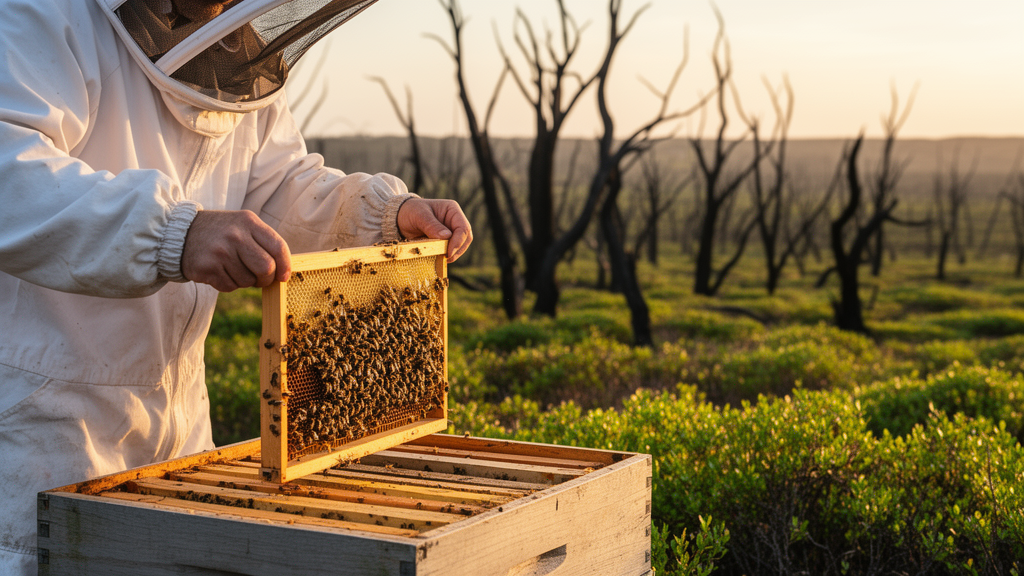
Researchers from the University of Western Australia analysed 120 honey samples harvested on Kangaroo Island between 2014 and 2026, spanning the catastrophic 2019–2020 Australian bushfire season known as the Black Summer. Those fires burnt approximately 211,000 hectares, nearly half the island’s land area, and devastated the western regions where more than 40 percent of the island’s protected vegetation is concentrated. The team, publishing in Plant Biosystems, set out to answer a deceptively simple question: could the chemical signature of honey reveal how a fire reshapes the nectar landscape available to pollinators?
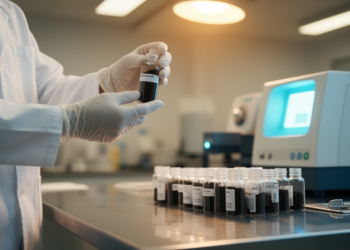
The analytical engine of the study was high-performance thin-layer chromatography, or HPTLC, a technique that separates the non-sugar organic fraction of honey — principally phenolic compounds and terpenes derived from nectar — into a reproducible fingerprint of bands. Each band corresponds to a compound or class of compounds, identified by its retention factor and colour under multiple visualisation conditions, including ultraviolet imaging at 254 and 366 nanometres and derivatisation with vanillin–sulphuric acid reagent. Because these compounds originate in the nectar rather than the bee, they function as a botanical fingerprint linking the final product directly to the flowers the bees visited.
This approach matters because the traditional tool for honey authentication, melissopalynology — the microscopic identification of pollen grains — has proven ineffective in Australia. The continent’s extraordinary floral biodiversity, with more than 900 species of eucalypts alone, combined with the migratory habits of Australian beekeepers, produces pollen profiles too complex for reliable monofloral classification. DNA metabarcoding offers a partial alternative but struggles with the Myrtaceae family, which includes the eucalypts, where single-locus methods cannot reliably resolve species. HPTLC sidesteps both problems by reading the chemistry of the nectar itself rather than trying to count its biological sources.
From the 100 archived samples collected under the island’s HACCP-compliant quality system, plus 20 freshly extracted in 2026, the researchers identified 13 distinct chromatographic groups. Only four contained enough samples for confident characterisation, but the nine smaller groups proved among the most scientifically intriguing. They included chemically distinct honey types from Kangaroo Island Mallee ash (Eucalyptus remota), the native coastal succulent Karkalla (Carpobrotus rossii), Coastal Bearded Heath (Leucopogon parviflorus) and Cup Gum (Eucalyptus cosmophylla). The identification of Karkalla as a potential honey source was particularly notable, as this fire-resilient coastal plant is widespread across the island.
The temporal distribution of these groups told a story written in nectar. Before the fires, beekeepers favoured spring-flowering coastal flora. After the fires, the foraging landscape expanded to include Kangaroo Island Narrow-leaf oil mallee (Eucalyptus cneorifolia), Sugar Gum (Eucalyptus cladocalyx) and other species not prominently represented in pre-fire harvests. Groups 2, 5, 9 and 12 emerged only after the fire, while Groups 6, 10 and 11 disappeared from the post-fire record. Group 4, the only group capable of annual harvest before the fires, ceased entirely after 2021 — evidence, the authors suggest, that its floral source was likely located on the severely burnt western side of the island and has not yet recovered.
The data also captured a quieter crisis preceding the flames. Rainfall records show that 2018’s critical autumn and spring rains fell below average, deepening into drought by 2019. This agricultural stress appears in the honey record as a four-year gap in extraction events for some groups, as beekeepers directed honey stores toward colony survival rather than harvest. The drought-flood-fire sequence — reduced flowering, then landscape incineration, then regeneration — is legible in the chromatographic record as a sequence of disappearing, persisting and newly emerging nectar signatures.
Beyond the ecological narrative, the study established the first chemical baseline for authenticating Kangaroo Island honey as a premium regional product. Representative blends from the three main groups met all Codex Alimentarius standards: moisture content between 16.4 and 18.4 percent, fructose-plus-glucose sums well above the 60 grams per 100 grams minimum, free acidity far below the 50 milliequivalents per kilogram limit, and diastase activity exceeding the minimum threshold. The absence of detectable sucrose in any group is particularly significant from an anti-fraud perspective, as sucrose syrup feeding is among the most common forms of honey adulteration worldwide.
One physicochemical parameter stands out as a geographic marker. The electrical conductivity of Kangaroo Island honey averaged 0.98 millisiemens per centimetre, exceeding the standard Codex threshold of 0.8 — but this is not a quality failure. The Codex standard explicitly recognises an exception for honeys dominated by eucalypt species, which naturally carry higher mineral loads. The consistently elevated conductivity, reproducible across groups and years, could serve as a rapid screening tool: a honey sold as Kangaroo Island product with conductivity below 0.8 would be anomalous and warrant scrutiny. Combined with the HPTLC fingerprint, this creates a multi-parameter authentication framework considerably more robust than any single test.
The antibacterial activity results added a further dimension. Using a modified microplate assay measuring growth inhibition of Staphylococcus aureus and Escherichia coli, the researchers found that freshly extracted 2026 samples showed markedly higher bioactivity than older archived samples with identical chromatographic fingerprints. This ageing effect has been documented in other honeys and is attributed to the gradual loss of hydrogen peroxide generated by glucose oxidase, which decomposes faster than it is replenished in stored honey. The phenolics and terpenes visible in the nectar signatures — including compounds related to taxifolin and epigallocatechin, known antibacterial agents — suggest that specific Kangaroo Island nectar sources may confer distinctive bioactive properties worthy of targeted investigation.
What elevates this study beyond a regional product analysis is its methodological precedent. Because the Ligurian bee population is genetically constrained, differences in honey composition between time periods can be attributed to landscape change rather than variation in bee behaviour or genetics — an interpretive advantage unavailable in virtually any other honey-producing region on Earth. The authors propose that continued annual sampling from fixed apiary sites, using the HPTLC grouping framework established here, could serve as a proxy measure of post-fire vegetation recovery, a novel application of honey chemistry with relevance to any fire-affected landscape where a defined bee population operates. As wildfires intensify globally, the humble jar of honey may become an unexpected instrument for reading how ecosystems rebuild themselves, one flowering season at a time.
Subject of Research: Chemical fingerprinting of honey types to track fire-driven vegetation change and authenticate Kangaroo Island honey
Article Title: Honey type diversity in a Ligurian honeybee sanctuary: Australia’s Kangaroo Island honey across a decadal fire-impacted landscape
Article References: Barbour, E., Locher, C., Hammer, K. A., & Islam, M. K. (2026). Honey type diversity in a Ligurian honeybee sanctuary: Australia’s Kangaroo Island honey across a decadal fire-impacted landscape. Plant Biosystems, 160(5), Article 293. https://doi.org/10.1007/s44473-026-00307-1
Image Credits: AI Generated
DOI: 10.1007/s44473-026-00307-1
Keywords: Kangaroo Island, Ligurian honeybee, HPTLC, honey authentication, bushfire recovery, nectar signature, fire ecology, Codex Alimentarius, eucalypt honey, antibacterial activity, Apis mellifera ligustica, plant chemistry
Cite Scienmag News
Alan Morgan. (October 16, 2026). Fire Rewrote the Recipe: A Decade of Kangaroo Island Honey Reveals a Landscape in Recovery. Scienmag. https://scienmag.com/fire-rewrote-the-recipe-a-decade-of-kangaroo-island-honey-reveals-a-landscape-in-recovery/
Alan Morgan. "Fire Rewrote the Recipe: A Decade of Kangaroo Island Honey Reveals a Landscape in Recovery." Scienmag, 16 October 2026, https://scienmag.com/fire-rewrote-the-recipe-a-decade-of-kangaroo-island-honey-reveals-a-landscape-in-recovery/. Accessed 16 October 2026.
Alan Morgan. "Fire Rewrote the Recipe: A Decade of Kangaroo Island Honey Reveals a Landscape in Recovery." Scienmag. October 16, 2026. https://scienmag.com/fire-rewrote-the-recipe-a-decade-of-kangaroo-island-honey-reveals-a-landscape-in-recovery/