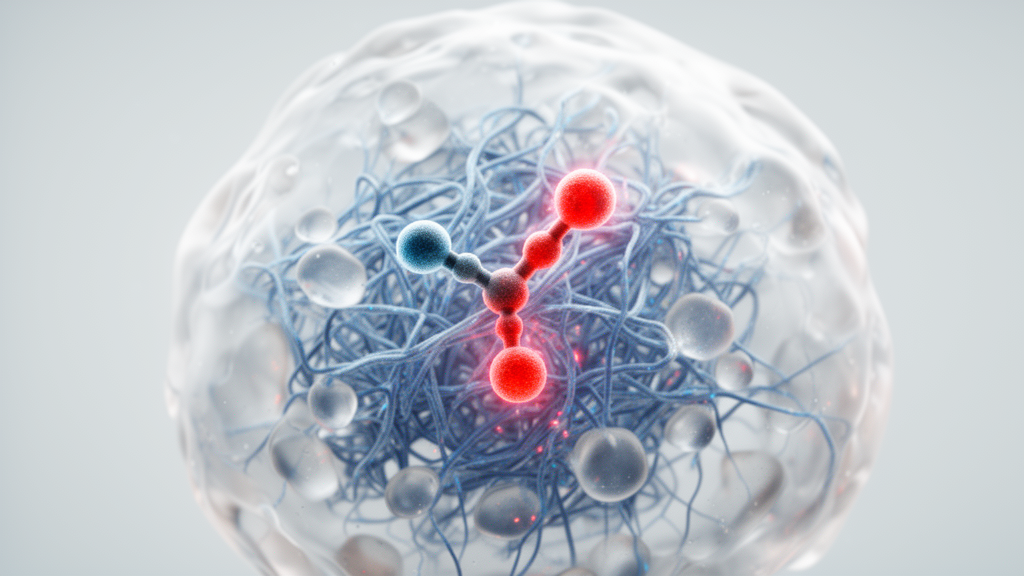
A newly identified single-domain antibody, J8, selectively bound Alzheimer’s disease-associated amyloid-β fibrils and reduced signs of cellular injury in human stem-cell-derived cortical neurons and three-dimensional forebrain organoids exposed to the fibrils. The Fc-free nanobody showed no detectable binding to monomeric amyloid-β 40 in the assay used, whereas the comparator antibody donanemab recognized both fibrils and monomers. These preclinical findings position J8 as a conformation-selective anti-amyloid lead, but they do not establish that it can clear plaques, slow Alzheimer’s disease or avoid amyloid-related imaging abnormalities in people.
J8 was isolated by phage display against immobilized amyloid-β 40 fibrils designed to resemble a prominent fibril structure previously identified in Alzheimer’s disease brain tissue. Repeated panning rounds enriched for fibril-binding clones while antibody binding to soluble monomer remained low. The purified J8 bound the fibrils with an apparent dissociation constant of 51.26 nanomolar, whereas no binding to amyloid-β 40 monomer was detectable under the same assay conditions. Donanemab, by comparison, bound fibrils with an apparent dissociation constant of 294.1 nanomolar and monomer with an apparent dissociation constant of 107.3 nanomolar. These measurements establish selectivity for the tested fibril preparation under laboratory conditions, rather than universal preference for every fibrillar form of amyloid-β or for toxic oligomeric and protofibrillar assemblies.
Direct association between J8 and the fibrils was visualized by immunogold transmission electron microscopy. Fibrils incubated with phosphate-buffered saline showed no gold-particle labeling, whereas gold particles were distributed along the surfaces of fibrils incubated with J8-Avi coupled to colloidal gold. The antibody also stained plaque-like amyloid deposits in postmortem brain sections from an individual with Alzheimer’s disease, alongside the pan-amyloid-β antibody 6E10. Signal was weak and limited in sections from a cognitively normal donor with mild deposition. The tissue comparison was small, involving two donors with Alzheimer’s disease and two cognitively normal donors, so it demonstrates that J8 can recognize plaque-associated material without establishing its prevalence or specificity across the full range of human amyloid pathology.
In human induced pluripotent stem cell-derived cortical neurons, exposure to 400 nanomolar amyloid-β 40 fibrils increased immunoreactivity for cleaved caspase-3, a marker associated with apoptotic signaling. Adding J8 at concentrations from 100 to 1,200 nanomolar during the same exposure produced a concentration-dependent reduction in that signal. The area stained for TUJ1, a neuronal marker used here to assess neuronal morphology, also increased with rising J8 concentrations, consistent with partial preservation of neuronal structure during fibril exposure. These experiments demonstrate attenuation of selected injury-associated responses when antibody and fibrils were present together; they do not show that J8 rescued neurons after pathology had already developed, nor did the two-dimensional experiment include a matched non-targeting single-domain antibody or a J8-alone control.
The same concurrent-treatment design was extended to human forebrain organoids, which provide a multicellular environment containing neurons, astrocytes and other cell types. Two batches derived from three healthy control stem-cell lines were maintained under the experimental conditions for 32 days and assigned to untreated, J8-alone, fibril-only or combined fibril-plus-J8 groups. Fibrils increased cleaved caspase-3 fluorescence, while concurrent J8 treatment was associated with a lower signal than fibril exposure alone. J8 alone did not increase the marker under the tested conditions. As in the neuronal experiment, the result concerns attenuation during co-exposure rather than reversal of an established phenotype. The models also lack complete vascular, microglial and systemic compartments, limiting their ability to reproduce the immune and vascular processes that contribute to Alzheimer’s disease and antibody-related safety risks.
Single-nucleus RNA sequencing added a cell-state view of the treatment response. The analysis resolved excitatory neurons, inhibitory neurons, astrocytes, oligodendrocyte precursor cells and perivascular cells. In astrocytes, fibril exposure was associated with lower expression of genes including PTPRZ1, GFAP and SLC1A2, alongside higher expression of endoplasmic-reticulum stress genes DDIT3, XBP1 and ATF4. Concurrent J8 treatment shifted these estimates toward the control condition and increased expression of PTN, although the treated organoids did not return fully to an untreated state. In excitatory neurons, fibrils reduced expression associated with the NTN1-DCC/UNC5 signaling axis, synaptic function and genes related to neuronal function while increasing apoptosis-associated transcripts. The combined treatment attenuated many of these changes, but the neuronal transcriptional state remained distinguishable from control.
Protein-level staining supported the direction of selected transcriptomic findings. Fibril exposure reduced PTPRZ1 and GFAP fluorescence in astrocyte-rich regions and reduced NTN1 signal in NMDAR1-positive excitatory neurons. Signals for all three markers were higher in the fibril-plus-J8 condition than in the fibril-only condition. The researchers treated this as orthogonal, marker-specific support rather than validation of the entire transcriptome. Cell-level measurements were averaged within each organoid before analysis, and the quantitative immunostaining comparison used 15 cells from three organoids per condition. Such design choices avoid counting individual cells as independent biological replicates but also restrict the strength of the statistical conclusions.
A broader exploratory comparison identified 2,319 protein-coding genes that met prespecified expression and effect-size thresholds in excitatory neurons. Of these, 1,343 were lower after fibril exposure and higher with concurrent J8, while 561 showed the reverse pattern. Candidate neuronal and synaptic genes included ST18, IL1RAPL2, LTBP1, ZMAT4, PAX6, GAD2, VSNL1, SOX6 and SLC6A1. Pathway analysis recovered terms related to neurodegeneration, neuron development, differentiation, neurogenesis and cell-projection organization. However, each experimental condition was represented by a single pooled sequencing library. The organoid-level estimates were therefore descriptive, no inferential test was performed for the treatment comparisons, and the candidate patterns require validation in independently replicated experiments.
The researchers compared the direction of fibril-associated organoid changes with independent single-nucleus datasets from human Alzheimer’s disease cortex. Among shared genes, 47.5% had the same direction in early-stage Braak 2 tissue, a proportion close to the 50% chance expectation. Agreement reached 60.3% in late-stage Braak 6 tissue and 56.3% in an independent Alzheimer’s disease-versus-control dataset. Pathway-level agreement was stronger: 61.3% of shared Gene Ontology biological-process pathways aligned in late-stage disease, rising to 70.4% in the independent cohort, while Reactome agreement reached 69.6% and 87.9%, respectively. Common changes were concentrated in synaptic and neuronal programs, including synapse assembly, trans-synaptic signaling and NMDA-receptor-related pathways. The comparisons establish directional alignment, not quantitative equivalence, and suggest that acute fibril exposure resembles selected features of more advanced disease.
J8’s small size and lack of an Fc region were presented as potential design advantages, but they also introduce an unresolved trade-off. Without an Fc domain, the antibody cannot directly activate complement or engage Fc-gamma receptors through that domain, which may reduce inflammatory signaling around vascular amyloid. At the same time, Fc-dependent interactions can promote microglial uptake and clearance of antibody-bound deposits; removing the Fc region might therefore reduce clearance and compromise efficacy. The study did not directly compare J8 with an Fc-containing version, and it did not test pharmacokinetics, immunogenicity, amyloid removal or amyloid-related imaging abnormalities in animals. Future work must map the antibody’s epitope, determine whether it recognizes oligomers, protofibrils and structurally distinct fibrils, and test delayed treatment in models containing vascular and immune components. The present data establish selective binding and reduced fibril-associated injury signals in human laboratory systems, supporting further development rather than clinical use.
Subject of Research: Preclinical evaluation of a fibril-selective anti-amyloid-β single-domain antibody in human neuronal and organoid models
Article Title: A fibril-selective single-domain antibody targets pathogenic amyloid-β assemblies and protects human neurons
Article References: Greenlee, M. A., Amniouel, S., Rivera, I., Suh, J., Martinez, N. J., Simeonov, A., Head, E., Tycko, R., Zheng, W., Fleming, B. D., & Zhang, Q. (2026). A fibril-selective single-domain antibody targets pathogenic amyloid-β assemblies and protects human neurons. iScience, 29(11), Article 117946. https://doi.org/10.1016/j.isci.2026.117946
Image Credits: AI Generated
DOI: 10.1016/j.isci.2026.117946
Keywords: Alzheimer’s disease, amyloid-beta fibrils, single-domain antibody, nanantibody J8, human cortical neurons, forebrain organoids, single-nucleus RNA sequencing, anti-amyloid therapy, cellular stress, new approach methodologies, fibril-selective, single-domain
Cite Scienmag News
Cassandra Pierce. (October 22, 2026). Fibril-selective nanantibody reduces amyloid injury signals in human brain models. Scienmag. https://scienmag.com/fibril-selective-nanantibody-reduces-amyloid-injury-signals-in-human-brain-models/
Cassandra Pierce. "Fibril-selective nanantibody reduces amyloid injury signals in human brain models." Scienmag, 22 October 2026, https://scienmag.com/fibril-selective-nanantibody-reduces-amyloid-injury-signals-in-human-brain-models/. Accessed 22 October 2026.
Cassandra Pierce. "Fibril-selective nanantibody reduces amyloid injury signals in human brain models." Scienmag. October 22, 2026. https://scienmag.com/fibril-selective-nanantibody-reduces-amyloid-injury-signals-in-human-brain-models/