


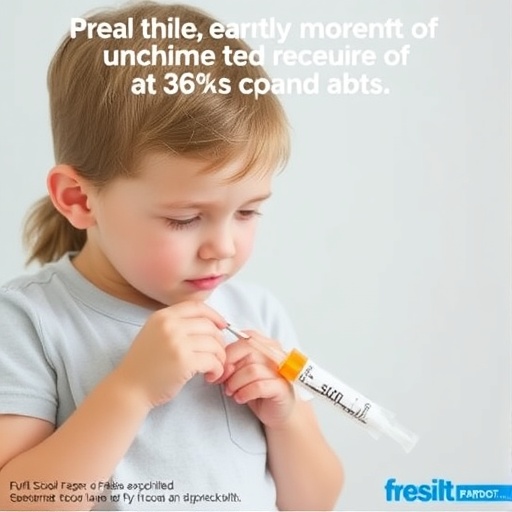
In England, a significant gap remains in the availability of adrenaline autoinjectors (AAIs) for schoolchildren at risk of anaphylaxis, a severe and potentially life-threatening allergic reaction. Despite longstanding guidelines from UK and European regulators advocating that individuals vulnerable to anaphylaxis should carry two AAIs at all times, current prescribing patterns reveal less than half of these children receive even a single device. This shortfall poses a critical risk, as some allergic episodes necessitate more than one dose of adrenaline, and backup devices are vital in cases where the initial injection is ineffective or improperly administered.
Food allergies represent a major trigger for anaphylaxis within the school environment, with approximately one in ten reactions occurring on school premises. The situation is exacerbated by the fact that on average, each UK classroom hosts one or two students susceptible to such allergic attacks. Schools often request that these students leave a personal AAI onsite to guard against emergencies when devices are forgotten at home. However, this arrangement depends heavily on prior prescriptions, which are inconsistently provided.
An extensive observational analysis leveraging data from the Clinical Practice Research Datalink (CPRD) Aurum—a comprehensive primary care database—studied children aged 5 to 18 diagnosed with food allergies between 2008 and 2018. The findings were alarming: a mere 44% of these children had been prescribed an AAI at least once, and only about one-third received repeat prescriptions. Even among those with documented episodes of anaphylaxis, less than 60% were provided with an AAI, highlighting systemic underprescription and raising concerns about emergency preparedness in educational settings.
In response to the evident shortcomings, UK legislation was amended in 2017 to empower schools to acquire ‘spare’ AAIs without individual prescriptions. These devices serve as emergency backups when a child’s own AAI is unavailable or when they have not been prescribed one. Despite the legislative change, uptake has been limited, with only about half of schools procuring these vital spare devices. The barrier appears to be financial, as retail prices for AAIs can exceed £100 per unit, a striking contrast to the subsidized NHS cost of around £10 for two devices.
To confront this issue, some Integrated Care Boards (ICBs)—the bodies responsible for local health funding—have piloted initiatives to supply spare AAIs to schools for use with any child experiencing anaphylaxis. The research team examined NHS prescription data for the 2023-24 and 2024-25 academic years, focusing on children prescribed more than two AAIs, which often correspond to devices intended for school retention rather than personal carry.
Their economic modelling reveals stark cost implications. Nearly 63% of AAI prescriptions to children with food allergies exceeded two units annually, resulting in estimated expenditures surpassing £9 million for the year 2023-24. Conversely, providing all schools in England with four spare AAIs annually would cost just £4.5 million. Switching to a centralized system supplying spare devices to schools, while limiting prescriptions to two AAIs per pupil for personal use, could save the NHS at least £4.6 million—amounting to a quarter of the current national spending on these devices.
Such an approach not only promises substantial financial savings but also streamlines access during emergencies, improving outcomes for children susceptible to anaphylaxis. The study acknowledges limitations, noting that the analysed data includes only community pharmacy dispensations and excludes hospital or private healthcare provisions, yet the conclusions remain compelling in affirming a cost-neutral, safety-enhancing strategy.
Experts emphasize the urgency of enhanced allergy management in schools. Helen Blythe from the Benedict Blythe Foundation highlights that the National Child Mortality Database identifies modifiable factors in 76% of fatal allergic reactions among children, with delayed adrenaline administration being a key contributor to mortality. Coroner reports further corroborate the recurring failure to provide timely treatment, underscoring systemic vulnerabilities in school environments.
Internationally, countries like Canada boast comprehensive legislation mandating allergy safety protocols in schools for over twenty years, including requirements to maintain stocked AAIs. In stark contrast, UK schools continue to rely on charitable fundraising to afford these life-saving devices. Advocates urge the government to enact Benedict’s Law, a proposed legislative package introduced to the Department for Education in 2023. This law aspires to mandate government-funded spare AAIs in all schools, compulsory staff training on allergy awareness and emergency response, and implementation of thorough school-wide allergy policies.
Regional pilots across the UK demonstrate that equipping schools with AAIs is feasible, practical, and financially sustainable. Such initiatives, when scaled nationally, would ensure equitable emergency access to adrenaline for all pupils, including those not currently prescribed AAIs or those who may forget their personal devices. This proactive, unified strategy could significantly enhance anaphylaxis management and potentially save numerous young lives.
This study provides compelling evidence for a paradigm shift in the management of childhood anaphylaxis in educational settings. By standardizing the availability of spare AAIs and limiting redundant personal prescriptions, health systems could optimize resource allocation, improve emergency responsiveness, and reduce preventable deaths linked to allergic reactions in schools.
Cite Scienmag News
Ophelia Keating. (October 21, 2025). Fewer than Half of English Schoolchildren at Risk of Food Anaphylaxis Receive Prescribed Adrenaline Antidote. Scienmag. https://scienmag.com/fewer-than-half-of-english-schoolchildren-at-risk-of-food-anaphylaxis-receive-prescribed-adrenaline-antidote/
Ophelia Keating. "Fewer than Half of English Schoolchildren at Risk of Food Anaphylaxis Receive Prescribed Adrenaline Antidote." Scienmag, 21 October 2025, https://scienmag.com/fewer-than-half-of-english-schoolchildren-at-risk-of-food-anaphylaxis-receive-prescribed-adrenaline-antidote/. Accessed 4 September 2026.
Ophelia Keating. "Fewer than Half of English Schoolchildren at Risk of Food Anaphylaxis Receive Prescribed Adrenaline Antidote." Scienmag. October 21, 2025. https://scienmag.com/fewer-than-half-of-english-schoolchildren-at-risk-of-food-anaphylaxis-receive-prescribed-adrenaline-antidote/


