


A surprisingly small number of chikungunya infections detected among thousands of patients with fever in Indonesia’s Yogyakarta region is raising a larger question: Is the mosquito-borne virus genuinely rare on Java, or is the apparent absence largely an artefact of limited testing?
In a new analysis, researchers report that only four of 7,600 patients who tested negative for dengue were positive for chikungunya virus by reverse-transcription polymerase chain reaction, or RT-PCR. The patients came from a broader cross-sectional sample of 8,000 febrile individuals in the greater Yogyakarta area. The same study identified 400 dengue-PCR-positive cases, reinforcing dengue’s dominant position among acute febrile illnesses in the region. Yet the four chikungunya infections may say as much about the limitations of disease surveillance as they do about the virus’s actual prevalence.
Chikungunya is transmitted primarily by Aedes mosquitoes, including Aedes aegypti and Aedes albopictus, the same vectors responsible for spreading dengue and several other arboviruses. Infection can cause sudden fever, severe joint pain, headache, rash and muscle pain. The overlapping symptoms create a major diagnostic problem: without laboratory confirmation, clinicians may have little practical way to distinguish chikungunya from dengue during the first days of illness. In regions where dengue is common and testing resources are constrained, a patient with chikungunya can easily be counted as having dengue, another febrile disease or no specific infection at all.
The Yogyakarta findings are therefore not equivalent to proof that chikungunya is nearly absent from Java. RT-PCR detects viral genetic material, but only during a relatively narrow period when virus is circulating in the bloodstream. Chikungunya typically produces a brief viraemic phase lasting several days around the onset of symptoms. A patient tested after that window may still have had chikungunya but return a negative molecular result. A single cross-sectional sampling event can consequently underestimate the number of people infected over a longer period, particularly when patients arrive at clinics at different stages of illness.
The test also focuses on current infection rather than accumulated exposure. Serological studies, which measure antibodies produced after infection, can reveal whether people were infected weeks, months or years earlier. But these tests have their own technical complications. Antibodies against chikungunya may cross-react with related alphaviruses, potentially producing results that are difficult to interpret without carefully validated assays. The authors say a random sample of the original 8,000 clinical specimens is now being examined to estimate past chikungunya exposure and the proportion of people who may have developed protective immunity.
That distinction could determine whether Java is facing a hidden reservoir of immunity or a largely susceptible population. If many infections have gone unnoticed, the island’s communities may have accumulated substantial protection, including through infections that caused mild or no symptoms. Such immunity could help explain why few acute cases were detected. Conversely, if chikungunya has genuinely circulated at low levels, many people may remain vulnerable, creating the conditions for a large outbreak if a virus variant is introduced or mosquito transmission intensifies.
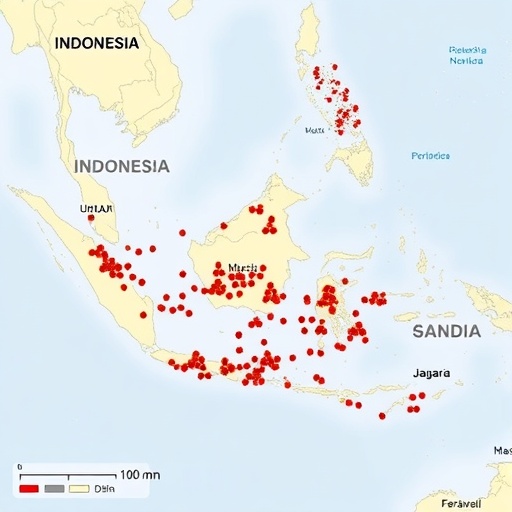
Indonesia’s wider epidemiological record offers no simple answer. Bali is a recognised chikungunya transmission hotspot, and outbreaks during 2021 and 2022 reached a reported incidence of 20.6 cases per 100,000 people. Java lies close to Bali and has dense populations, extensive movement of people and abundant mosquito habitat, yet published surveillance data paint a much patchier picture. In other Indonesian regions, evidence is similarly inconsistent. A study of asymptomatic adults in North and South Sulawesi found chikungunya IgG antibodies in more than half of participants, suggesting widespread previous exposure. By contrast, chikungunya was rarely detected in hospital-based sampling conducted across Ambon, Banjarmasin and Batam.
The apparent volatility of national case reports further complicates interpretation. Indonesia recorded 2,974 chikungunya cases in 2022, followed by 6,049 cases across 29 provinces in 2023, then only 571 cases in seven provinces in 2024. Such dramatic changes could reflect real shifts in transmission, but they could also result from differences in diagnostic capacity, reporting practices, access to care and the number of provinces actively conducting surveillance. Passive hospital-based systems tend to capture people who develop noticeable symptoms and seek medical attention, while people with mild or asymptomatic infections remain outside the reporting network.
The uncertainty has become more consequential because chikungunya vaccination is moving from theory into public-health policy. Two vaccines have reached licensure: IXCHIQ, a live-attenuated vaccine, and Vimkunya, a virus-like-particle vaccine. IXCHIQ contains a weakened form of the virus designed to stimulate immunity without causing typical disease, whereas Vimkunya presents viral structural components to the immune system without using a complete replicating virus. Both approaches aim to prepare immune defences before exposure, but their use must be weighed against the local risk of infection and the population’s age, health status and prior immunity.
Safety concerns have complicated that calculation. Post-marketing surveillance of IXCHIQ identified serious adverse events, predominantly among older adults. In 2025, use in that age group was temporarily restricted, and the vaccine was voluntarily withdrawn from the United States market in January 2026, although it remains available elsewhere. It is also being supported through an access programme for low- and middle-income countries and a pilot vaccination programme in Brazil. For Java, policymakers must therefore compare the expected number of chikungunya cases prevented with the vaccine’s potential risks, while recognising that neither the true infection rate nor the age distribution of previous exposure is yet well defined.
Those unknowns make the four positive PCR results more than a curious statistical footnote. On one interpretation, they indicate that chikungunya transmission in Yogyakarta is genuinely uncommon, and that large-scale vaccination might offer limited benefit. On another, they represent only the visible tip of a much larger iceberg hidden by late testing, asymptomatic disease and misdiagnosis as dengue. A third possibility is that past transmission has generated enough population immunity to suppress current cases without eliminating the threat of future outbreaks. Distinguishing among these scenarios will require repeated molecular surveillance, better timing of specimen collection, carefully designed antibody studies and monitoring that extends beyond hospitals.
The question is especially urgent on Java, a densely populated and economically important island where an outbreak could spread rapidly through communities with abundant Aedes mosquitoes. Better data would allow health authorities to estimate the number needed to vaccinate, identify groups most likely to benefit and determine whether vaccination is cost-effective. It would also clarify whether apparent changes in national case counts reflect genuine epidemic dynamics or fluctuations in detection. Until that evidence is available, the low number of chikungunya infections found in Yogyakarta should be treated neither as reassurance nor as a warning of an imminent outbreak, but as a signal that one of Indonesia’s most important mosquito-borne diseases remains poorly measured.
Cite Scienmag News
Phoebe Ingram. (August 28, 2026). Few chikungunya cases in Yogyakarta, Indonesia: emerging public health threat or not? Scienmag. https://scienmag.com/few-chikungunya-cases-in-yogyakarta-indonesia-emerging-public-health-threat-or-not/
Phoebe Ingram. "Few chikungunya cases in Yogyakarta, Indonesia: emerging public health threat or not?" Scienmag, 28 August 2026, https://scienmag.com/few-chikungunya-cases-in-yogyakarta-indonesia-emerging-public-health-threat-or-not/. Accessed 3 September 2026.
Phoebe Ingram. "Few chikungunya cases in Yogyakarta, Indonesia: emerging public health threat or not?" Scienmag. August 28, 2026. https://scienmag.com/few-chikungunya-cases-in-yogyakarta-indonesia-emerging-public-health-threat-or-not/


