


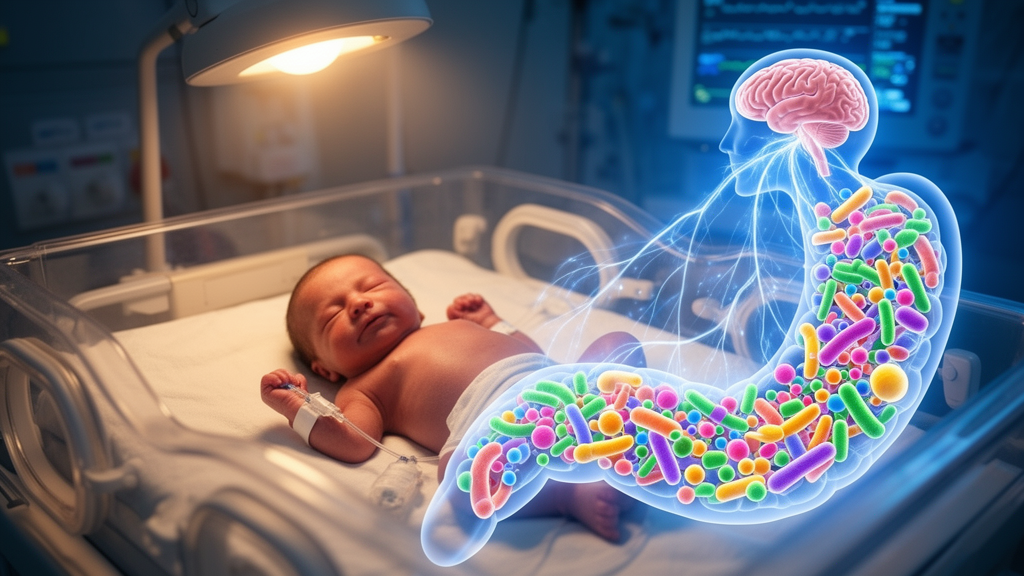
Every day in neonatal intensive care units around the world, the smallest and most fragile patients endure some of medicine’s most routine yet invisible suffering. Preterm infants admitted to the NICU can be exposed to as many as seventeen painful procedures per day, from heel lances to intravenous line insertion, all in the service of investigation and treatment. These infants cannot vocalize their pain in any way adults would recognize. Instead, their distress registers only as changes in heart rate, episodes of oxygen desaturation, facial grimacing, or crying that is often rendered inaudible by the breathing tubes and ventilator support keeping them alive. Compounding the problem, the pain-inhibitory systems of preterm infants are immature, and their sensory circuits display heightened excitability compared with more mature newborns, meaning that a preterm baby may actually experience pain more intensely than an older infant would. Yet according to recent reviews, only about twenty-seven percent of procedural pain in hospitalized neonates is mitigated by any pharmacological or non-pharmacological means.
The consequences of leaving this pain untreated are not trivial. In extremely preterm infants, those born at twenty-eight weeks of gestation or earlier, exposure to high numbers of noxious stimuli has been associated with disruption of thalamocortical development, the intricate wiring process that connects the brain’s sensory relay station to its outer cortex. Follow-up studies of these children have linked early pain exposure to unfavorable cognitive, sensory, and behavioral outcomes years later. Care teams do what they can with gentler tools: topical anesthetics, oral sucrose, skin-to-skin contact, swaddling, and non-nutritive sucking all help for minor procedures. But for unsettled, endotracheally intubated, hemodynamically unstable infants, or those undergoing surgery, stronger medicine is required, typically morphine, a natural opioid, or fentanyl, a synthetic, lipophilic phenylpiperidine opioid agonist.
Among neonates, fentanyl has largely displaced morphine as the analgesic of choice, and for understandable pharmacological reasons. It causes less cardiovascular instability and fewer episodes of hypotension, binds with higher specificity to mu-opioid receptors, and is fifty to four hundred times more potent than morphine, which acts as a non-specific opioid receptor agonist. Its efficacy in blunting the surgical stress response was demonstrated decades ago in a randomized trial of preterm babies undergoing ligation of a patent ductus arteriosus, a landmark study that helped establish opioid anesthesia for the tiniest surgical patients. But effectiveness comes with a shadow. Opioid exposure in the NICU has been associated with smaller cerebellar volumes, cerebellar hemorrhages, and altered long-term neurodevelopment. Earlier work suggested that infants exposed to greater numbers of painful experiences who received morphine for more than seven days showed lower cognition, while shorter exposures had less negative impact. A longitudinal study of 936 extremely preterm infants born at twenty-four to twenty-seven weeks of gestation found that prolonged exposure, longer than seven days, to morphine, fentanyl, midazolam, or lorazepam was associated with adverse effects on two-year neurodevelopmental outcomes, reflected in lower scores on the Bayley Scales of Infant Development, Third Edition. A retrospective study of infants born between twenty-three and thirty-two weeks similarly found that cumulative opioid exposure in the NICU was negatively associated with cognitive and motor development at three years of adjusted age. These findings raise an uncomfortable clinical dilemma: how to manage pain effectively while minimizing the adverse outcomes that the analgesics themselves may carry.
Into this dilemma steps an unexpected player, one that until recently had little place in conversations about neonatal analgesia: the gut microbiome. The community of trillions of microbes colonizing the infant intestine is increasingly recognized as a critical regulator of developmental processes far beyond digestion, shaping immune responses, metabolism, and hormonal signaling in both the gut and remote organs, including the brain. This microbiome-gut-brain axis has become one of the most active frontiers in developmental biology, and the early weeks of life represent a uniquely sensitive window during which microbial colonization patterns can have lasting consequences.
Preterm infants, it turns out, start life with a microbial handicap. Compared with their term-born counterparts, they carry gut microbiomes characterized by lower diversity and a conspicuous lack of Bifidobacterium species, beneficial members of the phylum Actinobacteriota that normally dominate the healthy infant gut. Their microbial communities are also particularly vulnerable to the hospital environment, being seeded less by maternal microbes and more by whatever organisms circulate in the intensive care unit. Given all of this, a pressing question arises: what happens to this fragile ecosystem when the infant is repeatedly dosed with one of the most potent opioids in clinical use? Until now, the effect of opioid exposure on the early-life microbiome had not been well studied.
A new investigation by David and colleagues, published in Pediatric Research and accompanied by a commentary from researchers at the University of Calgary, set out to answer exactly that question. The study leveraged the prospective Microbiome analysis in Neonatal Development, or MIND, cohort, which enrolled 250 infants born at less than thirty-seven weeks of gestation. For the fentanyl analysis, the researchers compared twenty-two infants with no fentanyl exposure, whose mean gestational age was thirty-one weeks, against forty-six infants who received the drug, whose mean gestational age was twenty-seven weeks. The team collected a wide range of clinical covariates, including sociodemographic information, mode of delivery, sex, postmenstrual age, length of NICU stay, intrauterine and extrauterine growth differences, enteral feeding patterns, antibiotic use, and major clinical morbidities, all of which are known to independently shape the infant microbiome.
What distinguishes this study technically is the depth of its microbiological and statistical toolkit. Rather than relying on a single sequencing approach, the researchers deployed 16S rRNA gene sequencing to profile microbial composition, deep shotgun metagenomic sequencing to resolve the functional potential of the microbial communities at the level of individual genes, and fecal metabolomics to measure the actual chemical products of gut microbial metabolism. This three-pronged strategy allowed them to dissect not just which microbes were present, but what those microbes might be doing, and how their metabolic output differed between fentanyl-exposed and unexposed infants. On the neurodevelopmental side, outcomes were assessed at two years of age using the Bayley Scales of Infant Development, Third Edition, and again between three and eight years of age using the Wechsler Preschool and Primary Scale of Intelligence, Fourth Edition, providing both early and later cognitive measures. Statistical analysis employed linear regression models and mixed binomial regression models to test the relationship between fentanyl exposure and microbiome features while adjusting for the extensive panel of clinical covariates.
The headline finding is striking: fentanyl exposure was associated with measurable alterations in the gut microbiome, and these microbial changes appeared to be linked to adverse cognitive outcomes in the preterm children when they were assessed at two to eight years of age. In other words, the study suggests that the drug given to protect the developing brain from pain may, through the intermediary of the gut’s microbial ecosystem, contribute to the very neurodevelopmental harms clinicians have been trying to understand. The commentary’s authors, Chunlong Mu, Kamran Yusuf, and Shabih U. Hasan of the Cumming School of Medicine at the University of Calgary, were careful to commend the study’s rigor, particularly the painstaking effort to account for a large number of maternal and infant variables in the statistical analyses, a step many microbiome studies skip at their peril.
Yet the same commentators, and the study’s own design, demand caution before drawing firm conclusions. The sample size was small, with only sixty-eight infants in the final analysis, and the complexity of confounding variables in this population is formidable. Fentanyl-exposed infants were, on average, born four weeks earlier than unexposed infants, and greater prematurity independently predicts both altered microbiome development and worse neurodevelopmental outcomes. Even the most sophisticated regression models cannot fully disentangle such entangled factors. As a result, a direct causal link between fentanyl exposure and neurodevelopmental outcomes cannot be established from this study. The association between the drug, the microbiome, and later cognition is real and intriguing, but the direction of causality and the magnitude of any true drug effect remain open questions.
What the study does establish is a compelling new framework for thinking about neonatal analgesia. If opioids reshape the preterm gut microbiome, and if those microbial shifts contribute to cognitive outcomes years later, then the microbiome becomes a modifiable target, a potential mediator whose effects might be buffered by probiotics, tailored nutrition, or more judicious dosing strategies. It also adds urgency to efforts to reduce opioid exposure where possible, expanding non-pharmacological comfort care and reserving sedation for infants who truly need it. The research was supported by a grant from the Canadian Institutes of Health Research, and its authors declare no competing interests. For the thousands of infants who pass through neonatal intensive care each year, and for the clinicians who must balance the immediate imperative of pain relief against the long-term imperative of healthy brain development, this work opens a promising and unexpected avenue: protecting the developing mind by tending the garden of microbes in the gut.
Subject of Research: The association between early-life fentanyl exposure, gut microbiome alterations, and neurodevelopmental outcomes in preterm infants
Article Title: Early-life fentanyl exposure, microbiome-brain axis and neurodevelopment
Article References: Mu, C., Yusuf, K., & Hasan, S. U. (2026). Early-life fentanyl exposure, microbiome-brain axis and neurodevelopment. Pediatric Research. https://doi.org/10.1038/s41390-026-05424-3
Image Credits: AI Generated
DOI: 10.1038/s41390-026-05424-3
Keywords: fentanyl, preterm infants, gut microbiome, microbiome-gut-brain axis, neonatal intensive care, neurodevelopment, neonatal pain, opioids, shotgun metagenomics, Bayley Scales, Pediatric Research, Bifidobacterium
Cite Scienmag News
Harold Sullivan. (October 17, 2026). Fentanyl in the NICU May Reshape the Infant Gut Microbiome and the Developing Brain. Scienmag. https://scienmag.com/fentanyl-in-the-nicu-may-reshape-the-infant-gut-microbiome-and-the-developing-brain/
Harold Sullivan. "Fentanyl in the NICU May Reshape the Infant Gut Microbiome and the Developing Brain." Scienmag, 17 October 2026, https://scienmag.com/fentanyl-in-the-nicu-may-reshape-the-infant-gut-microbiome-and-the-developing-brain/. Accessed 17 October 2026.
Harold Sullivan. "Fentanyl in the NICU May Reshape the Infant Gut Microbiome and the Developing Brain." Scienmag. October 17, 2026. https://scienmag.com/fentanyl-in-the-nicu-may-reshape-the-infant-gut-microbiome-and-the-developing-brain/


