


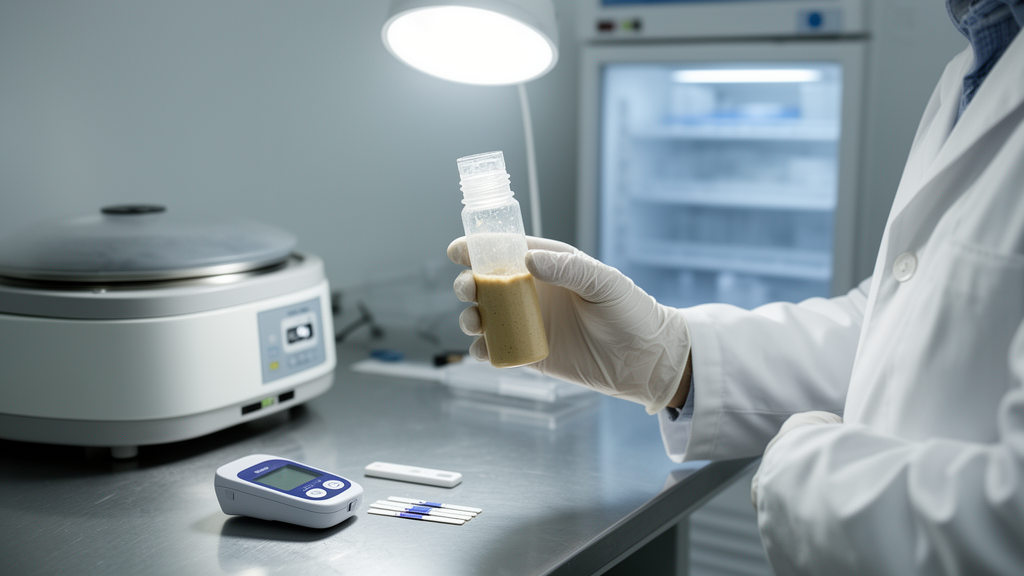
Faecal microbiota transplantation, one of the most talked-about ideas in modern medicine, has failed to show a clear benefit for blood sugar control in adults with metabolic disorders, according to a new systematic review and meta-analysis of randomised controlled trials published in Frontiers in Medicine. The findings strike at the heart of a field that has promised to transform the treatment of type 2 diabetes, insulin resistance and obesity by reshaping the trillions of microbes living in the human gut.
The review, led by researchers from Ukrainian medical universities including Danylo Halytsky Lviv National Medical University and Bogomolets National Medical University, set out to settle a question that has divided the literature for years: does transferring gut microbes from lean, metabolically healthy donors into people with metabolic disease actually improve glucose metabolism? The answer, based on the most rigorous statistical treatment yet applied to this evidence, appears to be a cautious no, at least for now.
The research team searched PubMed and Scopus for English-language randomised controlled trials published between January 2000 and May 2026. The searches identified 887 records, of which 18 studies met the eligibility criteria, covering adults with type 2 diabetes, prediabetes, insulin resistance, metabolic syndrome, obesity and metabolic dysfunction-associated steatotic liver disease. The primary outcome was the change from baseline in HOMA-IR, the homeostatic model assessment of insulin resistance, a widely used mathematical index calculated from fasting glucose and fasting insulin. Secondary outcomes included HbA1c, fasting glucose and clamp-derived peripheral insulin sensitivity, measured as the glucose disposal rate during a hyperinsulinaemic-euglycaemic clamp, the gold-standard physiological test of how well muscle tissue takes up glucose under insulin stimulation.
Only six trials, involving just 120 participants, could be pooled in the primary HOMA-IR analysis. The result was a mean difference of minus 1.29 in HOMA-IR favouring faecal microbiota transplantation, but with a 95 per cent confidence interval stretching from minus 3.04 to plus 0.47, crossing the line of no effect. Statistical heterogeneity was substantial, with an I-squared of 72 per cent, meaning that most of the variability between studies reflected real differences in trial design, populations and interventions rather than chance alone. A sensitivity analysis combining HOMA-IR with HOMA2-IR, a related but mathematically distinct index computed with updated consensus models, also produced a non-significant pooled estimate of minus 1.11 across seven trials and 190 participants.
The certainty of the evidence was rated very low for HOMA-IR and HbA1c, and low for peripheral insulin sensitivity, using the GRADE framework that weighs risk of bias, inconsistency, imprecision and other domains. Four of the 18 included trials were judged to be at low overall risk of bias, thirteen raised some concerns, and one was judged at high risk. The most common concern, affecting 14 of the 18 studies, related to the selection of the reported result, a subtle form of bias that arises when researchers choose which analyses to highlight after seeing the data.
What makes the new analysis methodologically distinctive is its deliberately conservative statistical machinery. Instead of the traditional DerSimonian-Laird random-effects model with Wald confidence intervals, which previous meta-analyses had used, the team employed Paule-Mandel estimation of between-study variance combined with Hartung-Knapp-Sidik-Jonkman adjusted confidence intervals, an approach that produces wider, more honest uncertainty bounds when the number of studies is small. The difference mattered. In the scale-mixed analysis, the conventional DerSimonian-Laird model yielded a statistically significant estimate of minus 1.07, whereas the Paule-Mandel model with Hartung-Knapp-Sidik-Jonkman inference yielded a non-significant minus 1.11 with a wider interval. In other words, whether faecal microbiota transplantation appeared to work depended on which statistical method was chosen, a finding that itself carries a warning for the field.
The influence analyses revealed another fragility. A single trial by Wu and colleagues, comparing faecal microbiota transplantation alone and combined with metformin against metformin alone in adults with newly diagnosed type 2 diabetes, exerted the greatest influence on the pooled estimate. Removing that study reduced the pooled effect from minus 1.29 to minus 0.69 and lowered heterogeneity from 72 per cent to 57 per cent. That trial was also affected by a marked baseline imbalance in HOMA-IR between groups, complicating the interpretation of its apparently strong result. Comparator design mattered throughout: the placebo- or sham-controlled analysis of three trials showed a non-significant estimate, the two autologous-transplant-controlled trials showed essentially no effect, and the single metformin-controlled trial favoured the intervention but was undermined by the baseline imbalance.
For HbA1c, the long-term marker of average blood sugar, the data were too sparse and too heterogeneous to pool across comparator types. One trial found no difference between transplantation and sham, another reported a reduction relative to metformin that was affected by the baseline imbalance, and a third reported a small within-group increase in HbA1c after the intervention. The clamp-derived insulin sensitivity findings were more intriguing: two trials assessing transplantation from lean donors produced a pooled estimate favouring the intervention, but the confidence interval was imprecise, and a separate comparison involving donors with metabolic impairment, digitised from a published figure, suggested a possible donor-phenotype effect that remained inconclusive. The authors described that comparison as hypothesis-generating rather than established evidence.
The biological rationale for the approach remains intact, the researchers emphasise. Gut microbial composition and function are linked to energy harvest, intestinal barrier integrity, immune activation, bile acid signalling and glucose metabolism. Microbial metabolites, including short-chain fatty acids, secondary bile acids, branched-chain amino acid metabolites and indole derivatives, can influence the molecular pathways that regulate glucose homeostasis. Microbiota-related endotoxaemia may promote the low-grade inflammation that underpins insulin resistance. But the review also found that microbial engraftment, the measurable persistence of donor bacteria and bacteriophages in the recipient gut, does not necessarily translate into clinical benefit. Donor-derived microbes may persist without improving glycaemic outcomes, and engraftment itself is shaped by donor composition, recipient microbiota, diet, inflammation and bile-acid profiles.
The clinical implications are stark. Current evidence does not support the routine use of faecal microbiota transplantation for improving glycaemic control, and consensus documents already recommend that the procedure be used for metabolic disorders only within clinical trials, with efficacy and long-term safety remaining uncertain outside its established role in recurrent Clostridioides difficile infection. Safety monitoring remains essential, the authors stress, noting that transmission of drug-resistant organisms has been documented after transplantation, which is why future metabolic trials should use validated stool-bank procedures, donor quarantine, repeat pathogen screening and long-term adverse-event surveillance.
The authors lay out a roadmap for what must happen next. Future trials should use a single predefined comparator, with sham-controlled designs assessing biological efficacy, autologous-transplant designs testing against a procedural and biological control, and active-drug comparisons reported as adjunctive treatment studies. HOMA-IR and HOMA2-IR should be analysed separately, trials should report adjusted between-group effects with complete dispersion measures and a predefined primary time point, and clamp-derived insulin sensitivity should be included in adequately powered mechanistic subsets. Donor metabolic phenotype should be prospectively defined, recipient characteristics, diet, medication and baseline microbiome composition should be recorded, and microbial engraftment should be accompanied by functional measurements such as metabolomics, short-chain fatty acids and bile-acid profiles.
The review acknowledges its own limitations candidly. The primary meta-analysis included only six trials and 120 participants, comparator-specific analyses contained one to three trials and were underpowered, and the protocol was not prospectively registered in PROSPERO, a transparency gap the authors themselves flag. Some effect estimates required conversion from medians or reconstruction of change-score standard deviations, populations differed in metabolic condition, baseline insulin resistance, co-interventions, administration route, dose, donor phenotype and follow-up duration, and publication bias cannot be excluded. The search was restricted to PubMed, Scopus and reference-list screening, and to English-language reports.
For now, the verdict on faecal microbiota transplantation as a diabetes therapy is a sobering one: the estimates are imprecise, heterogeneous and influenced by comparator design, and larger trials with standardised outcomes and predefined donor phenotypes are required before the procedure can be considered for metabolic disorders. The gut microbiome remains one of the most compelling therapeutic frontiers in metabolic medicine, but this analysis shows that turning microbial promise into proven clinical benefit will demand bigger trials, sharper methods and a willingness to let the data, not the hype, decide.
Subject of Research: Faecal microbiota transplantation shows no clear glycaemic benefit in adults with metabolic disorders, according to a systematic review and meta-analysis of randomised controlled trials.
Article Title: Effects of faecal microbiota transplantation on glycaemic outcomes in adults with metabolic disorders: a systematic review and meta-analysis of randomised controlled trials
Article References: Savytska, M., Halich, V.-S., Kuzmenko, L., Halabitska, I., Kamyshna, I., Petakh, P., Kamyshnyi, O., & Kobyliak, N. (2026). Effects of faecal microbiota transplantation on glycaemic outcomes in adults with metabolic disorders: a systematic review and meta-analysis of randomised controlled trials. Frontiers in Medicine, 13, Article 1983162. https://doi.org/10.3389/fmed.2026.1983162
Image Credits: AI Generated
DOI: 10.3389/fmed.2026.1983162
Keywords: faecal microbiota transplantation, HOMA-IR, insulin resistance, meta-analysis, metabolic syndrome, systematic review, type 2 diabetes mellitus, gut microbiome, Effects, faecal, microbiota, transplantation
Cite Scienmag News
Morgan Morrow. (October 17, 2026). Faecal Microbiota Transplants Fail to Deliver Clear Blood Sugar Benefits, Major Meta-Analysis Finds. Scienmag. https://scienmag.com/faecal-microbiota-transplants-fail-to-deliver-clear-blood-sugar-benefits-major-meta-analysis-finds/
Morgan Morrow. "Faecal Microbiota Transplants Fail to Deliver Clear Blood Sugar Benefits, Major Meta-Analysis Finds." Scienmag, 17 October 2026, https://scienmag.com/faecal-microbiota-transplants-fail-to-deliver-clear-blood-sugar-benefits-major-meta-analysis-finds/. Accessed 17 October 2026.
Morgan Morrow. "Faecal Microbiota Transplants Fail to Deliver Clear Blood Sugar Benefits, Major Meta-Analysis Finds." Scienmag. October 17, 2026. https://scienmag.com/faecal-microbiota-transplants-fail-to-deliver-clear-blood-sugar-benefits-major-meta-analysis-finds/


