Thursday, October 29, 2026
Science
No Result
View All Result
  • Login
  • HOME
  • SCIENCE NEWS
  • CONTACT US
  • HOME
  • SCIENCE NEWS
  • CONTACT US
No Result
View All Result
Scienmag
No Result
View All Result
Home Science News Psychology & Psychiatry

Eye-movement tests show shared antisaccade deficits in bipolar disorder and depression

October 29, 2026
in Psychology & Psychiatry
Glenn Wilkins
By Glenn Wilkins Scienmag Editorial Profile - Clinical Psychology
Reading Time: 3 mins read
0
Eye-movement tests show shared antisaccade deficits in bipolar disorder and depression

Eye-movement tests show shared antisaccade deficits in bipolar disorder and depression

65
SHARES
587
VIEWS
Share on FacebookShare on Twitter
ADVERTISEMENT

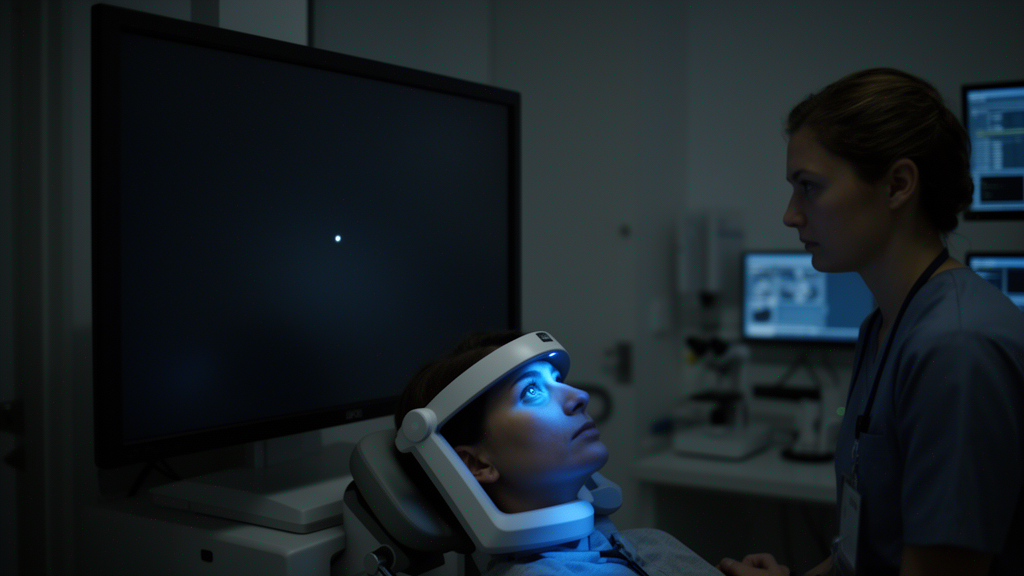
A three-level meta-analysis published in BMC Psychology has quantified how two simple eye-movement tasks perform as potential objective markers for distinguishing bipolar disorder from unipolar depression, two conditions whose depressive episodes can look nearly identical in the clinic. The systematic review, reported as accepted research shared ahead of final version-of-record edits, pooled 34 clinically diagnosed datasets covering 2,504 participants and found that antisaccade performance, but not prosaccade performance, separated both patient groups from healthy controls with moderate to large effects.

The antisaccade task requires participants to suppress the reflexive glance toward a sudden visual cue and instead look in the opposite direction, making it a probe of inhibitory control and rule-guided responding. In the meta-analysis, antisaccade accuracy was poorer than controls in bipolar disorder with Hedges’ g of −0.69 (95% CI −0.87 to −0.50) and in unipolar depression with g of −0.52 (95% CI −0.74 to −0.31). Antisaccade latency was prolonged in bipolar disorder (g = 0.85, 95% CI 0.52 to 1.17), while in unipolar depression the latency effect did not meet the conventional significance threshold (g = 0.36, 95% CI −0.0006 to 0.72, p = 0.0503).

Prosaccade trials, in which participants simply look toward the cue, showed smaller and less consistent effects. Bipolar disorder showed a modest prosaccade latency prolongation (g = 0.29, 95% CI 0.03 to 0.56), whereas prosaccade accuracy in bipolar disorder and both prosaccade outcomes in unipolar depression were non-significant. One moderator analysis found that stimulus type influenced prosaccade latency in bipolar disorder, with larger delays for face stimuli than for simple targets (p = 0.031), hinting that orienting to socially relevant images is more context-dependent than automatic responding to basic cues.

The authors searched PubMed, Scopus, Web of Science and PsycINFO from inception through 31 August 2026 under PRISMA 2020 guidance, synthesizing clinically diagnosed datasets with three-level random-effects models and study-level cluster-robust inference. To compare the two disorders indirectly, meta-regressions contrasted the bipolar-versus-control and depression-versus-control effect sets. Only antisaccade latency differed nominally between disorders (β = 0.46, 95% CI 0.06 to 0.86, p = 0.027), and that contrast lost statistical significance after excluding two studies that had enrolled both diagnostic groups (p = 0.067).

Robustness checks softened several results. Sensitivity analyses did not reverse the direction of any effect, but statistical significance varied for antisaccade latency in unipolar depression and for both prosaccade outcomes in bipolar disorder. Certainty in the evidence, evaluated with an adapted GRADE framework, was rated very low for all eight primary outcomes, a caution that applies across the entire set of pooled estimates.

The interpretation offered by the researchers is mechanistic rather than diagnostic. Poorer antisaccade accuracy in both disorders suggests a shared difficulty suppressing reflexive orienting and implementing rule-guided responses, while the larger bipolar latency effect may reflect additional slowing in response selection or preparation. Smaller, less consistent prosaccade effects suggest that relatively automatic orienting is either less affected or more dependent on task context. The authors emphasize that direct prospective comparisons using standardized tasks are required before any individual-level diagnostic or clinical application can be considered.

Subject of Research: Meta-analysis of antisaccade and prosaccade eye-movement performance in bipolar disorder and unipolar depression

Article Title: Antisaccade and prosaccade performance in bipolar disorder and unipolar depression: a three-level meta-analysis

Article References: Abolghasemi, M. M., Khodadad, A., Amiri, P., & Vahabie, A.-H. (2026). Antisaccade and prosaccade performance in bipolar disorder and unipolar depression: a three-level meta-analysis. BMC Psychology. https://doi.org/10.1186/s40359-026-05818-2

Image Credits: AI Generated

DOI: 10.1186/s40359-026-05818-2

Keywords: bipolar disorder, unipolar depression, antisaccade, prosaccade, meta-analysis, eye-tracking, cognitive control, biomarkers, BMC Psychology, GRADE certainty, performance, bipolar

Cite Scienmag News

Glenn Wilkins. (October 29, 2026). Eye-movement tests show shared antisaccade deficits in bipolar disorder and depression. Scienmag. https://scienmag.com/eye-movement-tests-show-shared-antisaccade-deficits-in-bipolar-disorder-and-depression/
Glenn Wilkins. "Eye-movement tests show shared antisaccade deficits in bipolar disorder and depression." Scienmag, 29 October 2026, https://scienmag.com/eye-movement-tests-show-shared-antisaccade-deficits-in-bipolar-disorder-and-depression/. Accessed 29 October 2026.

Glenn Wilkins. "Eye-movement tests show shared antisaccade deficits in bipolar disorder and depression." Scienmag. October 29, 2026. https://scienmag.com/eye-movement-tests-show-shared-antisaccade-deficits-in-bipolar-disorder-and-depression/

Tags: antisaccadeantisaccade task deficits in mood disordersBiomarkersbipolarbipolar disorderBMC Psychologycognitive controldifferentiating bipolar disorder from depression using eye movementseye trackingeye-movement biomarkers for bipolar and depressioneye-movement latency and accuracy as clinical markerseye-tracking in psychiatric diagnosisGRADE certaintymeta-analysismeta-analysis of antisaccade performance in mood disordersneurocognitive assessment of mood disordersobjective diagnostic markers for bipolar and unipolar depressionperformanceprosaccadeshared cognitive deficits in bipolar and depressionunipolar depressionvisual attention and inhibitory control in mental healthvisual saccade tasks as diagnostic tools
Share26Tweet16
Previous Post

Rare Suspected Botulism Case Diagnosed by Clinical Pattern Recognition Alone

Next Post

Chemoradiotherapy Lowers Circulating miR-21 Levels in Stage III Lung Cancer Patients

Related Posts

Brain’s reward signals split by prosociality in cooperation versus competition
Psychology & Psychiatry

Brain’s reward signals split by prosociality in cooperation versus competition

October 29, 2026
Positive attitudes toward PE linked to happiness in rural Turkish secondary students
Psychology & Psychiatry

Positive attitudes toward PE linked to happiness in rural Turkish secondary students

October 29, 2026
Sleep Apnea and Long COVID: What a Review of 11 Studies Actually Shows
Medicine

Sleep Apnea and Long COVID: What a Review of 11 Studies Actually Shows

October 29, 2026
Chronic Disease Tied to More Depressive Symptoms in Chinese Adults Over 45, but Symptom Networks Look Alike
Psychology & Psychiatry

Chronic Disease Tied to More Depressive Symptoms in Chinese Adults Over 45, but Symptom Networks Look Alike

October 29, 2026
New Scale Measures University Students’ Readiness for Digital Transformation
Psychology & Psychiatry

New Scale Measures University Students’ Readiness for Digital Transformation

October 29, 2026
Impulsivity and negative expectancies shape when distress drives problematic smartphone use in college students
Psychology & Psychiatry

Impulsivity and negative expectancies shape when distress drives problematic smartphone use in college students

October 29, 2026
Next Post
Chemoradiotherapy Lowers Circulating miR-21 Levels in Stage III Lung Cancer Patients

Chemoradiotherapy Lowers Circulating miR-21 Levels in Stage III Lung Cancer Patients

  • Mothers who receive childcare support from maternal grandparents show more optimized

    Mothers who receive childcare support from maternal grandparents show more parental warmth, finds NTU Singapore study

    27656 shares
    Share 11059 Tweet 6912
  • University of Seville Breaks 120-Year-Old Mystery, Revises a Key Einstein Concept

    1061 shares
    Share 424 Tweet 265
  • Bee body mass, pathogens and local climate influence heat tolerance

    682 shares
    Share 273 Tweet 171
  • Researchers record first-ever images and data of a shark experiencing a boat strike

    546 shares
    Share 218 Tweet 137
  • Groundbreaking Clinical Trial Reveals Lubiprostone Enhances Kidney Function

    531 shares
    Share 212 Tweet 133
Science

Embark on a thrilling journey of discovery with Scienmag.com—your ultimate source for cutting-edge breakthroughs. Immerse yourself in a world where curiosity knows no limits and tomorrow’s possibilities become today’s reality!

RECENT NEWS

  • New echocardiography guideline cuts uncertainty but misses more elevated filling pressures
  • Antigen cocktails boost interferon-gamma release assay for cattle tuberculosis
  • Income Inequality Linked to Higher Net Migration Across Africa
  • Cardiac Stem Cells Show Promise but Cardiomyocyte Potential Remains Contested

Categories

  • Agriculture
  • Anthropology
  • Archaeology
  • Athmospheric
  • Biology
  • Biotechnology
  • Blog
  • Bussines
  • Cancer
  • Chemistry
  • Climate
  • Earth Science
  • Editorial Policy
  • Marine
  • Mathematics
  • Medicine
  • Pediatry
  • Policy
  • Psychology & Psychiatry
  • Science Education
  • Science News
  • Social Science
  • Space
  • Technology and Engineering

Subscribe to Blog via Email

Enter your email address to subscribe to this blog and receive notifications of new posts by email.

Join 5,150 other subscribers

© 2025 Scienmag - Science Magazine

Welcome Back!

Login to your account below

Forgotten Password?

Retrieve your password

Please enter your username or email address to reset your password.

Log In
No Result
View All Result
  • HOME
  • SCIENCE NEWS
  • CONTACT US

© 2025 Scienmag - Science Magazine

Discover more from Science

Subscribe now to keep reading and get access to the full archive.

Continue reading