


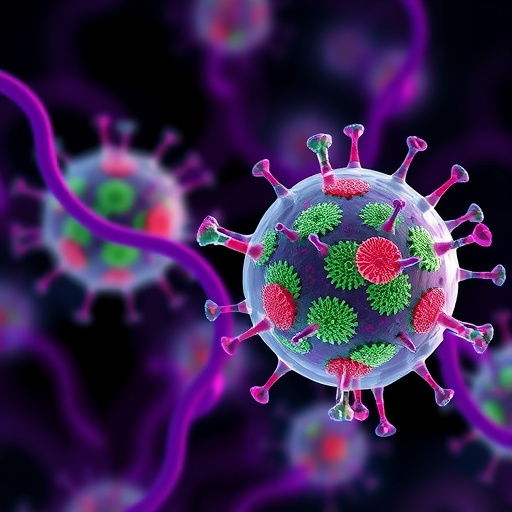
In recent years, the field of cancer research has witnessed a paradigm shift, largely driven by the growing understanding of extracellular vesicles (EVs). These nanometer-sized membranous particles, once considered mere cellular waste, have emerged as critical players in cancer biology. The comprehensive review by Aditi, Khajuria, Garima, and colleagues delves deeply into the multifaceted roles of EVs — spanning their biogenesis, the oncogenic mechanisms they propagate, their potential as diagnostic biomarkers, and their promising therapeutic applications. This discussion not only encapsulates current knowledge but also underscores the translational impact EV studies are poised to have in precision oncology.
Extracellular vesicles are heterogeneous populations of secreted entities categorized primarily into exosomes, microvesicles, and apoptotic bodies, each differing in size, biogenesis pathways, and molecular contents. Exosomes, typically 30-150 nm in diameter, originate from the endosomal system through inward budding of multivesicular bodies, subsequently fusing with the plasma membrane to release their cargo. Microvesicles, larger vesicles ranging up to 1,000 nm, shed directly from the plasma membrane. Understanding the precise cellular machinery orchestrating the formation and release of these vesicles is not merely an academic pursuit but a cornerstone to deciphering how cancer cells exploit EVs to manipulate their microenvironment.
Cancer cells use EVs as efficient vehicles to transfer oncogenic molecules such as proteins, lipids, mRNAs, microRNAs, and even DNA fragments to neighboring cells and distant organs. This intercellular communication mediated by EVs reprograms recipient cells, promoting tumor growth, immune evasion, angiogenesis, and metastasis. The review presents compelling evidence that EV cargo composition is dynamically modulated by the cell’s pathological state, creating a snapshot of the tumor’s molecular landscape. This selective packaging mechanism is orchestrated by various pathways, including ESCRT (endosomal sorting complex required for transport) dependent and independent mechanisms, which highlight the regulatory complexity underlying EV biogenesis.
Of particular note is the role of EVs in enabling metastatic dissemination, a primary cause of cancer mortality. Tumor-derived EVs precondition distant sites—often referred to as forming a pre-metastatic niche—by remodeling stromal and immune components to be more permissive to metastatic colonization. The cargo transported by EVs orchestrates extracellular matrix remodeling, recruitment of immunosuppressive cells, and angiogenic signaling, collectively facilitating tumor cell seeding. This insight into EV-mediated interorgan communication redefines metastasis as a multi-step process heavily reliant on vesicle trafficking, rather than solely on cell-intrinsic motility and invasion.
From a diagnostic perspective, the review emphasizes the burgeoning interest in exploiting EVs as liquid biopsy tools. Their stability in biofluids such as blood, urine, and saliva, coupled with their tumor-specific molecular signatures, positions EVs as superior candidates for non-invasive early detection, prognostic assessments, and monitoring therapeutic responses. Advanced isolation techniques and high-throughput molecular profiling technologies now enable detailed characterization of EV populations, revealing biomarker panels with remarkable sensitivity and specificity. This promises to revolutionize cancer diagnostics, particularly in malignancies currently lacking reliable screening methods.
Therapeutically, EVs offer tantalizing opportunities both as targets and delivery vehicles. Targeting EV biogenesis, release, or uptake pathways provides a novel avenue to interrupt tumor-promoting intercellular communication, potentially sensitizing tumors to conventional therapies. Conversely, engineering EVs to serve as precision delivery systems for anti-cancer drugs, nucleic acids, or immunomodulatory molecules exploits their natural biocompatibility and homing abilities. The review highlights state-of-the-art approaches in harnessing EVs for targeted therapy, including modifications to enhance tumor specificity and cargo loading efficiency, heralding a new era of personalized cancer treatment modalities.
Underlying these advancements is an expanding repertoire of cutting-edge technologies. Novel imaging techniques such as super-resolution microscopy and cryo-electron microscopy now visualize EV dynamics and structural composition with unparalleled detail. Complementary omics analyses—proteomics, transcriptomics, lipidomics—provide comprehensive insights into EV content and functional implications. Computational modeling integrated with experimental data elucidates vesicle trafficking networks and predicts therapeutic outcomes. This multidisciplinary synergy propels EV research from descriptive biology toward actionable clinical applications.
Despite the transformative potential, challenges remain. Standardization of EV isolation and characterization protocols is imperative to ensure reproducibility and comparability across studies. Heterogeneity within and between EV populations complicates the interpretation of functional roles and biomarker efficacy. Additionally, translating experimental findings into safe and efficacious clinical interventions demands rigorous validation and regulatory oversight. The review candidly discusses these limitations, advocating sustained collaborative efforts to overcome technical hurdles and ethical considerations.
The emerging narrative positions extracellular vesicles not merely as cellular byproducts but as central agents in cancer pathophysiology, diagnostics, and therapeutics. By shedding light on the molecular intricacies of EV biogenesis and cargo selection, and by elucidating their diverse oncogenic mechanisms, this body of work charts a path forward for innovative clinical strategies. Harnessing the full potential of EV biology could dramatically improve patient outcomes by enabling earlier detection, more precise monitoring, and tailored interventions.
In the broader oncology landscape, EV-based research is emblematic of a shift toward understanding cancer as a systemic disease involving complex intercellular communications rather than isolated aberrant cells. This holistic viewpoint is critical as it opens avenues not only for directly targeting tumor cells but also modulating the tumor microenvironment and systemic host responses. The interface of EV biology with immuno-oncology, for instance, is a particularly fertile area, with investigations into EV-mediated immune modulation informing novel immunotherapeutic designs.
Moreover, the scalability and versatility of EVs as therapeutics are advantageous for future clinical translation. Unlike synthetic nanoparticles, their endogenous origin confers superior biocompatibility and immune evasion capabilities. Adaptation of EVs for delivery of CRISPR-Cas systems, small interfering RNAs, or chemotherapeutic agents offers a platform adaptable to multiple cancer types and genetic contexts, addressing the inherent heterogeneity of malignancies.
Looking ahead, research is anticipated to delve deeper into the molecular determinants governing EV cargo specificity and destination targeting. Pinpointing key regulatory molecules will enable refined modulation of EV functions, either augmenting beneficial effects or blocking detrimental influences. Integrating EV studies with patient-derived organoids and in vivo models will facilitate precision medicine approaches tailored to individual tumor EV profiles.
In conclusion, the exhaustive analysis presented by Aditi and colleagues crystallizes the critical importance of extracellular vesicles in cancer biology and clinical oncology. This burgeoning field stands at the intersection of molecular cell biology, translational research, and therapeutic innovation. As we harness the intricate language of EV-mediated intercellular communication, we edge closer to breakthroughs that could transform cancer management, offering hope for more effective, less invasive, and personalized treatments. The journey from bench to bedside is underway, fueled by these diminutive yet powerful vesicles that carry the whispers and commands of cancer cells in their molecular cargo.
Cite Scienmag News
Nathaniel Bowman. (November 25, 2025). Extracellular Vesicles: Cancer Insights and Therapeutic Potential. Scienmag. https://scienmag.com/extracellular-vesicles-cancer-insights-and-therapeutic-potential/
Nathaniel Bowman. "Extracellular Vesicles: Cancer Insights and Therapeutic Potential." Scienmag, 25 November 2025, https://scienmag.com/extracellular-vesicles-cancer-insights-and-therapeutic-potential/. Accessed 4 September 2026.
Nathaniel Bowman. "Extracellular Vesicles: Cancer Insights and Therapeutic Potential." Scienmag. November 25, 2025. https://scienmag.com/extracellular-vesicles-cancer-insights-and-therapeutic-potential/


