


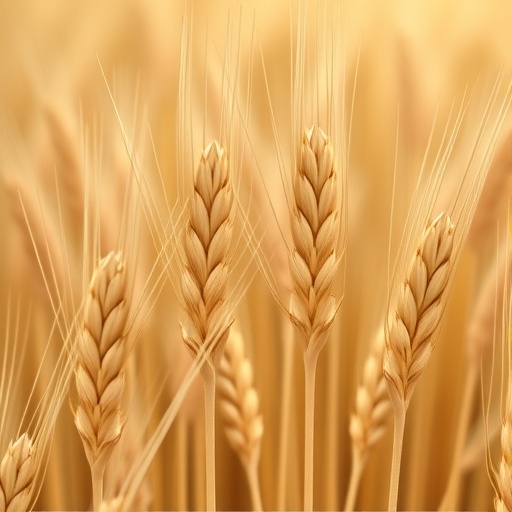
In the quest to unravel the complexities of agriculture and improve crop yields, researchers have turned increasingly to molecular genetics. A groundbreaking study by Wu et al. provides novel insights into the mechanisms driving heterosis—or hybrid vigor—specifically in wheat. This phenomenon demonstrates how hybrid offspring can outperform their parents, particularly regarding yield and resilience. The research focuses on transcriptome dynamics and the underlying allele-specific regulations that contribute to this significant agricultural trait.
The study focuses on two crucial developmental phases of wheat: anthesis, the flowering stage when fertilization occurs, and grain filling, where seeds mature and accumulate nutrients. Understanding these stages is vital because they directly influence crop yield and quality. The researchers utilized RNA sequencing to analyze the transcriptomic data at these two pivotal points. This method allows for a comprehensive examination of gene expression profiles that reveal how different alleles—the variants of a gene—play specific roles during these developmental stages.
One of the most striking findings is the identification of allele-specific regulators that operate differently in hybrid plants compared to their parental lines. These regulators affect gene expression in ways that enhance the growth and development of the hybrid plants. Moreover, Wu et al. noted that certain genes display enhanced expression levels in hybrids. The research outlines how these differences in expression can lead to increased vigor and better adaptability to environmental stresses.
A particularly fascinating aspect of the study was the role of epigenetics in this process. Epigenetic modifications, which involve changes in gene expression without altering the DNA sequence itself, were found to be significant players in the performance of hybrid wheat. These modifications can be inherited, meaning that they might influence the traits of subsequent generations. This adds a layer of complexity to our understanding of how heterosis works, suggesting that environmental factors might also perpetuate certain desirable traits through these epigenetic changes.
The researchers also aimed to map out the transcriptome variations between hybrid and parental lines more systematically. Comparisons of the transcriptome data revealed distinct patterns in how genes were expressed at different developmental stages. For instance, during anthesis, a set of genes associated with flower development was upregulated in hybrids. Meanwhile, during the grain-filling stage, genes associated with photosynthesis and nutrient transport demonstrated higher expression levels in hybrid plants.
Furthermore, the research established a direct link between these transcriptome dynamics and yield-related traits in wheat. The identification of alleles that favor hybrid performance highlights the potential for targeted breeding programs. By selecting parents based on the specific alleles that promote heterosis, breeders can develop new wheat varieties with enhanced yields and resilience to diseases.
An additional layer of complexity arises from the interactions among various alleles. The study indicates that the accumulation of beneficial alleles can result in synergistic effects, pushing hybrid performance beyond what would be expected from the additive effects of individual alleles. This discovery could revolutionize how breeders approach crop improvement, moving toward more integrative strategies that consider multiple alleles’ interactions rather than focusing on single traits.
Moreover, the implications of this research extend beyond wheat to other major crops. As food security becomes an increasing concern worldwide due to climate change and population growth, understanding the genetic basis of hybrid vigor could prove crucial. This framework can potentially be adapted to enhance the performance of other staple crops, providing a path toward sustainable agricultural practices.
In conclusion, the work of Wu et al. represents a significant advancement in agricultural genomics, shedding light on the complex interactions between genotype and phenotype in the realm of hybrid wheat. Their findings underscore the importance of transcriptional dynamics and allele-specific regulation in driving heterosis. By leveraging these insights, the agricultural community can look toward innovative breeding strategies that promise to improve yields and ensure food security.
As the research community continues to explore the myriad of genetic factors involved, it becomes increasingly evident that a multifaceted approach—integrating genomic, epigenomic, and phenotypic data—will be essential for future advancements. This study not only enriches our understanding of wheat biology but also sets the stage for future investigations that could further illuminate the molecular basis of crop improvement.
Ultimately, the pursuit of agricultural excellence through scientific inquiry remains a beacon of hope. As researchers delve deeper into the genetic underpinnings of heterosis and hybrid vigor, the potential to unlock new opportunities for sustainable farming practices becomes ever more tangible. The grit and determination of the scientific community will undoubtedly shape the future of agriculture as it faces unprecedented challenges.
Thus, the exploration and exploitation of transcriptome dynamics and allele-specific regulations in wheat represent a pivotal step forward for both science and society, hopefully paving the way for greater advancements in crop genetics and elevated standards of food security worldwide.
Wu, X., Chen, X., Wang, R. et al. Transcriptome dynamics and allele-specific regulation underlie wheat heterosis at the anthesis and grain-filling stages. BMC Genomics 26, 798 (2025). https://doi.org/10.1186/s12864-025-11983-2
Cite Scienmag News
Juliet Wilcox. (September 2, 2025). Exploring Wheat Heterosis Through Transcriptome Dynamics. Scienmag. https://scienmag.com/exploring-wheat-heterosis-through-transcriptome-dynamics/
Juliet Wilcox. "Exploring Wheat Heterosis Through Transcriptome Dynamics." Scienmag, 2 September 2025, https://scienmag.com/exploring-wheat-heterosis-through-transcriptome-dynamics/. Accessed 5 September 2026.
Juliet Wilcox. "Exploring Wheat Heterosis Through Transcriptome Dynamics." Scienmag. September 2, 2025. https://scienmag.com/exploring-wheat-heterosis-through-transcriptome-dynamics/


