


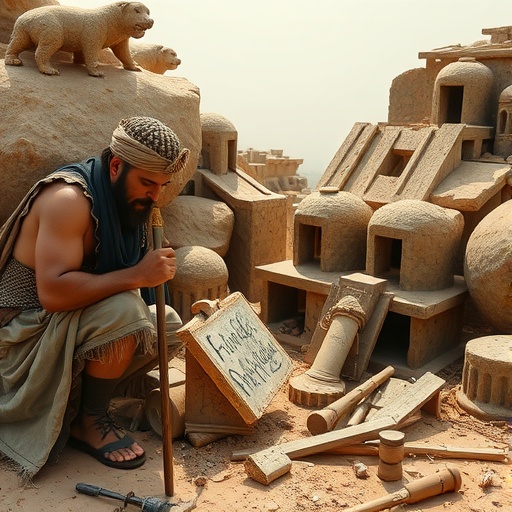
In a groundbreaking study that draws important connections between ancient cultures, Roma, Maritan, and Usai delve into the intricacies of the Impressed Corded Ware and its intersection with the White Nile Mesolithic period. This research presents fresh insights into the societal structures, technological advancements, and artistic expressions of prehistoric communities. By examining artifacts and their contexts, the authors reveal how these cultures were not isolated but rather engaged in a dynamic interplay that transcended geographic boundaries.
The Impressed Corded Ware culture, known for its distinctive pottery, serves as a focal point in understanding ancient human behavior and interaction. The study meticulously analyzes the decorative techniques employed in crafting these vessels, revealing a complexity that speaks volumes about the artisans of this era. The utilization of specific tools and methods not only reflects the technological prowess of these prehistoric people but also their aesthetic sensibilities. Understanding the significance of these artifacts goes beyond mere decoration; it paints a nuanced picture of cultural identity.
Furthermore, the research emphasizes the geographical context of the White Nile Mesolithic. This region, characterized by its unique environmental conditions, offered both challenges and opportunities for its inhabitants. The authors highlight how the shifting landscapes influenced material choices and settlement patterns. The interplay between natural resources and cultural practices provides a backdrop that is essential to understanding the lifecycle of the Corded Ware tradition.
An intriguing aspect of the study is the comparative analysis of corded pottery techniques across different regions. The authors meticulously document variations in decoration, which often reflects local materials and influences. By establishing connections with other archaeological findings, they argue convincingly for a more interconnected view of the Mesolithic era. This perspective challenges the notion of isolated cultures, instead arguing for a tapestry of influences that shaped artistic and technological developments.
Moreover, the investigation into tool production reveals intricate knowledge of material properties and manufacturing processes. The authors outline the significance of specific tools used in pottery making, emphasizing how these instruments contributed to the overall quality and functionality of the vessels. This exploration of technology not only sheds light on the practical aspects of ancient life but also underscores the intellectual achievements of Corded Ware communities.
The research does not shy away from addressing the boundaries, both physical and cultural, that influenced the evolution of these societies. The authors pose important questions regarding trade routes, migration patterns, and social networks that may have facilitated the exchange of ideas and resources. This deliberation adds depth to the narrative, illustrating how interconnected these communities were despite the challenges posed by their environments.
As the study unfolds, it becomes apparent that the authors are not merely cataloging artifacts; they are weaving a story of human resilience and adaptability. Each paragraph builds upon this narrative, drawing readers into a world where creativity and innovation thrived amid the rigors of existence. The combination of technical analysis and storytelling elevates this research, making it accessible to a broader audience while remaining firmly grounded in scientific rigor.
In their conclusion, Roma, Maritan, and Usai call for a reevaluation of the way we perceive prehistoric cultures. They assert that understanding the Impressed Corded Ware and its interactions with the White Nile Mesolithic requires an interdisciplinary approach, integrating archaeology, anthropology, and geography. This holistic view not only enriches our knowledge of the past but also offers valuable lessons for contemporary societies navigating their own complexities.
As we turn the pages of this compelling study, one cannot help but feel a sense of connection to those who lived thousands of years ago. Their struggles, triumphs, and creativity resonate through the artifacts they left behind, reminding us that the human experience is as much about our relationships with each other as it is about our environment. The authors have successfully bridged this gap, allowing us to glimpse the lives of our ancestors through a modern lens.
This research is not merely an academic exercise; it is a call to appreciate the complexities and intricacies of human history. The authors encourage further exploration and dialogue among scholars, urging them to pursue interdisciplinary partnerships that can illuminate the rich tapestry of human culture. Their message is clear: the past is not a distant memory but a living narrative that continues to influence our present and future.
Ultimately, “Techniques, Tools and Boundaries” embodies the essence of archaeological research— a commitment to uncovering truths about human societies and their development over time. The work stands as a testament to the enduring relevance of archaeology in understanding not just where we came from, but where we are headed. The world of the Impressed Corded Ware and the White Nile Mesolithic is a reminder that history is a continuous thread, interwoven with stories of innovation, adaptability, and human spirit.
In summary, this landmark research offers a profound look into the intersections of technology, art, and society in ancient contexts. By shining a light on the Impressed Corded Ware and its broader implications, Roma, Maritan, and Usai invite us to reconsider how we understand and value our shared past. Through careful examination of tools, techniques, and cultural boundaries, they lay the groundwork for future explorations that can unlock even more mysteries from the depths of human history.
Cite Scienmag News
Courtney Benton. (January 18, 2026). Exploring Tools and Techniques of Ancient Cultures. Scienmag. https://scienmag.com/exploring-tools-and-techniques-of-ancient-cultures/
Courtney Benton. "Exploring Tools and Techniques of Ancient Cultures." Scienmag, 18 January 2026, https://scienmag.com/exploring-tools-and-techniques-of-ancient-cultures/. Accessed 5 September 2026.
Courtney Benton. "Exploring Tools and Techniques of Ancient Cultures." Scienmag. January 18, 2026. https://scienmag.com/exploring-tools-and-techniques-of-ancient-cultures/


