


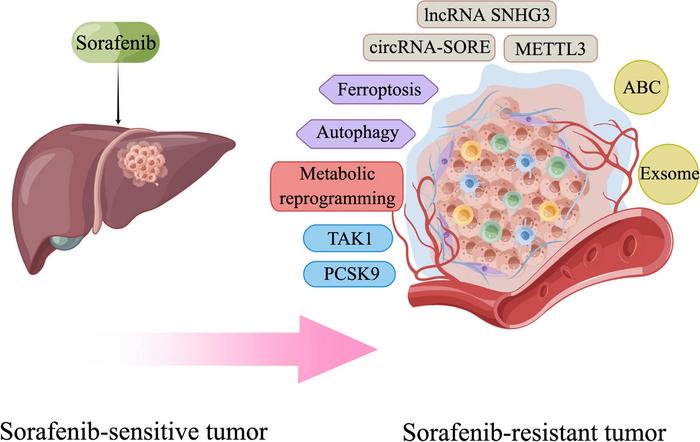
Colorectal cancer (CRC) is a leading cause of cancer-related deaths worldwide. The complexity of its pathogenesis, involving genetic mutations, dysregulated signaling pathways, and compromised immune surveillance, presents significant challenges for effective treatment. This review provides a comprehensive overview of the key signaling pathways implicated in CRC, exploring their roles in tumorigenesis and their potential as targets for therapeutic intervention.

Credit: By figdraw
Colorectal cancer (CRC) is a leading cause of cancer-related deaths worldwide. The complexity of its pathogenesis, involving genetic mutations, dysregulated signaling pathways, and compromised immune surveillance, presents significant challenges for effective treatment. This review provides a comprehensive overview of the key signaling pathways implicated in CRC, exploring their roles in tumorigenesis and their potential as targets for therapeutic intervention.
The study delves into the well-established role of EGFR-mediated signaling in CRC progression. Despite advancements in EGFR-targeted therapies, resistance remains a significant hurdle. The review explores strategies to overcome this resistance, focusing on targeting downstream molecules within the RAS-RAF-MEK-ERK and PI3K-AKT-mTOR pathways.
Furthermore, the study explores the intricate relationship between colonic epithelial cells and tumorigenesis. It examines the influence of bacterial species like Bacteroides fragilis and Escherichia coli, highlighting their roles in disrupting epithelial integrity and promoting inflammation, thereby contributing to CRC development.
Chemokines, particularly the CXCL family, are crucial in CRC progression, influencing tumor growth, angiogenesis, and metastasis. The review dissects the roles of specific CXCL chemokines and their receptors, emphasizing their potential as targets for novel therapies.
The study also explores the Notch signaling pathway, essential for maintaining intestinal epithelial integrity but often dysregulated in CRC. The review discusses the potential of gamma-secretase inhibitors (GSIs), initially developed for Alzheimer’s disease, as promising agents for targeting the Notch pathway in CRC treatment.
The Wnt/β-catenin pathway, frequently activated in CRC, is a key regulator of cell fate and stem cell renewal. The review analyzes the pathway’s role in CRC development and discusses various inhibitors targeting different components of this pathway, including Porcupine inhibitors, monoclonal antibodies against Wnt ligands, and agents disrupting the β-catenin destruction complex.
Furthermore, the study emphasizes the importance of cost-effectiveness analysis in evaluating treatment strategies for CRC. It highlights the need for personalized approaches, informed by mutation testing and economic considerations, to optimize treatment decisions.
The emergence of colonic organoids as a powerful tool for drug discovery and validation is discussed. These 3D models, closely mimicking the tumor microenvironment, offer a platform for personalized medicine, facilitating drug screening, biomarker identification, and the evaluation of combination therapies.
Conclusion:
This comprehensive review provides a valuable resource for understanding the complexities of CRC signaling pathways, guiding the development of effective targeted therapies. Continued research, focusing on overcoming resistance, optimizing drug combinations, and utilizing innovative models like colonic organoids, holds the key to improving patient outcomes in the fight against CRC.
Journal
Molecular Biomedicine
Method of Research
Literature review
Subject of Research
Not applicable
Article Title
Signaling pathways in liver cancer: pathogenesis and targeted therapy
Article Publication Date
31-May-2024
COI Statement
The authors declare no competing interests.
Cite Scienmag News
Nathaniel Bowman. (June 23, 2024). Exploring the intricate signaling pathways in colorectal cancer: Implications for targeted therapies. Scienmag. https://scienmag.com/exploring-the-intricate-signaling-pathways-in-colorectal-cancer-implications-for-targeted-therapies/
Nathaniel Bowman. "Exploring the intricate signaling pathways in colorectal cancer: Implications for targeted therapies." Scienmag, 23 June 2024, https://scienmag.com/exploring-the-intricate-signaling-pathways-in-colorectal-cancer-implications-for-targeted-therapies/. Accessed 4 September 2026.
Nathaniel Bowman. "Exploring the intricate signaling pathways in colorectal cancer: Implications for targeted therapies." Scienmag. June 23, 2024. https://scienmag.com/exploring-the-intricate-signaling-pathways-in-colorectal-cancer-implications-for-targeted-therapies/

