


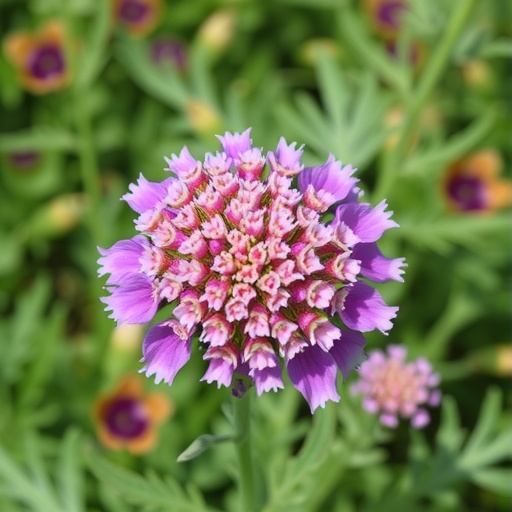
In a significant revelation in the botanical and medicinal research arena, the study conducted by Singh, Patel, and Verma delves into the intricacies of Achillea millefolium L., commonly known as yarrow. This plant, often recognized for its medicinal properties, has been a subject of interest among herbalists and scientists alike. The comprehensive morphotaxonomical and anatomical characterization of this species sheds light on its potential therapeutic benefits, unraveling both its botanical classification and the microscopical attributes that contribute to its medicinal efficacy.
Achillea millefolium is a perennial herbaceous plant belonging to the Asteraceae family. Known for its feathery leaves and clusters of small white to pink flowers, yarrow has historical significance in various traditional medicine practices across cultures. It has been utilized for its anti-inflammatory, antiseptic, and wound-healing properties, making it an essential component in herbal remedies. The latest study aims to document these characteristics more rigorously, offering valuable insights that could guide future research and applications in herbal medicine.
One of the fundamental aspects of the study is the morphotaxonomical assessment of Achillea millefolium. This involves analyzing the plant’s morphological features, including leaf shape, flower structure, and overall growth patterns. Such characteristics not only aid in accurate identification and classification of the species but also provide a basis for understanding its ecological adaptations. The researchers meticulously explored various populations of yarrow, documenting variations in morphology that could inform conservation efforts and cultivation practices.
The anatomical characterization of Achillea millefolium is equally critical, as it unveils the internal structures that contribute to its medicinal properties. Utilizing advanced microscopy techniques, the researchers examined various plant tissues, including epidermal layers, vascular bundles, and glandular structures. This detailed exploration reveals how these anatomical features may influence the plant’s capacity to synthesize and accumulate bioactive compounds known for their therapeutic effects.
As the study progresses, special attention is given to the plant’s phytochemical profile. Achillea millefolium is known to contain a plethora of secondary metabolites, such as flavonoids and essential oils, which are believed to underpin its health-promoting capabilities. Analyzing the concentration and distribution of these compounds across different plant parts enables a better understanding of how environmental factors impact their production. This knowledge is pivotal not just for enhancing medicinal use but also for promoting sustainable agriculture practices.
Furthermore, the research emphasizes the ecological significance of Achillea millefolium. As a species that thrives in diverse habitats, it plays a vital role in ecosystem maintenance. Understanding its botanical relationships and interactions within various ecosystems could elucidate its importance in biodiversity conservation. This perspective adds another layer of significance to the study, emphasizing the need for recognizing medicinal plants not only for their uses but also for their roles in natural environments.
The implications of this research extend beyond academia, as it addresses the growing interest in herbal medicine among the public. As modern consumers increasingly seek natural alternatives to conventional pharmaceuticals, the need for scientifically validated information about medicinal plants becomes paramount. This study on Achillea millefolium could serve as a valuable resource for healthcare professionals, herbalists, and individuals interested in natural health, providing evidence-based insights into the usage of this traditional remedy.
In addition to its medicinal uses, Achillea millefolium has gained popularity in landscaping and ecological restoration projects. Its ability to attract pollinators and beneficial insects makes it a favorite among gardeners and conservationists alike. This duality of purpose emphasizes the importance of continued research into the species, as understanding its biological fundamentals could enhance its applications in both medicine and environmental stewardship.
Moreover, as climate change continues to impact flora and fauna globally, the study highlights the importance of monitoring and preserving genetic diversity within species such as Achillea millefolium. Genetic variation is crucial for adaptation and resilience, and this research could inform conservation strategies aimed at protecting this valuable species from the threats posed by environmental change.
By identifying and characterizing the unique properties of Achillea millefolium, researchers hope to inspire further studies that explore other underutilized medicinal plants. The medicinal uses of yarrow are just one example of nature’s pharmacopoeia, and this work opens the door to revitalizing interest in the vast array of plants that nature has to offer. Future investigations could lead to the discovery of new bioactive compounds and innovative applications in health and wellness.
The study’s findings also echo the call for interdisciplinary collaboration in the field of ethnobotany. By bridging traditional knowledge with modern scientific methods, researchers can uncover insights that are beneficial for both communities that rely on these plants and the scientific community that aims to study them. Achillea millefolium serves as a prime example of how traditional knowledge can be validated and expanded upon through rigorous scientific inquiry.
Finally, as the global landscape of medicine continues to evolve, ongoing research into plants like Achillea millefolium is vital for integrating traditional and modern methodologies. The quest for effective treatments must be informed by a comprehensive understanding of the biological and ecological profiles of medicinal plants, ensuring that their potentials are realized in a manner that is sustainable and culturally respectful.
In conclusion, the morphotaxonomical and anatomical characterization of Achillea millefolium L. presents significant findings that contribute to the understanding of this therapeutic medicinal plant. The implications of such studies are far-reaching, with the potential to influence practices in herbal medicine, conservation, and sustainable agriculture. As interest in natural remedies grows, the validation of plants like yarrow will reinforce the importance of botanical research in the quest for health and well-being, ultimately encouraging a harmonious relationship with the myriad forms of life that encompass our planet.
Singh, S., Patel, S. & Verma, D. Morphotaxonomical and anatomical characterization of Achillea millefolium L.: a therapeutic medicinal plant.
Discov. Plants 2, 212 (2025). https://doi.org/10.1007/s44372-025-00296-z
Cite Scienmag News
Alan Morgan. (August 25, 2025). Exploring the Anatomy and Traits of Achillea Millefolium. Scienmag. https://scienmag.com/exploring-the-anatomy-and-traits-of-achillea-millefolium/
Alan Morgan. "Exploring the Anatomy and Traits of Achillea Millefolium." Scienmag, 25 August 2025, https://scienmag.com/exploring-the-anatomy-and-traits-of-achillea-millefolium/. Accessed 3 September 2026.
Alan Morgan. "Exploring the Anatomy and Traits of Achillea Millefolium." Scienmag. August 25, 2025. https://scienmag.com/exploring-the-anatomy-and-traits-of-achillea-millefolium/


