


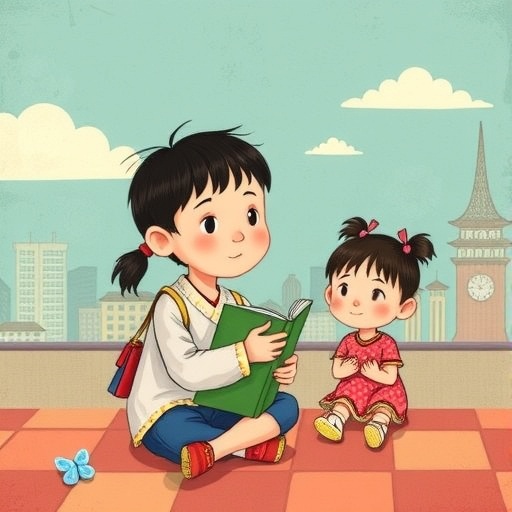
In recent years, the discourse surrounding race and representation in children’s literature has gained impressive momentum. A crucial contribution to this growing conversation comes from the work of researchers like Wee, SJ., Xue, M., and Lo, Y., who meticulously analyze the pervasive themes of racism and microaggressions as illustrated in children’s picture books. Their study delves into the specific experiences of East Asian and Asian American individuals, aiming to unpack narratives that often remain underrepresented or misrepresented in literary contexts aimed at young audiences.
The researchers emphasize the importance of children’s literature as a formative element in shaping a child’s understanding of society and their place within it. Picture books, specifically designed for young readers, serve as a primary introduction to narratives about race and cultural identity. The impact of these stories significantly influences children’s perceptions, understanding of diversity, and the development of empathy. Thus, a critical examination of the racial dynamics presented in these narratives is pivotal for fostering inclusive and understanding societies.
Historically, children’s literature has often perpetuated stereotypes and normalized biased perspectives through simplified storylines and caricatured characters. This tendency can lead to the marginalization of Asian experiences and reinforce harmful stereotypes. The work of Wee et al. is a vital corrective to these trends, highlighting specific examples wherein racism manifests and how these portrayals can affect young readers. Their analysis is not only a critique but also a call to action for authors, illustrators, and educators to consider the powerful role that representation plays in storytelling.
The venture into analyzing children’s books for themes of racism and microaggressions is anchored in a broader socio-cultural context. By encapsulating the East Asian and Asian American experiences, the researchers provide a lens through which to examine how societal prejudices infiltrate even the most innocuous of narratives intended for children. This exploration reveals the intricate layers of meaning that emerge from seemingly benign illustrations and text, shedding light on the societal structures that perpetuate inequality.
Moreover, the authors explore the implications of such narratives on the cognitive and emotional development of children. Children are keen observers of the world around them, and the stories they consume can powerfully shape their understanding of interpersonal relationships, cultural differences, and social norms. When children encounter microaggressions and biased depictions in literature, it can validate harmful stereotypes and hinder their ability to empathize with others. Therefore, the researchers argue that boosting representation can markedly improve children’s social development and understanding of their peers.
One of the most striking aspects of the research is how it spotlights the often-overlooked narratives within Asian American communities. The experiences of these groups are complex and varied, encompassing a rich tapestry of cultural backgrounds. The researchers argue that literature should reflect these complexities rather than present a monolithic perspective. By unpacking these narratives, the study urges publishers and educators to broaden their scope, recognizing the multifaceted nature of Asian identities.
Furthermore, the analysis presented by Wee, Xue, and Lo offers recommendations for authors and educators aimed at promoting equity through literature. They advocate for the creation of culturally affirming texts that present diverse characters in nuanced, relatable situations. Effective representation should go beyond mere skin color to include various cultural practices, languages, and experiences that resonate with children. This approach not only serves to enrich the literary landscape but also validates the experiences of children from diverse backgrounds.
Critically, this research serves as a starting point for a broader dialogue about the responsibility of publishers and educators to prioritize inclusive narratives. The authors argue for a paradigm shift in how children’s literature is curated, pushing for intentional efforts to select books that challenge and dismantle systemic racism and xenophobia. Discussions around selection criteria for children’s literature must take into account the socio-political implications of the stories being told and how they can either reinforce or dismantle stereotypes.
Ultimately, the work done by Wee, SJ., Xue, M., and Lo, Y. beckons readers to engage in critical consumership. It encourages parents, educators, and young readers to question the narratives they encounter, recognizing the power they hold in shaping not only individual identities but societal norms as well. This proactive stance is crucial in cultivating a generation of empathetic individuals who understand and celebrate diversity in its many forms.
In light of this research, one may wonder how different stakeholders—authors, educators, and publishers—can enact change. Collaborative efforts that include voices from diverse backgrounds can enhance the quality and authenticity of children’s literature. Workshops, forums, and discussions can foster a shared understanding of the types of narratives that can uplift marginalized voices, thereby creating a more inclusive literary canon for future generations.
In conclusion, the insights provided by this research articulate a compelling case for the urgent need to scrutinize and improve the narratives presented in children’s literature regarding race and microaggressions. It challenges all members of the literary community to pave the way for greater diversity and representation. By consciously choosing materials that reflect the breadth of human experience, literature can transcend mere storytelling to become a robust tool for social change and understanding.
Wee, SJ., Xue, M., Lo, Y. et al. Unpacking East Asian/Asian American Experiences of Racism and Microaggressions Portrayed in Children’s Picturebooks. Early Childhood Educ J (2025). https://doi.org/10.1007/s10643-025-01954-3
Cite Scienmag News
Courtney Benton. (August 25, 2025). Exploring Racism in East Asian Children’s Picturebooks. Scienmag. https://scienmag.com/exploring-racism-in-east-asian-childrens-picturebooks/
Courtney Benton. "Exploring Racism in East Asian Children’s Picturebooks." Scienmag, 25 August 2025, https://scienmag.com/exploring-racism-in-east-asian-childrens-picturebooks/. Accessed 4 September 2026.
Courtney Benton. "Exploring Racism in East Asian Children’s Picturebooks." Scienmag. August 25, 2025. https://scienmag.com/exploring-racism-in-east-asian-childrens-picturebooks/


