


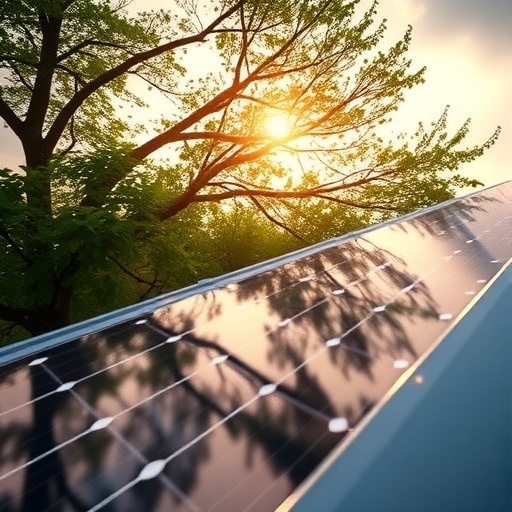
Recent research shines a light on an invisible enemy impacting solar energy efficiency: pollution. In a world increasingly reliant on renewable energy sources, the efficiency of solar panels is vital for maximizing energy production and reducing reliance on fossil fuels. However, pollution can significantly hinder their effectiveness, leading to decreased energy output. This pressing issue has sparked innovative investigations into potential solutions, particularly through the use of hydrophilic nano-coatings that promise self-cleaning capabilities without the need for water.
The research conducted by Akı, Akal, and Tez explores the intersection of environmental pollution and solar energy production, offering a comprehensive examination of how contaminants not only obscure solar panels but also diminish their ability to harness sunlight. The findings of this study highlight an alarming trend: as urban areas grow and air quality deteriorates, the performance of solar panels can suffer considerably. Dust, dirt, and other particulates accumulate on panel surfaces, creating a barrier that prevents sunlight from reaching photovoltaic cells.
One of the cornerstones of this research is the introduction of hydrophilic nano-coatings, which possess properties that enable them to effectively repel water and contaminants. These coatings can be applied to solar panels to enhance their ability to maintain cleanliness through the natural action of rain or humidity. The research highlights how these nano-coatings create a surface that encourages water to spread evenly and wash away dirt and grime, thus preventing a buildup of pollutants that can block sunlight.
A hallmark of hydrophilic nano-coatings is their sophisticated surface chemistry. These coatings are engineered at the molecular level, allowing for interactions with water that facilitate self-cleaning. The study illustrates the effectiveness of these coatings in various environmental conditions, demonstrating that they can significantly reduce the frequency and extent of manual cleaning, which is traditionally labor-intensive and costly. Furthermore, the authors emphasize that utilizing these advanced coatings can lead to substantial long-term savings for solar energy producers.
The implications of reduced cleaning efforts extend beyond mere convenience. The study posits that by maintaining a higher level of efficiency in solar panels through the use of nano-coatings, solar energy becomes a more viable and attractive option for both residential and commercial applications. As the technology matures, the potential for widespread adoption increases, leading to a more sustainable future for energy production.
Moreover, the research delves into the cost-effectiveness of applying such coatings compared to traditional cleaning methods. Solar panel operators often face diminishing returns due to the costs associated with upkeep, which can deter investment in solar technology. By proving that self-cleaning coatings can maintain optimal performance levels with less intervention, the study presents a compelling case for the adoption of these innovations in new and existing solar installations.
In recognizing the global scale of pollution and its detrimental effects on solar energy production, the researchers advocate for policies that promote cleaner environments. Governments and energy stakeholders must acknowledge that maximizing energy production from renewable sources is not solely a technological challenge, but also an environmental one. By incentivizing cleaner air and reducing industrial emissions, the performance of solar panels can be optimized, thereby supporting the transition to a greener economy.
As urbanization continues to rise, the researchers caution that pollution will remain a persistent challenge for solar energy. They urge for deeper investigations into alternative materials and technology that can enhance the resilience of solar panels against pollutants. The study’s findings underline the necessity for ongoing research and development in the field of solar energy, pairing technological advancements with environmental stewardship.
The authors also call for collaboration between scientists, engineers, and policymakers to tackle the multifaceted challenges associated with solar energy efficiency. A unified approach combining cutting-edge research, informed policy-making, and public awareness can significantly advance the effectiveness of renewable energy systems. The quest for clean energy solutions must not only encompass technological innovations but also engage communities to reduce pollution at the source.
In conclusion, the study by Akı and colleagues serves as a crucial reminder of the interdependence between environmental health and renewable energy efficiency. With pollution acting as a formidable barrier to the full potential of solar technology, innovative solutions like hydrophilic nano-coatings present a practical pathway forward. By embracing these advancements, the prospect of a cleaner, more sustainable energy future becomes increasingly attainable. The ongoing pursuit of knowledge and innovation in this arena holds promise not only for the solar industry but for the planet as a whole.
Through the lens of this impactful research, the case for hydrophilic nano-coatings becomes more than just an academic exploration—it turns into a clarion call for action. Embracing such technology could pave the way for new standards in solar energy production, turning obstacles into opportunities and reinforcing the critical role that clean energy plays in combating climate change. As with any great scientific advancement, the path ahead involves rigorous testing, widespread adoption, and an unwavering commitment to improving the health of our planet.
The researchers encourage a collective effort to raise awareness about the importance of maintaining solar panel efficiency in the face of pollution. By informing both consumers and energy producers about the benefits of advancements like hydrophilic nano-coatings, the transition to resilient renewable energy systems can be accelerated. The implications touch every sphere of modern life, from individual households to global economies, and fostering this shift will be essential for a sustainable future.
Finally, the research transcends technical boundaries, merging scientific inquiry with practical applications. It embodies the spirit of innovation needed to address some of the most pressing environmental challenges of our time. The potential for hydrophilic nano-coatings to redefine solar panel maintenance is a testament to the power of technology to transform industries and enhance our quality of life. As we look to the future of energy production, it is critical to embrace these advances and work collaboratively towards viable solutions that prioritize both ecological integrity and human progress.
Akı, O., Akal, D., Tez, T. et al. Investigation of the pollution effect on reducing energy production in solar panels and self-cleaning with hydrophilic nano-coatings without using water.
Environ Sci Pollut Res (2025). https://doi.org/10.1007/s11356-025-36947-7
Cite Scienmag News
Faith Mcneil. (September 15, 2025). Exploring Pollution’s Impact on Solar Panel Efficiency. Scienmag. https://scienmag.com/exploring-pollutions-impact-on-solar-panel-efficiency/
Faith Mcneil. "Exploring Pollution’s Impact on Solar Panel Efficiency." Scienmag, 15 September 2025, https://scienmag.com/exploring-pollutions-impact-on-solar-panel-efficiency/. Accessed 6 September 2026.
Faith Mcneil. "Exploring Pollution’s Impact on Solar Panel Efficiency." Scienmag. September 15, 2025. https://scienmag.com/exploring-pollutions-impact-on-solar-panel-efficiency/


