


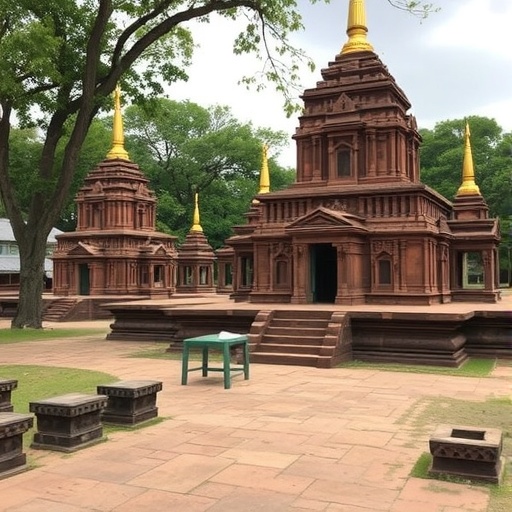
The rich tapestry of prehistoric archaeology in Myanmar has long enthralled researchers, and a recent study delves into its extensive history. The authors of the paper, Wei, Liang, and Soe, encapsulate the evolution of archaeological practices in a region that has often been overlooked in broader discussions of Southeast Asian archaeology. The landscape of Myanmar, steeped in antiquity, serves as a window into the past, revealing evidence of early human settlements and their cultural development over thousands of years. This brief review provides an essential overview for historians, archaeologists, and scholars eager to explore the roots of this intriguing Southeast Asian nation.
From the moment the first stone tools were discovered, Myanmar has offered an abundance of archaeological evidence showcasing the early inhabitants’ ability to adapt and thrive in various environments. The Paleoarchaeological finds in the region, dating back to the Paleolithic era, underscore a remarkably advanced understanding of tool-making and usage by early humans. Such artifacts not only highlight the cognitive skills of these ancient populations but also provide insights into their daily life, subsistence practices, and interaction with the environment.
Throughout the Neolithic period, the evidence grows more abundant, revealing a transition towards sedentary agricultural practices. This pivotal shift is documented through various archaeological sites that reflect the gradual development of agriculture and domestication of plants and animals. Excavations of Neolithic settlements indicate that communities began to establish more permanent living arrangements, fostering social structures and complex societies. Such transformations were significant, marking the dawn of crop cultivation in this vibrant area.
In the Bronze Age, the discovery of metalworking further illustrates Myanmar’s rich cultural evolution. Archaeologists have identified sites where early metallurgical practices flourished, suggesting that the region was not only a participant in the spread of technology but also a contributor to innovations that would influence surrounding areas. Analysis of metal artifacts showcases sophisticated craftsmanship, indicating a society that placed value on both functionality and artistry. This period also saw the emergence of trade networks, linking Myanmar to neighboring regions and facilitating cultural exchanges.
The study of prehistoric archaeology in Myanmar is inextricably linked to the country’s myriad ethnic groups, each contributing unique cultural elements. As researchers continue to unearth artifacts, they can trace the complex interplay between different societies and their customs throughout history. From pottery and textiles to metallurgy and architecture, these findings depict a dynamic tapestry of cultural interaction, adaptation, and resilience, all of which define Myanmar’s archaeological narrative.
Expert scholars face the challenge of piecing together this intricate historical puzzle, as many archaeological sites remain under-explored. The potential for groundbreaking discoveries is significant, particularly in remote areas that are difficult to access. These regions, often overgrown or affected by conflict and environmental changes, may still harbor undiscovered artifacts that could dramatically alter our understanding of early civilizations in Myanmar. Such continued exploration not only enriches our comprehension of the past but also allows for the recovery of lost narratives that deserve to be told.
Furthermore, the role of climate change cannot be underestimated within this archaeological framework. As shifting weather patterns affect the landscape, researchers are compelled to adapt their approaches and methodologies. The preservation of sites is deeply intertwined with environmental conditions, and many historically significant locations may be at risk due to rising temperatures and extreme weather events. Innovative strategies for conservation are therefore needed to safeguard Myanmar’s archaeological heritage for future generations.
In a contemporary context, the surge of interest in Myanmar’s archaeological heritage has drawn international attention. Collaborative efforts between local and international archaeologists are essential to share knowledge, enhance preservation methods, and develop sustainable tourism that respects and uplifts the cultural significance of the sites. Such cooperations foster a greater appreciation for the deep-rooted history of Myanmar while empowering local communities to value and protect their archaeological treasures.
Moreover, public interest in archaeology extends beyond academia. As discoveries captivate the wider populace, there is a growing demand for accessible education regarding the significance of these findings. Engaging exhibitions, workshops, and interactive online platforms provide essential avenues for disseminating knowledge about Myanmar’s prehistoric societies. Empowering local communities to act as stewards of their heritage can promote pride and ownership over archaeological sites, ensuring their preservation for years to come.
Ultimately, the complexity of prehistoric archaeology in Myanmar unfolds in layers, each waiting to be explored and understood. The recent review by Wei and colleagues emphasizes the importance of adopting a holistic approach to uncovering the past. By integrating traditional archaeological techniques with modern technologies, such as remote sensing and spatial analysis, we can glean deeper insights into prehistoric life and its connections to subsequent historical developments.
The narrative woven by Myanmar’s archaeological record is compelling, and ongoing research promises to illuminate the many facets of its ancient human experience. As scholars continue to engage with the archaeological legacy of Myanmar, they will undoubtedly uncover stories that resonate with contemporary themes — those of adaptation, resilience, and the ever-evolving relationship between humans and their environment. The task ahead is immense, but it is one that holds the potential to redefine our understanding of Southeast Asia’s prehistoric landscape, compelling us to re-examine our perceptions of cultural history in the region.
As we reflect on the findings of this study, we are reminded of the irreplaceable value of archaeology in human discourse. It is through the lens of our ancestors’ lives and experiences that we can glimpse our origins, and Myanmar’s prehistoric archaeology continues to offer essential insights into the shared narrative of humanity. The future of this field shines brightly as continued exploration holds the promise of further revelations, forging connections across time and place, and enhancing our understanding of what it means to be human.
While substantial knowledge has been gained about Myanmar’s prehistoric past, numerous questions remain unanswered. The pursuit of these answers will require dedication, innovation, and collaboration across various academic disciplines. Researchers are tasked with not only interpreting archaeological evidence but also engaging with the cultural implications of their findings. It is a challenging yet rewarding endeavor that will shape the discourse surrounding Myanmar’s archaeology and its significance in the broader context of global history for generations to come.
Wei, X., Liang, T., Soe, M.T. et al. The history of prehistoric archaeology in Myanmar: a brief review.
asian archaeol 7, 203–219 (2023). https://doi.org/10.1007/s41826-023-00075-3
Cite Scienmag News
Courtney Benton. (January 20, 2026). Exploring Myanmar’s Prehistoric Archaeological Journey. Scienmag. https://scienmag.com/exploring-myanmars-prehistoric-archaeological-journey/
Courtney Benton. "Exploring Myanmar’s Prehistoric Archaeological Journey." Scienmag, 20 January 2026, https://scienmag.com/exploring-myanmars-prehistoric-archaeological-journey/. Accessed 3 September 2026.
Courtney Benton. "Exploring Myanmar’s Prehistoric Archaeological Journey." Scienmag. January 20, 2026. https://scienmag.com/exploring-myanmars-prehistoric-archaeological-journey/


