

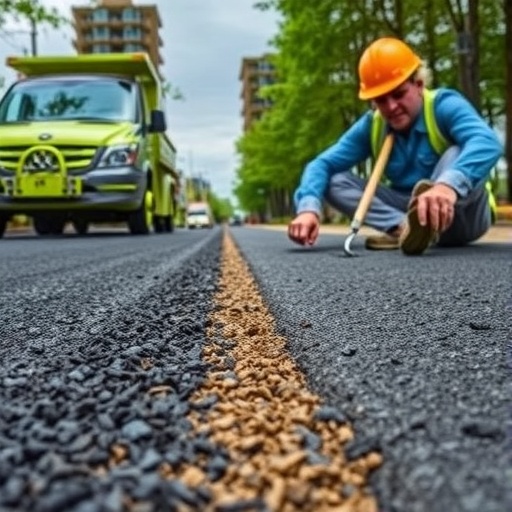
As urbanization continues to reshape our infrastructure, the need for sustainable and resilient construction materials has never been more pressing. Among the innovative solutions gaining traction is the advent of high-porous rubberized asphalt pavements, a material that not only addresses the increasing demand for robust roadway systems but also incorporates eco-friendly practices. Recent research conducted by a team led by M. Aswin has systematically examined the mechanical performance of these pavements when enhanced with Engineered Cementitious Composites (ECC) mortar. This transformative approach aims to redefine the quality and sustainability of asphalt surfaces in urban environments.
The concept of rubberized asphalt is rooted in the repurposing of tires that would otherwise contribute to waste. By integrating ground tire rubber into asphalt mixtures, engineers can significantly improve the performance characteristics of pavements. This innovation not only prolongs the lifespan of roadway surfaces but also minimizes the environmental burden associated with tire disposal. The research team’s focus on high porosity in rubberized asphalt presents a double advantage, enhancing drainage capabilities while retaining structural integrity—an essential trait for immediate and long-term performance in varying climatic conditions.
Engineered Cementitious Composites represent a leap forward in composite materials, offering superior ductility and resistance to cracking compared to traditional concrete mixes. The combination of ECC mortar with rubberized asphalt aims to create a synergy that maximizes the strengths of both materials. The incorporation of ECC is particularly significant because its inherent properties can counteract the common issues faced by asphalt pavements, such as susceptibility to deformation under loads, moisture damage, and thermal cracking. The research diligently explores how the interaction between the porous rubberized asphalt and the ECC mortar can enhance overall pavement performance and lifecycle.
The experimental investigation conducted by Aswin and his colleagues meticulously evaluates various mechanical properties essential for the practical applications of these innovative materials. Through rigorous testing methodologies, the team assessed parameters such as compressive strength, tensile strength, and ductility of the rubberized asphalt grouted with ECC mortar. These fundamental mechanical properties are crucial as they provide insights into the materials’ behavior under different loads and environmental conditions, thereby informing future design and construction practices.
One of the primary objectives of the study was to determine the optimal composition of rubberized asphalt when combined with ECC mortar. This entailed experimenting with different ratios and configurations to find the best-performing mixture. The researchers meticulously documented the resulting mechanical characteristics, which revealed that specific formulations significantly outperformed conventional mixtures in terms of durability and resistance to deformation. Such discovery could pave the way for broader adoption of these materials in real-world applications, addressing the dual challenge of sustainable construction and infrastructural resilience.
Field trials complemented laboratory tests, providing a comprehensive view of how these materials hold up under actual traffic conditions. The integration of ECC into high-porous rubberized asphalt not only enhances mechanical performance but also responds to concerns over noise reduction and reflecting heat—a common issue found in urban environments. The findings highlighted the potential for reduced road noise levels, making commuting more pleasant for urban residents while also mitigating the urban heat island effect.
In addition to mechanical and acoustic properties, the research also delves into the environmental impact of using recycled materials in construction. By utilizing scrap tires, the carbon footprint of asphalt production could be significantly reduced while also preserving natural resources. The implications of this study are monumental; as cities grapple with sustainability goals, the adoption of rubberized asphalt grouted with ECC represents a tangible step toward eco-friendly urban infrastructure.
The research outcomes contribute valuable insights into not only the viability of these innovative pavements but also their scalability within the construction industry. As municipalities become increasingly aware of the benefits of integrating sustainable materials into their infrastructure projects, the demand for data-driven approaches to pavement performance grows. This exploration into high-porous rubberized asphalt combined with ECC mortar embodies this trend, providing a template for future experimental studies aimed at optimizing materials for next-generation roadway systems.
Moreover, the relevance of this research extends beyond mere technical specifications. It embodies a visionary approach to civil engineering that encompasses material reuse and sustainability as fundamental principles. Educating stakeholders, including urban planners, civil engineers, and policymakers, on the feasibility and advantages of using recycled materials is crucial for fostering an environment of innovation in construction techniques.
As the transportation sector continues striving toward greener roads, insights from studies like Aswin’s will also play a pivotal role in shaping public policy and investment in infrastructure. Advocates for sustainable development may leverage these findings to influence decisions that prioritize environmentally friendly practices. Initiatives promoting the use of recycled contents in paving offer broader implications, urging shifts in legislative frameworks to align with sustainable construction goals.
Engaging with the public discourse surrounding sustainable infrastructure can amplify the importance of such studies. Through media outreach, presentations, and community involvement, researchers and advocates can help foster public awareness and support for adopting resilient and sustainable paving alternatives. Increasing visibility around these innovative materials and their benefits will ultimately enhance their acceptance and implementation on a larger scale.
The road ahead for high-porous rubberized asphalt pavements enhanced with ECC mortar appears promising. As cities evolve and populations grow, the need for durable, resilient, and environmentally conscious infrastructure will only intensify. The ongoing exploration into the mechanical performance of these materials can catalyze transformative changes across the construction industry, ensuring that future generations inherit roadways built with sustainable principles that stand the test of time.
In conclusion, the experimental investigation led by Aswin and his colleagues represents a significant stride toward integrating innovative materials in urban infrastructure. By merging the old-world function of asphalt with cutting-edge ECC technology and sustainable practices, researchers are redefining what it means to build for the future. The findings underscore a broader commitment to sustainable urban environments, where resilience, efficiency, and eco-consciousness are no longer seen as separate entities but rather as integrated components of successful civil engineering.
Subject of Research: High-porous rubberized asphalt pavement grouted with ECC mortar.
Article Title: Experimental investigation on mechanical performance of high-porous rubberized asphalt pavement grouted with ECC mortar.
Article References:
Aswin, M., Adamu, M., Liew, M.S. et al. Experimental investigation on mechanical performance of high-porous rubberized asphalt pavement grouted with ECC mortar.
Discov Sustain (2025). https://doi.org/10.1007/s43621-025-02436-7
Image Credits: AI Generated
DOI: 10.1007/s43621-025-02436-7
Keywords: Rubberized asphalt, Engineered Cementitious Composites, Sustainable materials, Mechanical performance, Urban infrastructure, Eco-friendly paving solutions.


