


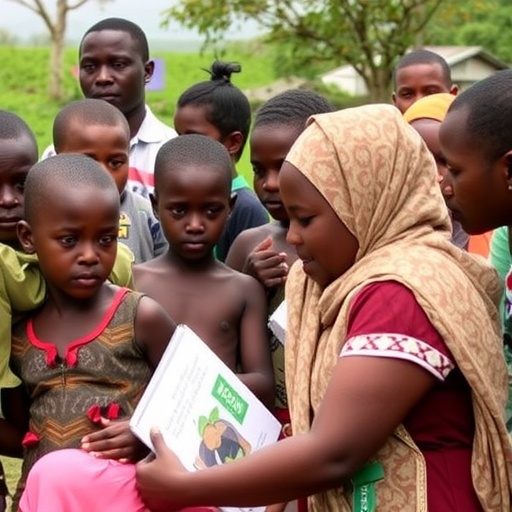
In the context of rapid globalization and increasing interconnectedness, knowledge management has emerged as a critical factor for national development, especially in countries like Kenya. A recent study by Wainaina and Sun delves into the experiences of foreign-educated Kenyan returnees, shedding light on the environmental factors that affect their ability to utilize and share knowledge upon their return to the country. This research highlights the importance of recognizing and addressing these elements to foster a conducive atmosphere for knowledge exchange that can ultimately propel national progress.
Kenya’s development trajectory is significantly influenced by its human capital, particularly those who acquire education abroad. As these individuals return, they bring with them not only advanced skills and knowledge but also diverse perspectives that can contribute to the country’s advancement. However, the process of integrating this acquired knowledge into the local context is fraught with challenges stemming from various environmental factors. Understanding these barriers is essential for creating frameworks that support effective knowledge utilization and sharing.
The role of environmental factors cannot be understated when examining the experiences of returnees. The study categorizes these elements into economic, cultural, and social dimensions. Economic factors include access to resources, funding opportunities, and the overall economic climate of the country. For returnees, the availability and accessibility of financial support can either facilitate or hinder their initiatives aimed at knowledge sharing. A robust economy that values innovation encourages returnees to invest their skills for societal benefit, enhancing overall development.
Cultural factors also play a significant role in shaping the knowledge-sharing landscape. The attitudes toward education and foreign experience within local communities can either promote or discourage returnees from sharing their insights. In some cases, returnees may face skepticism or resistance from colleagues who perceive their foreign education as less relevant or applicable to local contexts. This cultural friction can stifle innovation and lead to a scenario where valuable knowledge remains untapped.
Social networks significantly influence how knowledge is shared among returnees. The study underscores the importance of building robust social connections, as access to networks often determines the reach and impact of one’s knowledge. Returnees who can integrate into existing professional networks are more likely to successfully disseminate their insights, while those who struggle to establish connections may find themselves isolated, leading to a decrease in potential contributions to national development.
The research further demonstrates that institutional support mechanisms, such as professional organizations and government initiatives, can enhance the capacity of returnees to share knowledge. When professional associations actively engage with returnees, providing platforms for sharing ideas and experiences, it leads to enhanced collaboration and innovation. These institutions can act as a bridge, facilitating knowledge transfer between returnees and local professionals in their relevant fields.
Moreover, the legal frameworks governing business operations and intellectual property can greatly influence the willingness of returnees to share their knowledge. In environments that lack clear policies or protections for intellectual contributions, there can be apprehension towards sharing innovative ideas, which may deter potential entrepreneurial ventures that could significantly benefit the nation. A conducive legal environment encourages openness and the safe exchange of knowledge.
The study also highlights the significance of orientation programs designed for returnees. Such programs can facilitate smoother transitions by providing essential resources, insights into the local cultural and professional environment, and connecting returnees with like-minded individuals. By equipping them with necessary tools and knowledge about navigating local industries, these initiatives can bolster their confidence and ability to share their insights more effectively.
Furthermore, successful examples of knowledge sharing can pivotally illustrate effective models. For instance, stories of returnees who have established startups or engaged in community projects serve to inspire others, creating a ripple effect that potentially mobilizes more returnees to contribute to national development. Celebrating these achievements can shape positive narratives around the contributions of returnees, fostering a more inclusive and supportive environment for knowledge exchange.
In addition, understanding the impact of technological advancements is crucial in this dialogue. The proliferation of digital platforms has created new avenues for knowledge sharing, allowing returnees to disseminate information to larger audiences without geographical limitations. Online forums, social media, and collaborative technologies can serve as effective tools for fostering engagement and exchanging ideas, enabling returnees to reach diverse stakeholders across the country and the globe.
As Kenya positions itself in the global economy, fostering a knowledge-driven society becomes paramount. Policymakers must recognize the value that foreign-educated returnees bring and create supportive environments tailored to their unique challenges. This includes crafting policies that explicitly support knowledge-sharing initiatives, incentivizing entrepreneurial endeavors among returnees, and constructing platforms for collaboration that bridge gaps between different sectors.
In conclusion, Wainaina and Sun’s research underscores the importance of understanding the interplay between environmental factors and knowledge sharing in national development. It emphasizes that fostering a robust system for knowledge exchange is not solely about the individual returnees; it encompasses broader systemic, cultural, and institutional support. For Kenya to leverage the potential of its human capital effectively, it is critical to cultivate an environment that encourages and facilitates the sharing of knowledge, ultimately paving the way for sustainable national development and transformation.
Wainaina, P.K., Sun, Y. Knowledge management for national development: the role of environmental factors in knowledge utilization and sharing by foreign-educated Kenyan returnees.
Discov Educ (2025). https://doi.org/10.1007/s44217-025-01021-4
Cite Scienmag News
Courtney Benton. (December 14, 2025). Environmental Influences on Knowledge Sharing by Kenyan Returnees. Scienmag. https://scienmag.com/environmental-influences-on-knowledge-sharing-by-kenyan-returnees/
Courtney Benton. "Environmental Influences on Knowledge Sharing by Kenyan Returnees." Scienmag, 14 December 2025, https://scienmag.com/environmental-influences-on-knowledge-sharing-by-kenyan-returnees/. Accessed 4 September 2026.
Courtney Benton. "Environmental Influences on Knowledge Sharing by Kenyan Returnees." Scienmag. December 14, 2025. https://scienmag.com/environmental-influences-on-knowledge-sharing-by-kenyan-returnees/


