


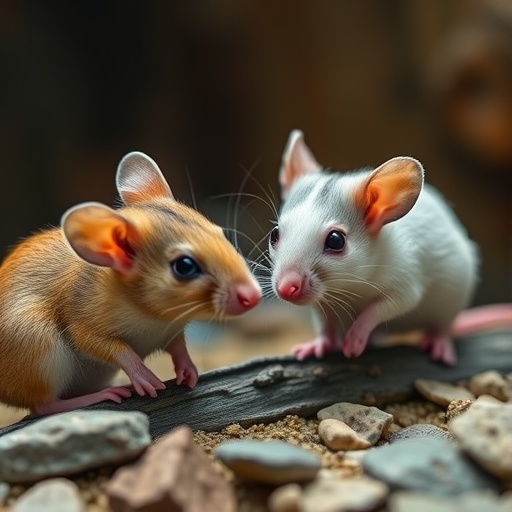
A groundbreaking study from UCLA has uncovered intriguing parallels between the cooperative behaviors displayed by mice and those exhibited by artificial intelligence systems. This research sheds light on the mechanisms underlying collaboration, a fundamental aspect of both biological organisms and advanced technological constructs. As society grapples with increasing division and conflict, understanding the nature of cooperation and how it can be fostered may have profound implications for various fields, from neuroscience to artificial intelligence (AI).
Cooperation serves as a backbone for effective social structures, influencing everything from interpersonal relationships to large-scale international diplomacy. The ability to work collaboratively is not only a hallmark of human interaction but is also essential for the survival of various species across the animal kingdom. The insight gained from studying cooperative behaviors in different systems may open new avenues for mitigating social strife and improving the design of AI systems that are increasingly becoming part of our daily lives.
In this research, scientists designed a series of carefully controlled experiments where pairs of mice were tasked with working together under stringent time constraints. Utilizing advanced techniques such as calcium imaging, the researchers monitored the activity of individual neurons within the anterior cingulate cortex (ACC) of the mice during their cooperative efforts. This area of the brain is known to play a significant role in social behavior and decision-making processes, making it a focal point for understanding how cooperation is neurologically encoded.
The results revealed that the mice were able to develop effective strategies for cooperation. They learned to approach each other’s locations, wait for one another before taking action, and engage in reciprocal interactions aimed at securing mutual rewards. The frequency of these cooperative behaviors amplified significantly as the trials progressed, demonstrating that the animals were not only learning but also enhancing their social skills through experience. Their ability to coordinate actions improved dramatically, signifying a fundamental understanding of the complexities involved in teamwork.
Moreover, the study identified specific neuronal behaviors associated with successful cooperation. Mice that displayed heightened cooperative performance showed stronger neural activation related to their partner’s actions, suggesting a sophisticated level of social cognition. When the researchers inhibited activity in the ACC, there was a marked decrease in cooperative behavior, indicating that this brain region is crucial for successful interactions where teamwork is required. This compelling evidence points to a tangible connection between neural function and social behavior in mammals.
Taking this research a step further, the scientists turned to AI. They created a set of artificial agents trained to engage in similar cooperative tasks using multi-agent reinforcement learning. The outcomes were strikingly similar to those of the mice. The AI systems also exhibited behaviors characterized by waiting for partners and precise coordination of actions, suggesting that the principles underlying cooperation might not be limited to biological systems alone. Both sets of agents developed comparable strategies to enhance interactivity, demonstrating that fundamental computational principles may govern cooperation across different systems, blurring the lines between biology and technology.
The shared neural mechanisms observed in biological systems and AI suggest that researchers may begin developing AI that understands and enhances human cooperation. This evolution could lead to more collaborative machines—those not just programmed to execute tasks but designed to work alongside humans in mutually beneficial ways. As AI systems become more entwined with everyday life, understanding these principles will be critical to ensuring that they can integrate seamlessly into society, facilitating rather than hindering cooperative endeavors.
In resonance with the findings in mice, AI agents also demonstrated the formation of functional groups that displayed enhanced responsiveness to cooperative stimuli. This finding reinforces the notion that both biological and artificial agents benefit from shared information and coordinated strategies when tasked with solving problems in tandem. When disruptions were introduced to specific cooperation-related neural circuits within the AI framework, a dramatic decline in performance mirrored that seen in the biological counterparts, highlighting the vital role of effective communication in successful cooperation.
The study opens up several avenues for future research. One of the essential next steps will involve exploring whether similar cooperative mechanisms are at play in other brain regions beyond the ACC. Understanding the broader neural landscape that supports social behaviors could lead to invaluable insights that benefit both biological studies and advancements in AI design. Insights derived from animal cooperation can potentially inform the development of more sophisticated and intuitive artificial systems that seamlessly adapt to functioning within human teams.
As the research continues, the team led by professors Weizhe Hong and Jonathan C. Kao emphasizes the socio-scientific relevance of this work. By deciphering how both biological brains and artificial systems learn to cooperate, it becomes possible to glean valuable insights into the neural substrates that underscore human social behavior. Ultimately, the knowledge gained here could contribute to the design of AI that not only performs tasks efficiently but does so in a manner that fosters collaboration, bridging gaps between human and machine interaction.
The implications of this research extend into critical societal challenges such as conflict resolution, social anxiety disorders, and designing AI that reinforces collective human endeavors. With increasing societal dependency on technology, developing collaborative AI systems that improve collective capabilities could prove transformative, aligning machines more closely with human values and objectives.
In conclusion, the UCLA study deepens our understanding of cooperation by illustrating how similar strategies are adopted by both biological and artificial systems. This groundbreaking insight is not just a scientific curiosity but a timely contribution to the discourse surrounding technology’s role in society. As artificial intelligence becomes more integrated into daily life, research grounded in cooperation will be vital in ensuring that these systems serve humanity in harmonious and constructive ways.
Keywords
Cite Scienmag News
Denise Maddox. (September 25, 2025). Exploring Cooperation: New Study Shows How Mice and AI Work Together. Scienmag. https://scienmag.com/exploring-cooperation-new-study-shows-how-mice-and-ai-work-together/
Denise Maddox. "Exploring Cooperation: New Study Shows How Mice and AI Work Together." Scienmag, 25 September 2025, https://scienmag.com/exploring-cooperation-new-study-shows-how-mice-and-ai-work-together/. Accessed 4 September 2026.
Denise Maddox. "Exploring Cooperation: New Study Shows How Mice and AI Work Together." Scienmag. September 25, 2025. https://scienmag.com/exploring-cooperation-new-study-shows-how-mice-and-ai-work-together/


