


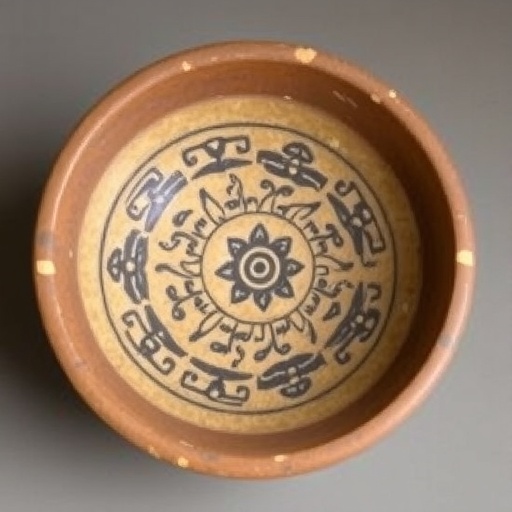
Recent research conducted by Hurter, Antonites, Lindahl, and their colleagues sheds light on the intricate world of 13th-century AD ceramics from Mapungubwe, a site located in present-day South Africa. The study, titled “Compositional analysis of c13th century AD Mapungubwe ceramics in South Africa: regional, local and household connections,” published in the journal Archaeological and Anthropological Sciences, delves deeply into the material composition of these artifacts. This innovative approach not only aims to unravel the complexities of social interactions within the region but also seeks to understand the broader connections that transcended local communities.
The Mapungubwe site, which once flourished as a trading center, has long intrigued archaeologists seeking to uncover its historical significance. The ceramics analyzed in the study present a unique opportunity to understand the interplay of local traditions and external influences during a period of substantial cultural exchange. By focusing on the composition of the ceramics, the researchers aim to trace the origins of the materials used and how they reflect the socio-economic dynamics of the time. This research provides a window into the past, revealing how communities interacted through trade, sharing, and crafting practices.
The study employs advanced compositional analysis techniques, allowing for a detailed examination of the clay materials and temper used in the pottery. Techniques such as X-ray fluorescence (XRF) and petrographic analysis are utilized to identify the elemental and mineralogical composition of the ceramics. Such technological advancements in archaeological science enable researchers to discern subtle differences among pottery fragments, offering insights into varying production techniques and material sourcing. Through meticulous analysis, the authors have unveiled not only the local materials but also materials that indicate trade connections extending far beyond the immediate region.
One of the significant findings of this research relates to the evidence of diverse pottery-making practices across various households within Mapungubwe. The study highlights how certain ceramics exhibit distinctive compositional signatures, suggesting that different households may have had unique recipes for their pottery clays. This diversity points to a rich tapestry of cultural practices and perhaps even social hierarchies within the community. By analyzing these differences, the authors argue that ceramics serve as a reflection of identity that transcends mere utility; they provide clues to artisan skills, trade networks, and local preferences.
Moreover, the research implicates the significant role that inter-regional connections played in shaping the social landscape of Mapungubwe. In tracing materials sourced from different geographical locations, the authors posit that trade and exchange were essential components of local economies. The incorporation of foreign materials reveals much about the interactions between Mapungubwe and neighboring regions. This evidence of trade not only confirms the existence of an elaborate exchange system but also underscores the importance of Mapungubwe as a central hub within a broader economic sphere during the 13th century.
The thematic exploration of regional, local, and household connections offers a compelling narrative about the complexities of life in ancient Mapungubwe. Through the lens of ceramic analysis, the study fosters a greater appreciation of how pottery is emblematic of broader socio-political trends. The layers of meaning extracted from the ceramics reveal insights into how communities navigated their identities, crafted their narratives, and sustained their livelihoods in a dynamic world.
Furthermore, the study contributes to a growing body of literature that seeks to interpret material culture as a means of understanding historical societies. As archaeologists increasingly embrace scientific methods such as compositional analysis, the interpretation of artifacts is transforming. Rather than viewing pottery solely as everyday items, these analyses encourage a perspective that considers them artifacts of history imbued with social significance.
The implications of this research extend beyond the scope of ceramics and Mapungubwe. By highlighting the complexity of social relationships in a historical context, it raises critical questions about how we engage with material culture today. Understanding the connections reflected in pottery can inform contemporary discussions about cultural identity and heritage, especially in regions rich with archaeological history.
It’s important to note that while the findings are specific to Mapungubwe, they resonate with broader archaeological narratives across Africa and beyond. The study serves as a reminder of the interconnectedness of ancient societies, emphasizing that cultural exchange and trade were not isolated phenomena but rather essential features of human evolution and adaptation.
In conclusion, the research undertaken by Hurter et al. represents a pivotal advancement in the understanding of 13th-century AD ceramics from Mapungubwe. By employing sophisticated compositional analysis, the authors uncover the intricate relationships woven through material culture, offering profound insights into the dynamics of regional trade and community interactions. As further investigations into ancient ceramics continue, promising new discoveries may pave the way for a deeper understanding of our shared past.
Cite Scienmag News
Courtney Benton. (November 23, 2025). Exploring 13th Century Mapungubwe Ceramics Connections. Scienmag. https://scienmag.com/exploring-13th-century-mapungubwe-ceramics-connections/
Courtney Benton. "Exploring 13th Century Mapungubwe Ceramics Connections." Scienmag, 23 November 2025, https://scienmag.com/exploring-13th-century-mapungubwe-ceramics-connections/. Accessed 5 September 2026.
Courtney Benton. "Exploring 13th Century Mapungubwe Ceramics Connections." Scienmag. November 23, 2025. https://scienmag.com/exploring-13th-century-mapungubwe-ceramics-connections/


