


WHAT:
Current or previous use of the antiretroviral drug (ARV) abacavir was associated with an elevated risk of major adverse cardiovascular events (MACE) in people with HIV, according to an exploratory analysis from a large international clinical trial primarily funded by the National Institutes of Health (NIH). There was no elevated MACE risk for the other antiretroviral drugs included in the analysis. The findings will be presented at the 2024 International AIDS Conference (AIDS 2024) in Munich, Germany.

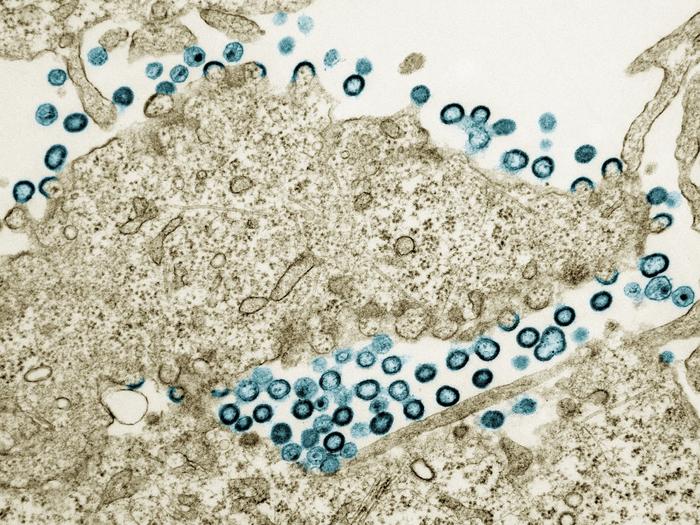
Credit: NIAID
WHAT:
Current or previous use of the antiretroviral drug (ARV) abacavir was associated with an elevated risk of major adverse cardiovascular events (MACE) in people with HIV, according to an exploratory analysis from a large international clinical trial primarily funded by the National Institutes of Health (NIH). There was no elevated MACE risk for the other antiretroviral drugs included in the analysis. The findings will be presented at the 2024 International AIDS Conference (AIDS 2024) in Munich, Germany.
The Randomized Trial to Prevent Vascular Events in HIV (REPRIEVE) enrolled 7,769 study participants with HIV from 12 countries that found daily use of a cholesterol-fighting statin drug reduced the risk of major adverse cardiovascular events, such as heart attacks and strokes by more than one third. The REPRIEVE study team also performed statistical analyses to assess whether select ARVs were associated with MACE risk among study participants, all of whom had low-to-moderate cardiovascular disease risk. The ARVs selected for analysis had previously been linked to cardiovascular risk and included abacavir, tenofovir, zidovudine, stavudine, and drugs from a class called protease inhibitors (PIs). All were taken as part of multi-drug ART regimens.
Overall, 22% of study participants reported prior exposure to abacavir, 86% to tenofovir, 49% to zidovudine or stavudine, and 47% to PIs. At study entry, 13% of participants were taking abacavir, 61% were taking tenofovir, 10% were taking zidovudine or stavudine, and 26% were taking PIs. In the investigators’ analyses, participants with prior and current use of abacavir had a 50% and 42% elevated risk of MACE, respectively, compared to participants with no abacavir exposure. Former or current use of other ARVs was not associated with any change in MACE risk, and the co-administration of common ARV drug classes as part of an ART regimen did not impact the elevated MACE risk among participants with current or prior abacavir exposure.
According to the authors, these findings align with previous studies that also identified an elevated cardiovascular disease risk associated with abacavir. They suggest that more research is needed to better understand the increased risk observed in this analysis, including how these findings should be considered in the context of known cardiovascular disease risk factors, such as dyslipidemia, diabetes and hypertension, for people with HIV.
More information about the REPRIEVE trial is available at ClinicalTrials.gov under identifier NCT02344290.
REFERENCE:
CJ Fichtenbaum et al. Abacavir is associated with elevated risk for cardiovascular events in the REPRIEVE trial. International AIDS Conference. Friday, July 26, 2024.
WHO:
Sarah Read, M.D., deputy director, Division of AIDS, National Institute of Allergy and Infectious Diseases, NIH is available to discuss this research.
CONTACT:
To schedule interviews, please contact NIAID News & Science Writing Branch, 301-402-1663, niaidnews@niaid.nih.gov.
NIAID conducts and supports research—at NIH, throughout the United States, and worldwide—to study the causes of infectious and immune-mediated diseases, and to develop better means of preventing, diagnosing and treating these illnesses. News releases, fact sheets and other NIAID-related materials are available on the NIAID website.
About the National Institutes of Health (NIH): NIH, the nation’s medical research agency, includes 27 Institutes and Centers and is a component of the U.S. Department of Health and Human Services. NIH is the primary federal agency conducting and supporting basic, clinical, and translational medical research, and is investigating the causes, treatments, and cures for both common and rare diseases. For more information about NIH and its programs, visit
NIH…Turning Discovery Into Health®
Cite Scienmag News
Ophelia Keating. (July 23, 2024). Exploratory analysis associates HIV drug abacavir with elevated cardiovascular disease risk in large global trial. Scienmag. https://scienmag.com/exploratory-analysis-associates-hiv-drug-abacavir-with-elevated-cardiovascular-disease-risk-in-large-global-trial/
Ophelia Keating. "Exploratory analysis associates HIV drug abacavir with elevated cardiovascular disease risk in large global trial." Scienmag, 23 July 2024, https://scienmag.com/exploratory-analysis-associates-hiv-drug-abacavir-with-elevated-cardiovascular-disease-risk-in-large-global-trial/. Accessed 5 September 2026.
Ophelia Keating. "Exploratory analysis associates HIV drug abacavir with elevated cardiovascular disease risk in large global trial." Scienmag. July 23, 2024. https://scienmag.com/exploratory-analysis-associates-hiv-drug-abacavir-with-elevated-cardiovascular-disease-risk-in-large-global-trial/

