

Monday, October 26, 2026
Science
No Result
View All Result
  • Login
  • HOME
  • SCIENCE NEWS
  • CONTACT US
  • HOME
  • SCIENCE NEWS
  • CONTACT US
No Result
View All Result
Scienmag
No Result
View All Result
Home Science News Earth Science

Explainable AI maps flood susceptibility across Luuq District in Somalia

October 26, 2026
in Earth Science
Violet Maxwell
By Violet Maxwell Scienmag Editorial Profile - Natural Hazards
Reading Time: 2 mins read
0
Explainable AI maps flood susceptibility across Luuq District in Somalia

Explainable AI maps flood susceptibility across Luuq District in Somalia

65
SHARES
587
VIEWS
Share on FacebookShare on Twitter
ADVERTISEMENT

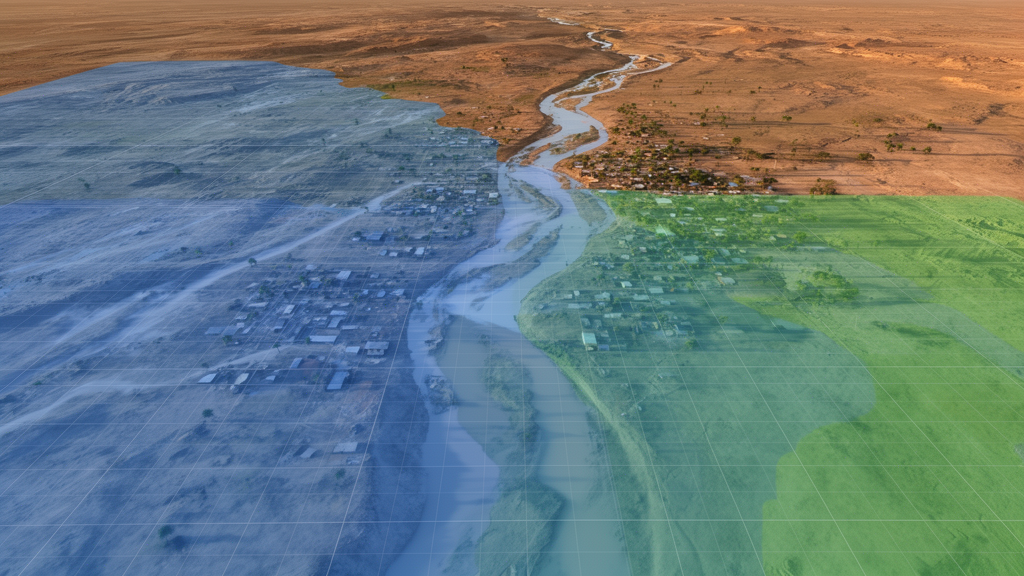
An explainable ensemble machine-learning framework developed for Luuq District in Somalia’s Gedo Region produced highly accurate flood-susceptibility maps, with seven tested models achieving test-set area under the curve values from 0.9930 to 0.9960. The study used satellite observations, geospatial conditioning factors and multiple predictive algorithms to identify areas associated with flood-prone conditions along the Jubba River system. Its final map classified 407.77 square kilometers as having very high flood susceptibility and placed 97.8% of documented flood points within that category.

Researchers built a balanced flood inventory containing 400 validated flood locations and 400 spatially constrained non-flood locations. Flood records came from UNOSAT flood-extent data and were independently verified using changes in Sentinel-1 Synthetic Aperture Radar backscatter in Google Earth Engine. The models used 14 flood-conditioning factors representing topographic, hydrological, climatic, environmental and anthropogenic controls. Seven approaches were trained and evaluated against an independent test dataset: Random Forest, ExtraTrees, XGBoost, LightGBM, CatBoost, a Soft Voting Ensemble and a Stacking Ensemble.

CatBoost produced the highest individual-model discrimination, with an area under the curve of 0.9960. The Soft Voting Ensemble achieved the best overall classification performance, recording 97.9% accuracy, an F1 score of 0.9793, recall of 0.9833 and a Kappa coefficient of 0.9583. These results describe how accurately the models classified locations in the study’s test dataset; they do not mean that flooding will occur at every location identified as susceptible. The mapped classes are model-based estimates of flood susceptibility based on the selected variables, inventory and spatial sampling.

SHAP-based model interpretation identified land use and land cover, elevation, distance to river, the Height Above Nearest Drainage metric and the Topographic Wetness Index as the dominant predictive correlates. Their prominence was consistent with physically meaningful floodplain processes. In addition to the very high-susceptibility class, the final map established a “Reliable Risk” zone covering 540.66 square kilometers, or 6.53% of the district. Spatial validation showed that 98.3% of documented flood points fell within areas where all seven models agreed on the susceptibility classification.

The research was a district-scale susceptibility study rather than a forecast of flood frequency, depth or damage, and its results depend on the quality and representativeness of the flood inventory, radar-derived validation data and selected conditioning factors. Within those limits, the framework combines ensemble prediction with model interpretation to identify areas that may warrant attention in flood-risk reduction, land-use planning and disaster preparedness. The authors present the approach as a potentially useful operational tool for mapping flood susceptibility in the study area.

Subject of Research: Explainable ensemble machine learning for flood-susceptibility mapping in Luuq District, Somalia

Article Title: Hybrid explainable ensemble machine learning framework for flood susceptibility prediction in Somalia

Article References: Dhaqane, A. I., & Al Sayeem, M. A. (2026). Hybrid explainable ensemble machine learning framework for flood susceptibility prediction in Somalia. Discover Sustainability. https://doi.org/10.1007/s43621-026-04629-0

Image Credits: AI Generated

DOI: 10.1007/s43621-026-04629-0

Keywords: flood susceptibility, machine learning, Somalia, ensemble models, Sentinel-1 radar, SHAP analysis, Jubba River, satellite mapping, disaster preparedness, Hybrid, explainable, ensemble

Cite Scienmag News

Violet Maxwell. (October 26, 2026). Explainable AI maps flood susceptibility across Luuq District in Somalia. Scienmag. https://scienmag.com/explainable-ai-maps-flood-susceptibility-across-luuq-district-in-somalia/

Violet Maxwell. "Explainable AI maps flood susceptibility across Luuq District in Somalia." Scienmag, 26 October 2026, https://scienmag.com/explainable-ai-maps-flood-susceptibility-across-luuq-district-in-somalia/. Accessed 26 October 2026.

Violet Maxwell. "Explainable AI maps flood susceptibility across Luuq District in Somalia." Scienmag. October 26, 2026. https://scienmag.com/explainable-ai-maps-flood-susceptibility-across-luuq-district-in-somalia/


Tags: Application of explainable AI in environmental hazarddisaster preparednessensembleEnsemble machine learning models for flood riskensemble modelsExplainableExplainable AI in flood predictionFlood inventory validation with remote sensingFlood risk classification accuracy and evaluationflood susceptibilityFlood susceptibility mapping in SomaliaGeospatial analysis of flood-prone areasHybridJubba RiverMachine learningMachine learning algorithms for disaster risk assessmentPredictive modeling with XGBoost and LightGBMsatellite mappingSatellite-based flood detection using Sentinel-1Sentinel-1 radarSHAP analysisSomaliaTopographic and hydrological factors in flood modelingUse of Google Earth Engine for flood monitoring
Share26Tweet16
Previous Post

School climate associated with later distress among Chinese adolescents

Next Post

Machine learning assesses lemon balm responses to drought, fungi and TiO₂ nanoparticles

Related Posts

Selected private Kruger lodges show varied adoption of sustainability standards
Earth Science

Selected private Kruger lodges show varied adoption of sustainability standards

October 26, 2026
Controlled lamb study links dried leftover food to growth and carcass gains
Earth Science

Controlled lamb study links dried leftover food to growth and carcass gains

October 26, 2026
Survey links single-use plastic use to retail barriers
Earth Science

Survey links single-use plastic use to retail barriers

October 26, 2026
Research report: Influencer marketing and consumer engagement in shaping the relationship between pro-environmental behavior and sustainable consumption
Earth Science

Research report: Influencer marketing and consumer engagement in shaping the relationship between pro-environmental behavior and sustainable consumption

October 26, 2026
Review evaluates adobe as a tropical bioeconomy housing strategy
Earth Science

Review evaluates adobe as a tropical bioeconomy housing strategy

October 26, 2026
Kenyan SME study links environmental capabilities to accounting adoption
Earth Science

Kenyan SME study links environmental capabilities to accounting adoption

October 26, 2026
Next Post
Machine learning assesses lemon balm responses to drought, fungi and TiO₂ nanoparticles

Machine learning assesses lemon balm responses to drought, fungi and TiO₂ nanoparticles

  • Mothers who receive childcare support from maternal grandparents show more optimized

    Mothers who receive childcare support from maternal grandparents show more parental warmth, finds NTU Singapore study

    27656 shares
    Share 11059 Tweet 6912
  • University of Seville Breaks 120-Year-Old Mystery, Revises a Key Einstein Concept

    1061 shares
    Share 424 Tweet 265
  • Bee body mass, pathogens and local climate influence heat tolerance

    682 shares
    Share 273 Tweet 171
  • Researchers record first-ever images and data of a shark experiencing a boat strike

    546 shares
    Share 218 Tweet 137
  • Groundbreaking Clinical Trial Reveals Lubiprostone Enhances Kidney Function

    531 shares
    Share 212 Tweet 133
Science

Embark on a thrilling journey of discovery with Scienmag.com—your ultimate source for cutting-edge breakthroughs. Immerse yourself in a world where curiosity knows no limits and tomorrow’s possibilities become today’s reality!

RECENT NEWS

  • Machine learning assesses lemon balm responses to drought, fungi and TiO₂ nanoparticles
  • Explainable AI maps flood susceptibility across Luuq District in Somalia
  • School climate associated with later distress among Chinese adolescents
  • Clinical review addresses recurrent infections with long-term catheters

Categories

  • Agriculture
  • Anthropology
  • Archaeology
  • Athmospheric
  • Biology
  • Biotechnology
  • Blog
  • Bussines
  • Cancer
  • Chemistry
  • Climate
  • Earth Science
  • Editorial Policy
  • Marine
  • Mathematics
  • Medicine
  • Pediatry
  • Policy
  • Psychology & Psychiatry
  • Science Education
  • Science News
  • Social Science
  • Space
  • Technology and Engineering

Subscribe to Blog via Email

Enter your email address to subscribe to this blog and receive notifications of new posts by email.

Join 5,151 other subscribers

© 2025 Scienmag - Science Magazine

Welcome Back!

Login to your account below

Forgotten Password?

Retrieve your password

Please enter your username or email address to reset your password.

Log In
No Result
View All Result
  • HOME
  • SCIENCE NEWS
  • CONTACT US

© 2025 Scienmag - Science Magazine

Discover more from Science

Subscribe now to keep reading and get access to the full archive.

Continue reading