

Sunday, August 16, 2026
Science
No Result
View All Result
  • Login
  • HOME
  • SCIENCE NEWS
  • CONTACT US
  • HOME
  • SCIENCE NEWS
  • CONTACT US
No Result
View All Result
Scienmag
No Result
View All Result
Home Science News Policy

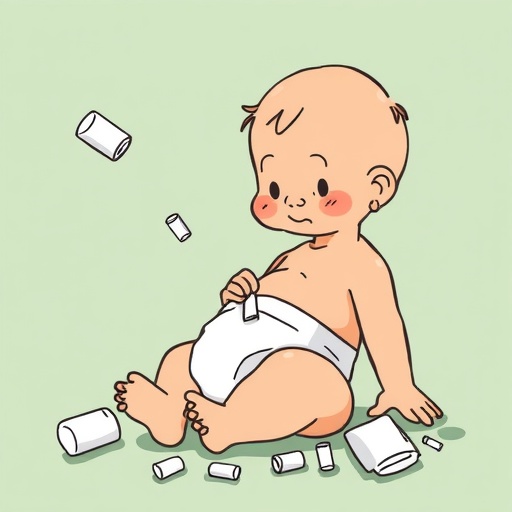
Experts urge action as nappy waste crisis worsens globally

July 26, 2026
in Policy
Reading Time: 2 mins read
0
Experts urge action as nappy waste crisis worsens globally

Experts urge action as nappy waste crisis worsens globally

65
SHARES
587
VIEWS
Share on FacebookShare on Twitter
ADVERTISEMENT

Earlier toilet training and breakthrough recycling pathways could significantly cut the environmental footprint of disposable nappies and related hygiene products, according to a new roadmap led by UCL researchers and published in Nature Sustainability. The study frames absorbent hygiene products (AHPs)—including nappies, incontinence pads and period products—as a global waste problem largely driven by design choices, user behavior and end-of-life infrastructure gaps.

The authors estimate that 160–200 million tonnes of AHP waste are generated each year worldwide, with most ending in landfill or incineration. Where waste collection is inadequate, used products are frequently dumped or burned, exporting plastic pollution and increasing risks from contaminated water and pathogen spread. The paper argues that this is not a single-technology failure but a system-level issue.

A first priority focuses on reducing and reusing: encouraging earlier toilet training and increasing the adoption of reusable products. The team notes that earlier toilet training may also support children’s bladder and bowel health, but emphasizes that practical barriers—limited guidance, caregiver time pressures and the perceived convenience of disposables—must be addressed through healthcare support and workplace or childcare changes.

Second, the study calls for scaling recycling technologies capable of handling the complex material mix of AHPs. Used products contain plastics, fibres and super-absorbent polymers, while contamination from human waste and medicines complicates processing. Existing approaches recover only part of the material stream, motivating research into full-component recovery and improved decontamination that removes pathogens and residual pharmaceuticals.

Third, the roadmap highlights the development of fully compostable products designed for industrial composting or anaerobic digestion. The authors caution that many items marketed as “biodegradable” do not meet complete compostability requirements, particularly regarding maintaining dryness and ensuring safe breakdown under real-world conditions.

Crucially, the composting route depends on regulatory and economic permissions—such as constraints on compost containing human waste—before it can be deployed widely. The researchers argue for different strategies in different regions: high-income countries may benefit most from recycling and demand reduction, while lower-income settings may require locally viable composting or disposal options.

Finally, the paper stresses affordability and equity. Because hygiene products are essential rather than optional, environmental policies must avoid shifting burdens onto vulnerable households. The study also builds on UCL’s Big Toilet Project, which examines how rising toilet training age affects nappy use patterns.

Subject of Research: Absorbent hygiene product waste; nappies, incontinence and period products
Article Title: Research priorities for addressing global absorbent hygiene product waste
News Publication Date: 23-Jul-2026
Web References: https://www.bigtoiletproject.org/
References: 10.1038/s41893-026-01903-x
Image Credits:
Keywords: environmental health, pollution, environmental issues, recycling, composting, absorbent hygiene products

Tags: Disposable nappies environmental impactearly toilet training benefitsend-of-life recycling pathways for hygiene productsglobal nappy waste crisisglobal strategies for waste reduction in hygiene industryhealthcare and childcare policy changesinnovation in absorbent hygiene product recyclingplastic pollution from absorbent hygiene productsreducing single-use hygiene productsreusable diaper adoptionsustainable hygiene product solutionssystem-level waste management challenges
Share26Tweet16
Previous Post

Mathematical equations may reveal the secret to lasting love

Next Post

How Quantum Computers Lose Power and Halt Calculations

Related Posts

Gipuzkoa study finds inclusive local AI governance matters more than technology
Policy

Gipuzkoa study finds inclusive local AI governance matters more than technology

August 14, 2026
UN warns 40% of England adults take no action on heat alerts
Policy

UN warns 40% of England adults take no action on heat alerts

August 14, 2026
European cities target carbon removal for one-fifth emissions, but few know how
Policy

European cities target carbon removal for one-fifth emissions, but few know how

August 14, 2026
Ontario wildfire smoke exposed Americans to unhealthy air for 106 million person-days
Policy

Ontario wildfire smoke exposed Americans to unhealthy air for 106 million person-days

August 13, 2026
American Journal of Public Health highlights the importance of public deliberation in developing efficient public health policies
Policy

American Journal of Public Health highlights the importance of public deliberation in developing efficient public health policies

August 12, 2026
Foreign-born doctors provide essential care to millions in underserved U.S. communities
Policy

Foreign-born doctors provide essential care to millions in underserved U.S. communities

August 12, 2026
Next Post
How Quantum Computers Lose Power and Halt Calculations

How Quantum Computers Lose Power and Halt Calculations

  • Mothers who receive childcare support from maternal grandparents show more

    Mothers who receive childcare support from maternal grandparents show more parental warmth, finds NTU Singapore study

    27656 shares
    Share 11059 Tweet 6912
  • University of Seville Breaks 120-Year-Old Mystery, Revises a Key Einstein Concept

    1061 shares
    Share 424 Tweet 265
  • Bee body mass, pathogens and local climate influence heat tolerance

    682 shares
    Share 273 Tweet 171
  • Researchers record first-ever images and data of a shark experiencing a boat strike

    546 shares
    Share 218 Tweet 137
  • Groundbreaking Clinical Trial Reveals Lubiprostone Enhances Kidney Function

    531 shares
    Share 212 Tweet 133
Science

Embark on a thrilling journey of discovery with Scienmag.com—your ultimate source for cutting-edge breakthroughs. Immerse yourself in a world where curiosity knows no limits and tomorrow’s possibilities become today’s reality!

RECENT NEWS

  • Tropical Forest Biomass Responds to Diverse Climate Controls
  • Survey-Based Model Reveals How Preparedness Constraints Shape Cholera Transmission in Sudan
  • Waste-Based Retrofits Improve Thermal Performance in North Sinai Social Housing
  • KAIST develops semiconductor neuron that harnesses noise to selectively process signals

Categories

  • Agriculture
  • Anthropology
  • Archaeology
  • Athmospheric
  • Biology
  • Biotechnology
  • Blog
  • Bussines
  • Cancer
  • Chemistry
  • Climate
  • Earth Science
  • Editorial Policy
  • Marine
  • Mathematics
  • Medicine
  • Pediatry
  • Policy
  • Psychology & Psychiatry
  • Science Education
  • Social Science
  • Space
  • Technology and Engineering

Subscribe to Blog via Email

Success! An email was just sent to confirm your subscription. Please find the email now and click 'Confirm Follow' to start subscribing.

Join 5,149 other subscribers

© 2025 Scienmag - Science Magazine

Welcome Back!

Login to your account below

Forgotten Password?

Retrieve your password

Please enter your username or email address to reset your password.

Log In
No Result
View All Result
  • HOME
  • SCIENCE NEWS
  • CONTACT US

© 2025 Scienmag - Science Magazine
