


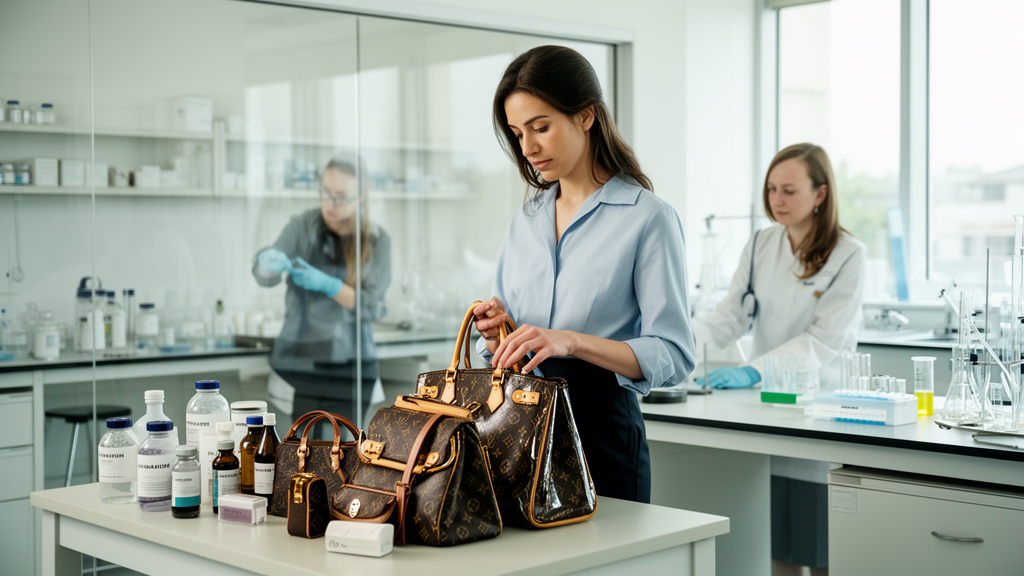
Women near ovulation showed stronger preferences for luxury goods that others could see, according to three experiments involving 2,522 female participants and published in PLOS One . The pattern appeared in drawings of luxury-brand logos, purchase intentions for publicly consumed products, and choices between luxury and nonluxury gift certificates. It was not observed for luxury goods intended for private consumption, suggesting that the findings concern conspicuous consumption rather than a general preference for expensive products.
The experiments were not designed to establish that ovulation caused women to buy luxury goods, that the purchases attracted attention, or that they improved women’s prospects of attracting a mate. Led by Aekyoung Kim of Jeonbuk National University in the Republic of Korea and colleagues, the study examined whether preferences for conspicuous luxury changed during the fertile phase of the menstrual cycle. The researchers used urine samples to measure hormone levels and a survey method to estimate each woman’s current cycle phase.
Their prediction was that women near ovulation would favor visible luxury signals, such as prominently displayed brand logos, because such signals could help them be noticed by men. In the first experiment, 70 female university students drew the logos of luxury brands including Gucci, Chanel and Louis Vuitton. The students drew larger logos near ovulation than during the low-fertility phase of the cycle.
This result supports an association between ovulatory status and a preference for more conspicuous branding, although this experiment alone did not directly test the proposed mate-attraction mechanism. In the second experiment, 1,486 women reported their purchase intentions for luxury and nonluxury brands. Women near ovulation showed increased interest in luxury products intended for consumption in public, but not in luxury products intended for private use.
The difference is consistent with the idea that the association depends on the visibility of a luxury signal, though stated purchase intentions do not demonstrate that women subsequently made the purchases. The third experiment included 966 participants and tested whether beliefs about attention from men could moderate luxury choices. Women near ovulation were more likely to choose a $100 gift certificate from a luxury brand, such as Polo Ralph Lauren, than one from a nonluxury brand, such as Old Navy.
After reading research findings indicating that men do not notice women’s designer clothes, however, participants were less likely to choose a luxury brand, including those near ovulation. This result directly addressed the proposed mechanism: the preference weakened when participants believed that men did not pay attention to the signal. It does not show that conspicuous luxury actually increases attention, creates romantic opportunities or provides a reproductive advantage.
Taken together, the three experiments provide experimental evidence that ovulatory status is associated with stronger preferences for visible luxury symbols, with the third experiment also showing that beliefs about whether men notice such signals influence those choices. The findings remain limited to the populations and tasks studied, and the authors cautioned that they do not apply to every context in which women attempt to attract men. The studies did not measure whether the intended purchases occurred or whether real-world social and romantic outcomes changed.
Subject of Research: Experimental study of ovulatory status and women’s conspicuous luxury preferences
Article Title: Fertility may drive women’s desire for luxury
Article References: Fertility may drive women’s desire for luxury. Original publication (Bibliographic details unavailable.)
Image Credits: AI Generated
DOI: Not provided
Keywords: ovulation, fertility, conspicuous consumption, luxury brands, menstrual cycle, consumer behavior, mate attention, hormonal contraception, PLOS One, drive, women, desire
Cite Scienmag News
Courtney Benton. (October 22, 2026). Experiments link ovulatory status to conspicuous luxury preferences. Scienmag. https://scienmag.com/experiments-link-ovulatory-status-to-conspicuous-luxury-preferences/
Courtney Benton. "Experiments link ovulatory status to conspicuous luxury preferences." Scienmag, 22 October 2026, https://scienmag.com/experiments-link-ovulatory-status-to-conspicuous-luxury-preferences/. Accessed 22 October 2026.
Courtney Benton. "Experiments link ovulatory status to conspicuous luxury preferences." Scienmag. October 22, 2026. https://scienmag.com/experiments-link-ovulatory-status-to-conspicuous-luxury-preferences/


