


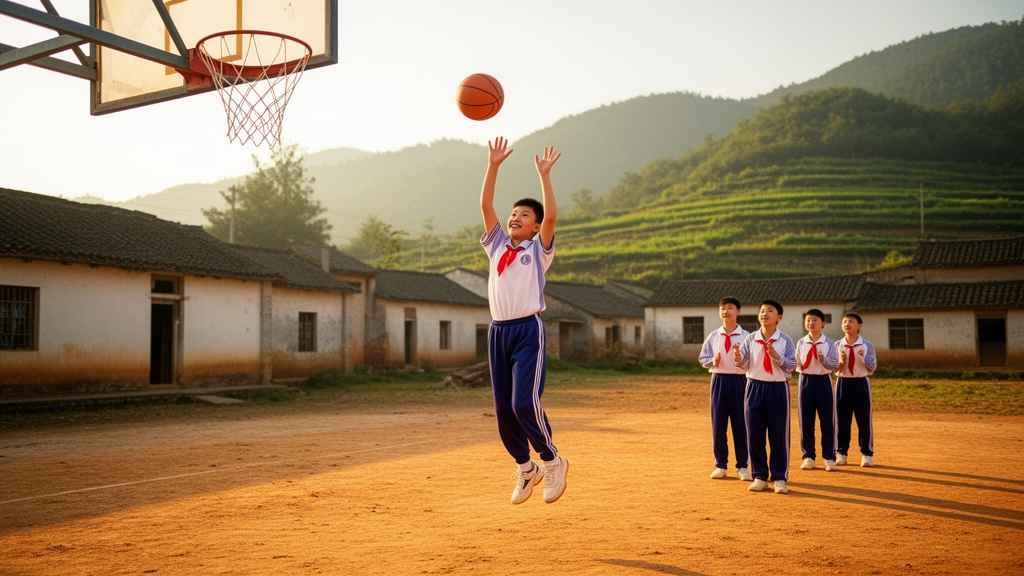
Among rural left-behind adolescents in China—teenagers whose parents have migrated away for work—those who reported more physical exercise also reported markedly lower psychological distress, according to a new cross-sectional study published in Frontiers in Psychology. The survey of 1,399 secondary school students in Yunnan, Guizhou, and Guangxi found that the association between exercise and distress was largely carried by two internal psychological resources: general self-efficacy, the belief in one’s ability to cope with challenges, and emotional intelligence, the capacity to perceive, understand, and regulate emotions. The authors stress that the design cannot establish causality, but the findings offer a detailed statistical map of how a modifiable behavior may relate to mental health in one of China’s most vulnerable adolescent populations.
Left-behind children are a defining feature of rural China, where parents often move to cities for employment while children remain at home with limited parental company. Prolonged parent–child separation, reduced emotional support, and unstable family resources can create an unfavorable social–emotional environment. Previous research has linked such conditions to weakened emotion regulation and stress recovery, and to elevated risks of psychological distress, depressive symptoms, and self-harm behaviors. Psychological distress itself captures non-specific negative emotional states—nervousness, hopelessness, restlessness, depressed mood, and feelings of worthlessness—and is widely used to flag subclinical but meaningful mental health risk. The World Health Organization estimates that roughly one in seven adolescents worldwide experiences a mental health problem, and a meta-analysis cited by the authors reported that people with high psychological distress face a 29 percent higher risk of mortality than those with low distress.
The research team, led by Tian Yin and Yanfeng Peng with corresponding author Changcheng Xie, surveyed students in 23 rural secondary schools between February 28 and March 15, 2025. Of 3,656 questionnaires distributed to screen left-behind status and demographics, 1,614 students met the eligibility criteria and completed the core questionnaire; after excluding patterned responses and questionnaires with 10 percent or more missing data, 1,399 valid cases remained—an 86.68 percent retention rate. The final sample included 736 boys (52.61 percent) and 663 girls (47.39 percent), with a mean age of 14.58 years. Participants completed paper-and-pencil questionnaires in classroom groups after written informed consent was obtained from both students and their guardians, and the study was approved by the Science and Technology Ethics Committee of Yunnan Minzu University.
Four instruments anchored the measurements. Physical exercise was assessed with the Physical Activity Rating Scale-3, which combines exercise intensity, duration, and frequency into a score from 0 to 100 using a multiplicative formula. Psychological distress was measured with the 9-item Kessler Psychological Distress Scale, scored from 9 to 36, with strong internal consistency in this sample (Cronbach’s alpha of 0.892). General self-efficacy was assessed with Schwarzer and Jerusalem’s 10-item General Self-Efficacy Scale (alpha 0.887), and emotional intelligence with the 19-item Self-Rated Emotional Intelligence Scale–Revised (alpha 0.897). Grade level and academic performance were included as covariates throughout the analyses to reduce potential confounding.
The correlational results were clear-cut. Physical exercise was positively correlated with general self-efficacy (r = 0.427) and emotional intelligence (r = 0.312), and negatively correlated with psychological distress (r = −0.333), all significant at p < 0.01. Self-efficacy and emotional intelligence were themselves strongly correlated (r = 0.536), and both were negatively associated with distress (r = −0.602 and r = −0.547, respectively). The total effect of exercise on distress was significant (β = −0.323, 95 percent confidence interval −0.372 to −0.273), meaning that higher exercise participation was robustly associated with lower distress in this sample.
The mediation analysis, conducted with PROCESS Model 6 and 5,000 bootstrap resamples, revealed where that association resided. Once general self-efficacy and emotional intelligence entered the model, the direct effect of exercise on distress shrank to β = −0.059—still significant, but accounting for only 18.27 percent of the total effect. The total indirect effect through the two psychological resources was β = −0.264, representing 81.73 percent of the total effect. The single strongest pathway ran through self-efficacy alone (β = −0.171, or 52.94 percent of the total effect), followed by the serial pathway in which exercise was associated with higher self-efficacy, which in turn was associated with higher emotional intelligence and lower distress (β = −0.063, 19.50 percent). The separate pathway through emotional intelligence alone was smaller but significant (β = −0.030, 9.29 percent).
This serial structure carries the study’s central theoretical claim. Drawing on self-efficacy theory and broaden-and-build theory, the authors positioned self-efficacy upstream: exercise settings supply repeated mastery experiences, competence feedback, and peer interaction, which may build generalized beliefs that one can cope. Those beliefs, in turn, may make adolescents more willing to notice, interpret, and regulate their emotions under stress, activating the emotional-processing abilities captured by emotional intelligence. In other words, the protective relevance of exercise may not flow through any single resource, but through a linked cognitive-emotional chain—exercise participation, competence beliefs, emotional processing, psychological adjustment. The authors caution that this ordering was chosen on theoretical grounds and that the cross-sectional data cannot rule out the reverse sequence or reciprocal influence between the two resources.
Gender added a further layer of nuance. In the moderated model, which also controlled for grade level and academic performance, the direct effect of exercise on distress was no longer significant (β = −0.031, p = 0.181), while the interaction between emotional intelligence and gender was (β = −0.092, p = 0.023). Simple slope analyses showed that emotional intelligence was negatively associated with distress for both boys (β = −0.263) and girls (β = −0.354), but the association was stronger among girls. Consequently, the indirect effects involving emotional intelligence—both the exercise-to-emotional-intelligence-to-distress path and the serial path through self-efficacy and emotional intelligence—were larger for girls (β = −0.035 and β = −0.072) than for boys (β = −0.026 and β = −0.054). The indexes of moderated mediation confirmed that gender significantly conditioned both emotional-intelligence-related pathways.
The authors interpret this gender pattern through the lens of coping styles and rural family socialization. Prior research indicates that girls more frequently use emotion-focused coping and rumination, and that rumination partly explains their higher risk of depression and anxiety; girls also report more internalizing problems, with psychological distress showing a particularly pronounced gender gap in a cross-national study of more than half a million adolescents. In rural Chinese left-behind families, the authors note, girls are often expected to be compliant and attentive to others’ emotions while boys are expected to be tough and less emotionally expressive, and parental migration can amplify these role differences. For girls carrying heavier emotional-processing burdens, emotional intelligence may function as a key protective factor that blunts the link between rumination, emotional dysregulation, and distress.
The study’s limitations are substantial and the authors are explicit about them. The convenience sample came exclusively from rural western China, so the findings should not be generalized to eastern or northern rural areas, urban left-behind children, or non-left-behind adolescents. The survey did not measure heterogeneity within left-behind experiences—such as whether one or both parents migrated, the duration of separation, caregiver type, or contact frequency—leaving open the possibility that these characteristics confounded the observed associations. The cross-sectional design permits only statistical associations, not temporal or causal claims, and all variables were self-reported at a single time point; although Harman’s single-factor test suggested no severe common method bias, the authors acknowledge that this diagnostic is coarse. The multiplicative scoring of the exercise scale also warrants caution. The authors call for longitudinal, cross-lagged, and intervention studies to test whether exercise actually drives subsequent changes in self-efficacy, emotional intelligence, and distress. Within those limits, they argue the results provide preliminary empirical clues and a theoretical framework for school-based mental health promotion programs—suggesting that such programs might do more than raise activity levels, and instead deliberately build competence beliefs and emotional skills, with particular attention to girls’ emotional-processing needs.
Subject of Research: Associations between physical exercise, general self-efficacy, emotional intelligence, and psychological distress among rural left-behind adolescents in China
Article Title: Physical exercise and lower psychological distress among rural left-behind adolescents in China: evidence from a moderated serial mediation model
Article References: Yin, T., Peng, Y., Liu, X., Zhu, Y., Wang, J., Pan, T., & Xie, C. (2026). Physical exercise and lower psychological distress among rural left-behind adolescents in China: evidence from a moderated serial mediation model. Frontiers in Psychology, 17, Article 1861638. https://doi.org/10.3389/fpsyg.2026.1861638
Image Credits: AI Generated
DOI: 10.3389/fpsyg.2026.1861638
Keywords: physical exercise, psychological distress, left-behind adolescents, general self-efficacy, emotional intelligence, serial mediation, gender moderation, rural China, adolescent mental health, cross-sectional study, Physical, exercise
Cite Scienmag News
Glenn Wilkins. (October 26, 2026). Exercise Linked to Lower Psychological Distress in Rural Chinese Left-Behind Teens. Scienmag. https://scienmag.com/exercise-linked-to-lower-psychological-distress-in-rural-chinese-left-behind-teens/
Glenn Wilkins. "Exercise Linked to Lower Psychological Distress in Rural Chinese Left-Behind Teens." Scienmag, 26 October 2026, https://scienmag.com/exercise-linked-to-lower-psychological-distress-in-rural-chinese-left-behind-teens/. Accessed 26 October 2026.
Glenn Wilkins. "Exercise Linked to Lower Psychological Distress in Rural Chinese Left-Behind Teens." Scienmag. October 26, 2026. https://scienmag.com/exercise-linked-to-lower-psychological-distress-in-rural-chinese-left-behind-teens/


