


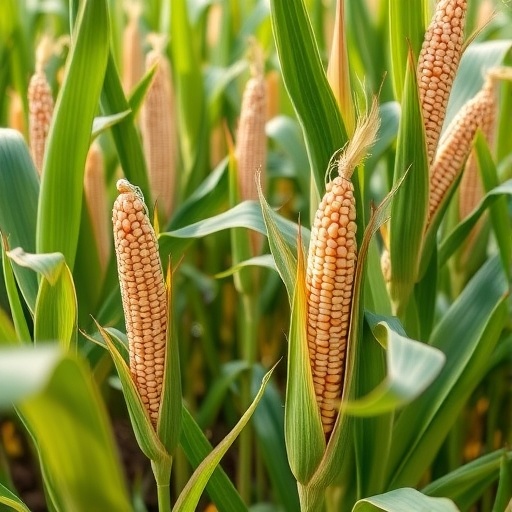
In an era where sustainable agricultural practices are becoming increasingly essential to combat climate change and food insecurity, researchers are meticulously analyzing the multifaceted impacts of fertilizer formulations on crop production. A groundbreaking study led by Kabré et al. sheds light on the effects of different fertilizer types on the growth of Zea mays L., more commonly known as maize, in Burkina Faso, a country heavily reliant on this staple crop for both economic stability and food supply.
The study examines a spectrum of fertilizer formulations to uncover which blend can optimize maize yields while promoting environmental sustainability. These formulations range from traditional chemical fertilizers to more innovative hybrid options, potentially offering a balance between high productivity and reduced ecological footprints. Researchers sought to determine not only how these fertilizers influence growth metrics like stalk height, leaf count, and kernel weight, but how they can be effectively integrated into local farming practices to benefit farmers economically and ecologically.
A critical aspect of the investigation involved rigorous field experiments conducted across various locations in Burkina Faso, each selected for its distinct soil type and climatic conditions. Such diversity allows for a comprehensive analysis, providing insights into the interplay between fertilizers and the surrounding environment. By collecting quantitative data like soil nutrient levels, moisture retention capacity, and yield outputs, the team aimed to evaluate how each formulation performed under varying conditions.
Throughout the study, the researchers meticulously monitored key growth parameters over several growing seasons. This long-term approach is vital in understanding not just short-term yield boosts, but also the lasting implications of different fertilization strategies on soil health, pest resistance, and plant vigor. Initial findings suggest that certain organic fertilizers may enhance soil biota, thereby improving nutrient cycling and water retention, ultimately leading to healthier maize plants.
The findings also indicate that conventional fertilizers could induce rapid growth but may compromise soil structure over time, rendering it less hospitable to beneficial microorganisms. Addressing such concerns, the research emphasizes the necessity for integrated fertilization methods that combine chemical and organic inputs, fostering a resilient agricultural ecosystem. This integrative approach appears paramount in addressing both food production demands and environmental sustainability.
Moreover, the implications extend beyond mere yield; enhancing maize production can significantly impact food security and local economies. By providing farmers with reliable formulation recommendations based on scientific evidence, the research not only empowers them with knowledge but can also catalyze socio-economic development in rural communities. The ability to produce higher yields with less environmental degradation can lead to improved income and support for families dependent on agriculture.
The study also tackles a pressing concern regarding the affordability of fertilizers in Burkina Faso. A significant barrier to optimal productivity remains the cost of high-quality fertilizers, which can be prohibitive for many smallholder farmers. To address this issue, the researchers analyzed the cost-efficiency of different formulations, stressing the importance of accessible solutions that can democratize agricultural productivity.
Furthermore, the collaboration with local farmers proved instrumental in confirming the practical applications of the research. Engaging farmers not only ensures that the studies resonate with the realities of agricultural practice but also facilitates knowledge exchange, enabling farmers to adopt new strategies effectively. Collaboration is seen as a vital element for fostering innovations in agricultural practices that are both scientifically sound and culturally relevant.
In the broader scope of sustainable agriculture, this research harmonizes with global accords aimed at reducing the carbon footprints of farming practices. By minimizing reliance on harsh chemical inputs, the findings support international commitments to protect biodiversity and ecosystems. The proactive management of fertilizer applications aligns well with sustainable development goals, emphasizing agriculture’s critical role in environmental stewardship.
Collectively, the research carried out by Kabré et al. represents a beacon of hope for agricultural resilience in Burkina Faso and beyond. By fostering a clearer understanding of the complex interactions between fertilizer use and crop performance, the study paves the way for sustainable practices that could reshape how maize is cultivated for generations to come.
The path ahead, however, is far from simple. Future research will be crucial to examine how these findings can translate to other crops and regions facing comparable challenges. Continuous evaluation of agricultural techniques, alongside supportive government policies, will be necessary to ensure the vibrant future of agriculture in Burkina Faso remains steadfast despite the myriad challenges posed by climate change.
In conclusion, the research highlights the pressing need for a re-evaluation of how fertilizers are utilized in promoting sustainable crop production. It is evident that the findings could serve as a model for further investigations into innovative farming practices that promote optimal yield while protecting the environment. The interconnection of agriculture, ecology, and economy is more crucial now than ever, and research such as this stands at the forefront of this transformative era in food production.
Kabré, B., Pagbo, I., Dabiré, K. et al. Assessing the effects of fertilizer formulations on the production of Zea mays L. for sustainable agriculture in Burkina Faso.
Discov Agric 3, 127 (2025). https://doi.org/10.1007/s44279-025-00296-3
Cite Scienmag News
Alan Morgan. (August 31, 2025). Evaluating Fertilizer Impacts on Sustainable Maize Production. Scienmag. https://scienmag.com/evaluating-fertilizer-impacts-on-sustainable-maize-production/
Alan Morgan. "Evaluating Fertilizer Impacts on Sustainable Maize Production." Scienmag, 31 August 2025, https://scienmag.com/evaluating-fertilizer-impacts-on-sustainable-maize-production/. Accessed 6 September 2026.
Alan Morgan. "Evaluating Fertilizer Impacts on Sustainable Maize Production." Scienmag. August 31, 2025. https://scienmag.com/evaluating-fertilizer-impacts-on-sustainable-maize-production/


