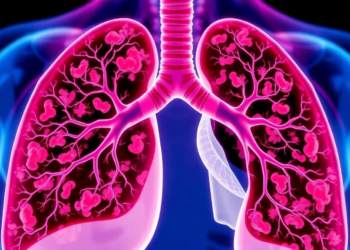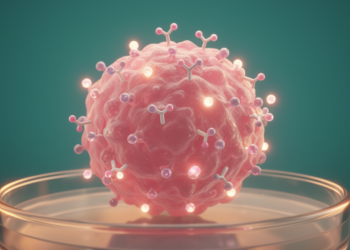
Microplastics and nanoplastics are everywhere—suspended in air, settled in soil, drifting through rivers, embedded in food, and detected in human tissues—yet the science meant to understand them is, by its own admission, a patchwork. A new perspective article published on 1 September 2026 in the journal Food Safety and Risk argues that Europe now has a genuine opportunity to fix this, not by building new laboratories, but by wiring together the research infrastructures it already owns. The paper, written by a consortium of researchers working with the FHERITALE initiative—short for Food, Health and Environment Research Infrastructures to Tackle Emerging Priorities—lays out both a diagnosis of a fragmented field and a roadmap for integrating analytical services across the food, health, and environmental domains under a One Health framework.
The scale of the underlying problem is considerable. According to figures cited in the article, the European Union produced 54.6 million tons of plastics in 2024, of which 43.3 million tons came from fossil-based production, 10.7 million tons from recycling, and just 0.6 million tons from bio-based sources. Packaging plastics waste alone reached 15.8 million tons in 2023. These synthetic particles persist in the environment, and their smallest fractions raise urgent questions about exposure, toxicity, and long-term impacts on people, animals, and ecosystems. But the authors’ central complaint is not about the particles themselves—it is about how badly the research community studying them communicates, measures, and collaborates.
Terminology is the first fault line. While the European Union has a regulatory definition of nanomaterial, no comparable definition exists for micro- or nanoplastics. In practice, researchers still rely on a working definition of microplastics as solid synthetic polymer particles smaller than 5 millimeters in their longest dimension, proposed at a 2008 workshop of the US National Oceanic and Atmospheric Administration. For nanoplastics, two competing conventions coexist: particles smaller than 1 micrometer, favored in environmental science because it matches the practical detection limit of many analytical instruments, and particles smaller than 100 nanometers, which aligns with the EU nanomaterial definition and with ISO terminology describing the nanoscale as roughly 1 to 100 nanometers. The authors sidestepped the unresolved debate by adopting, in their own bibliometric work, whatever particle-size classification each original study’s authors had used.
That bibliometric analysis, covering more than 800 papers, revealed a research landscape that is active but strikingly uneven. Microscopy and optical spectroscopy methods dominate the toolkit, together accounting for 58 percent of the studies analyzed at the micro-scale but only 39 percent at the nano-scale—a gap the authors attribute partly to the practical difficulties of optical techniques at smaller dimensions. Advanced approaches such as high-resolution nuclear magnetic resonance, non-destructive imaging, and computational modeling remain underutilized, in part because of the steep cost and maintenance burden of specialized instruments. The consequence is a field in which research capacity varies widely across laboratories and countries, creating inequities that hinder the development of harmonized protocols and shared standards.
The imbalances extend to subject matter. Nanoplastics remain significantly understudied relative to microplastics, despite growing evidence that their small size and high surface-to-volume ratio may make them more biologically active. Biodegradable plastics, increasingly prevalent in consumer products, have received comparatively little attention—even though they may degrade into particles with distinct toxicological profiles, and although their main environmental advantage is a smaller carbon footprint rather than guaranteed degradation in natural settings. Plastic additives, integral to the particles and capable of enhancing their impact, also warrant greater investigation. Perhaps most tellingly, mitigation and remediation research is scarce, suggesting the field remains primarily descriptive rather than solutions-oriented, and cross-domain studies integrating environmental, food, and health perspectives are still the exception rather than the rule.
Standardization deficits compound these problems. The article describes an absence of standardized sampling protocols, extraction and purification methods, analytical workflows, reference materials, and reporting formats, which undermines reproducibility and makes cross-study comparisons unreliable. A recent public controversy over detecting microplastics in tissue samples underscored the need for the community to refine and harmonize its analytical methods. There has been progress: ISO 24187:2023 established principles for microplastic analysis across environmental matrices, drinking water, and food, covering particle-size classification, sampling apparatus, and sample preparation without prescribing a single method. ISO 16094-2, published in September 2025, added guidelines for analyzing microplastics in water using vibrational spectroscopy such as Raman and FTIR, while further parts covering thermoanalytical methods and complex water matrices remain under development. Still, laboratories continue to use different protocols and instrumental setups, producing poorly comparable results.
The knowledge gaps run deeper than measurement. The authors highlight what they call an Environmental-Human Testing Gap: understanding of how artificial materials interact biologically at the micro- and nanoscale lags well behind the ability to characterize them. Robust analytical tools for studying micro- and nanoplastics in complex matrices such as tissues, soils, and food are lacking, risk assessment in the food sector remains insufficient, and real-world exposure studies are rare. Basic questions, such as how micro- and nanoplastics are taken up by cells, have been addressed only to some extent, largely through animal and in-vitro studies from an ecotoxicological perspective, and fundamental limitations still make it impossible to accurately compare data across diverse studies. Without this mechanistic foundation, the authors argue, exposure pathways cannot be properly understood or managed, and evidence-based policy remains out of reach.
FHERITALE’s answer is to treat research infrastructures as integrators rather than isolated service providers. The project has mapped dozens of services offered by European research infrastructures, spanning physical and chemical characterization, structural analysis, toxicology, biological activity, exposure assessment, and environmental monitoring, with the current map publicly available on the project website. The authors propose organizing these into service clusters—collections of services adhering to a defined set of standards, oriented toward the micro- and nanoplastics research community—enabling multi-modal analytical workflows, shared quality standards, joint technology development, coordinated training, and cross-domain projects. To assess maturity, the initiative introduced a Service Readiness Classification derived from the Technology Readiness Level framework, sorting technologies into three classes: fully operational services, existing but partially aligned or restricted services, and technologies not yet ready for service.
The vision extends to a coordinated pan-European One Health ecosystem built on five pillars: a harmonized analytical infrastructure with common terminology, shared protocols, certified reference materials, and interoperable data systems; integrated service clusters; a One Health knowledge hub serving as a central platform for data integration, exposure modeling, and infrastructure coordination; a solutions-oriented research agenda shifting from characterization toward mitigation, bioremediation, and material redesign; and global leadership through harmonized standards and international regulatory alignment. The One Health framing, as defined by the One Health High-Level Expert Panel, aims to sustainably balance and optimize the health of people, animals, and ecosystems—a lens the authors consider the only one capable of capturing the full lifecycle of artificial materials as they traverse environmental compartments, food chains, and physiological barriers.
The authors are candid that the transition will not be easy. One Health remains difficult to put into practice; researchers from different domains use similar terms to mean different things, social scientists are rarely integrated into technical discussions, and training opportunities in advanced analytical techniques are unevenly distributed across Europe, leaving many laboratories at risk of falling behind. Bridging the technological gaps needed to analyze nanoplastics meaningfully is described as a longer-term goal, since the spatial resolution and detection limits of available instrumentation determine which materials can be studied at all. Yet the perspective closes on an optimistic note: with investment, coordination, and sustained commitment, Europe could build a world-leading research ecosystem whose benefits extend to environmental integrity, food safety, and human health—provided the field moves decisively from describing the problem to solving it.
Subject of Research: European research infrastructures and the FHERITALE initiative's plan to integrate micro- and nanomaterial research under a One Health framework
Article Title: Research infrastructures as engines of integration for micro- and nanomaterial research: a European perspective inspired by FHERITALE
Article References: Murgioni, E., Adamovský, O., Belc, N., Boër, M., Carazo, J. M., Gragera, M., Mandemaker, L. D. B., Morelli, F., Mustatea, G., Poscente, V., Schwalbe, H., Sharma, S. L., Timkovsky, J., Van Loco, J., Vermeulen, R. C. H., Zoani, C., & Rosato, A. (2026). Research infrastructures as engines of integration for micro- and nanomaterial research: a European perspective inspired by FHERITALE. Food Safety and Risk, 13(1), Article 35. https://doi.org/10.1186/s40550-026-00159-9
Image Credits: AI Generated
DOI: 10.1186/s40550-026-00159-9
Keywords: microplastics, nanoplastics, research infrastructures, FHERITALE, One Health, standardization, ISO standards, food safety, analytical methods, Europe, toxicology, biodegradable plastics
Cite Scienmag News
Alan Morgan. (October 29, 2026). Europe’s Research Infrastructures Push to Untangle the Microplastics Mess. Scienmag. https://scienmag.com/europes-research-infrastructures-push-to-untangle-the-microplastics-mess/
Alan Morgan. "Europe’s Research Infrastructures Push to Untangle the Microplastics Mess." Scienmag, 29 October 2026, https://scienmag.com/europes-research-infrastructures-push-to-untangle-the-microplastics-mess/. Accessed 29 October 2026.
Alan Morgan. "Europe’s Research Infrastructures Push to Untangle the Microplastics Mess." Scienmag. October 29, 2026. https://scienmag.com/europes-research-infrastructures-push-to-untangle-the-microplastics-mess/