


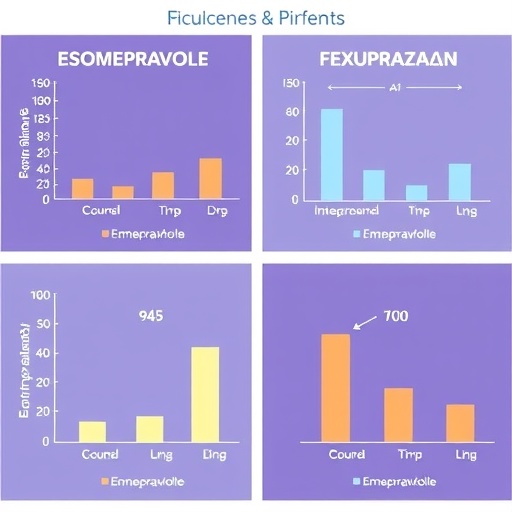
In the relentless pursuit of understanding inflammation and its management, a recent groundbreaking study has pitted two pharmacological agents—esomeprazole and fexuprazan—against each other to decipher their anti-inflammatory potentials. This research, conducted on lipopolysaccharide (LPS)-stimulated RAW 264.7 macrophages, heralds a new chapter in inflammation modulation, promising insights that could reshape therapeutic approaches to inflammatory diseases.
Inflammation is a complex biological response, initiated as a defense mechanism against pathogens, damaged cells, or irritants. However, when unchecked or chronic, it becomes a precursor to numerous pathologies, including autoimmune disorders, chronic infections, and even certain cancers. Macrophages, as critical mediators of the immune response, orchestrate inflammation through cytokine release, phagocytosis, and antigen presentation. RAW 264.7 cells, a murine macrophage lineage, have long served as the gold standard in in vitro inflammation research due to their receptiveness to stimuli like lipopolysaccharides—components derived from bacterial cell walls that simulate infection.
Esomeprazole is conventionally revered as a proton pump inhibitor (PPI), primarily prescribed to curb gastric acid secretion in gastrointestinal ailments such as gastroesophageal reflux disease (GERD) and peptic ulcers. Beyond its well-established acid-suppressing capabilities, esomeprazole’s off-target effects have piqued scientific curiosity, hinting at possible anti-inflammatory actions. Conversely, fexuprazan represents a newer class of medications termed potassium-competitive acid blockers (P-CABs), boasting a distinct mechanism of gastric acid inhibition. Their potential anti-inflammatory efficacy, however, remains less characterized, making this comparison not only timely but also critical.
The crux of the study involved exposing RAW 264.7 macrophages to LPS to induce a robust inflammatory response, simulating a bacterial infection scenario. Upon stimulation, these macrophages typically upregulate pro-inflammatory mediators like nitric oxide (NO), tumor necrosis factor-alpha (TNF-α), and interleukins such as IL-6 and IL-1β. Monitoring the modulation of these mediators upon treatment with esomeprazole and fexuprazan provided quantifiable measures of their anti-inflammatory potency.
Delving deeper, both agents were administered at varying concentrations to investigate dose-dependent effects. Subsequent analyses demonstrated that esomeprazole significantly curtailed the production of nitric oxide, a reactive nitrogen species that exacerbates inflammation and tissue damage when produced in excess. Its action appeared to be intimately tied with downregulation of inducible nitric oxide synthase (iNOS) expression, the enzyme responsible for nitric oxide biosynthesis in activated macrophages.
Fexuprazan, on its part, exhibited a comparable yet subtly distinct profile. The P-CAB diminished both TNF-α and IL-6 secretion more robustly than esomeprazole did, suggesting a differential modulation of inflammatory cytokines. This nuance is critical as these cytokines contribute profoundly to the propagation and maintenance of inflammatory cascades, implicating fexuprazan in potentially more effective cytokine storm mitigation.
At the molecular signaling level, the study illuminated pivotal pathways impacted by both drugs. Nuclear factor kappa-light-chain-enhancer of activated B cells (NF-κB) signaling—a master regulator of inflammatory gene transcription—was markedly inhibited by both esomeprazole and fexuprazan. This inhibition impedes the nuclear translocation of NF-κB, thereby preventing the transcription of pro-inflammatory genes. Simultaneously, the extracellular signal-regulated kinase (ERK) pathway, another conduit influencing cytokine expression, was more profoundly suppressed by fexuprazan, shedding light on its possibly superior anti-inflammatory credentials.
Intriguingly, the structural and chemical disparities between these drugs may underlie their differential effects. Esomeprazole, as a benzimidazole derivative, covalently binds to the H+/K+ ATPase pump, whereas fexuprazan, a pyrrole derivative, competitively inhibits the potassium-binding site. These unique interaction modes could influence cellular signaling beyond mere acid blockade, as macrophage functioning and signaling pathways are sensitive to intracellular pH and ion flux alterations.
Beyond the cellular milieu, these findings portend translational relevance. Inflammatory macrophages are central players in chronic inflammatory diseases such as rheumatoid arthritis, inflammatory bowel disease, and certain neurodegenerative disorders. If esomeprazole and fexuprazan can attenuate macrophage-driven inflammation with varying efficiencies, they may be repurposed or serve as scaffolds for designing next-generation anti-inflammatory therapeutics.
Moreover, the safety profiles of both drugs, well established through their extensive use in gastric acid-related conditions, provide an advantageous starting point for repurposing. The possibility of harnessing their anti-inflammatory properties without introducing novel safety concerns could optimize clinical management strategies, especially in patients with coexisting inflammatory and gastrointestinal disorders.
The study’s methodology was meticulous, employing ELISA assays for cytokine quantification, Griess reagent assays for nitric oxide detection, and Western blotting to assess key protein expressions. These techniques robustly confirmed that the observed anti-inflammatory effects were not artifacts but bona fide pharmacological actions.
In light of ongoing pandemics and emergent inflammatory syndromes, such as severe COVID-19 where macrophage overactivation is implicated, the therapeutic potential highlighted by this study assumes even greater urgency. Drugs that can safely and effectively modulate macrophage-mediated inflammation could tip the scales in managing systemic inflammatory responses, underscoring the broader implications of this research.
This investigation also opens new vistas for dissecting drug mechanisms beyond classical targets. The nuanced interplay between acid suppression, intracellular signaling, and immune regulation invites further exploration into how various proton pump inhibitors and potassium-competitive acid blockers modulate immune cells.
Furthermore, integrating these findings with in vivo models now becomes imperative to verify the clinical relevance of esomeprazole and fexuprazan in real-world inflammatory contexts. Animal studies focusing on chronic inflammation models can illuminate pharmacodynamics, tissue distribution, and possible synergistic effects when combined with other anti-inflammatory agents.
In sum, this comparative research marks a significant stride in immunopharmacology, juxtaposing two acid secretion inhibitors for their potential anti-inflammatory roles in macrophage biology. While both esomeprazole and fexuprazan display promising inhibitory actions on key inflammatory mediators, the distinctions in their cytokine modulation profiles and signaling pathway impacts invite a reappraisal of their broader therapeutic utility.
As inflammation sits at the crossroads of many chronic diseases, understanding and exploiting the anti-inflammatory facets of widely used drugs like these could usher in more efficacious, safer interventions. The implications resonate not only within pharmacological circles but also across clinical disciplines grappling with the pervasive burden of inflammation-driven pathology.
Future research inspired by these findings will likely delve into combinatorial drug therapies, dose optimization, and patient stratification to harness the full potential of esomeprazole and fexuprazan. The prospect of developing tailored anti-inflammatory regimens incorporating these agents may revolutionize current paradigms, emphasizing precision medicine grounded in mechanistic insight.
This study notably enriches the scientific dialogue on inflammation, drug repurposing, and immune modulation. It underscores the imperative for relentless curiosity and innovative cross-disciplinary endeavors to transform existing medications into new champions against inflammation.
Cite Scienmag News
Ophelia Keating. (May 9, 2026). Esomeprazole vs. Fexuprazan: Anti-Inflammatory Effects Compared. Scienmag. https://scienmag.com/esomeprazole-vs-fexuprazan-anti-inflammatory-effects-compared/
Ophelia Keating. "Esomeprazole vs. Fexuprazan: Anti-Inflammatory Effects Compared." Scienmag, 9 May 2026, https://scienmag.com/esomeprazole-vs-fexuprazan-anti-inflammatory-effects-compared/. Accessed 4 September 2026.
Ophelia Keating. "Esomeprazole vs. Fexuprazan: Anti-Inflammatory Effects Compared." Scienmag. May 9, 2026. https://scienmag.com/esomeprazole-vs-fexuprazan-anti-inflammatory-effects-compared/


