


FRANKFURT. The cell’s outer shell determines whether the human adaptive immune system identifies pathogens or not. Figuratively speaking, the cell membrane is the arena where two key players meet: On the one hand, there are receptors, of T cells for example, which are specialized in reacting to signs, known as antigens, for a cell that is degenerated or infected by a virus. On the other hand, it is the infected or abnormal cell itself that produces these antigens in the form of small peptides in its interior, then transports them to its surface. If a T cell receptor on the membrane recognizes an antigen that matches it, it binds to it, which in turn triggers an intricate mechanism at the end of which the abnormal cell is eliminated. This property of T cells is the reason for their increased use as a customized tool in immunotherapy.

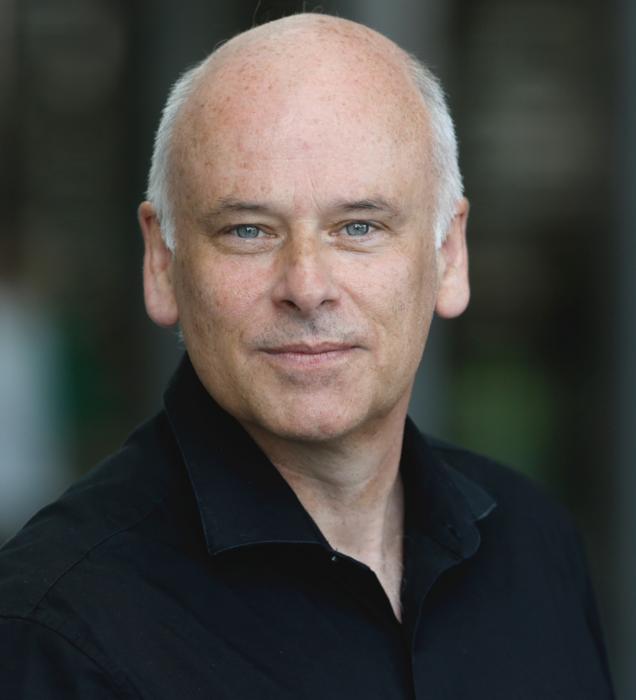
Credit: Uwe Dettmar
FRANKFURT. The cell’s outer shell determines whether the human adaptive immune system identifies pathogens or not. Figuratively speaking, the cell membrane is the arena where two key players meet: On the one hand, there are receptors, of T cells for example, which are specialized in reacting to signs, known as antigens, for a cell that is degenerated or infected by a virus. On the other hand, it is the infected or abnormal cell itself that produces these antigens in the form of small peptides in its interior, then transports them to its surface. If a T cell receptor on the membrane recognizes an antigen that matches it, it binds to it, which in turn triggers an intricate mechanism at the end of which the abnormal cell is eliminated. This property of T cells is the reason for their increased use as a customized tool in immunotherapy.
Biochemist and structural biologist Robert Tampé, a specialist in the structural analysis of membrane protein complexes of the adaptive immune system, has now been awarded a five-year, €2.5 million European Research Council Advanced Grant for his project Unraveling the Supramolecular Architecture of Molecular Machineries in Adaptive Immunity (“ImmunoMachines”). ERC Advanced Grants support groundbreaking research projects by outstanding scientists.
Robert Tampé’s research project aims to decipher the spatial and temporal structure of as yet unexplained processes in the cell’s immune response. His research team draws on and combines several scientific disciplines and methods, including cryogenic electron microscopy, the control of cellular processes by light, chemical and synthetic biology, in-situ structural biology, and others. Tampé is certain that “there is a lot to discover at the interfaces of biology, chemistry, physics and medicine” and that such underlying research findings will lead to tangible benefits in therapeutic approaches. “It is the dream of every researcher in this field to understand how the T-cell receptor works, which would pave the way to ultimately producing customized T-cell receptors that can treat infectious diseases, autoimmune diseases and cancer.”
This is Tampé’s second ERC Advanced Grant – he received his first in 2017. A year later, he was awarded a Reinhart Koselleck Project by the German Research Foundation. Since 2022, he has headed the Collaborative Research Center 1507 on “Protein Assemblies, Machineries, and Supercomplexes in Cell Membranes”. In 2023, he received the Schaefer Research Award from Columbia University, New York.
The European Research Council (ERC) selected 255 projects by leading researchers from the 1,829 submissions across 19 member states and associated countries it had received, meaning that just under fourteen percent of the proposals were successful. The winners include 50 German, 31 French, 28 British, 22 Italian and a further 28 researchers from other countries.
Set up by the European Union in 2007, the ERC is the premier European funding organization for excellent frontier research, offering financing to creative researchers of any nationality and age to run projects based across Europe. It is led by the Scientific Council, an independent governing body composed of eminent international scientists and scholars, which is responsible for its strategic direction.
Cite Scienmag News
Kristina Jarvis. (April 15, 2024). ERC Advanced Grant for cutting-edge research on the cell’s immune response. Scienmag. https://scienmag.com/erc-advanced-grant-for-cutting-edge-research-on-the-cells-immune-response/
Kristina Jarvis. "ERC Advanced Grant for cutting-edge research on the cell’s immune response." Scienmag, 15 April 2024, https://scienmag.com/erc-advanced-grant-for-cutting-edge-research-on-the-cells-immune-response/. Accessed 4 September 2026.
Kristina Jarvis. "ERC Advanced Grant for cutting-edge research on the cell’s immune response." Scienmag. April 15, 2024. https://scienmag.com/erc-advanced-grant-for-cutting-edge-research-on-the-cells-immune-response/

