
Tuesday, October 20, 2026
Science
No Result
View All Result
  • Login
  • HOME
  • SCIENCE NEWS
  • CONTACT US
  • HOME
  • SCIENCE NEWS
  • CONTACT US
No Result
View All Result
Scienmag
No Result
View All Result
Home Science News Science Education

EPA ratings reveal self-assessment differences among Chinese cardiology residents

October 20, 2026
in Science Education
Courtney Benton
By Courtney Benton Scienmag Editorial Profile - Science and Technology Policy
Reading Time: 3 mins read
0
EPA ratings reveal self-assessment differences among Chinese cardiology residents

EPA ratings reveal self-assessment differences among Chinese cardiology residents

65
SHARES
587
VIEWS
Share on FacebookShare on Twitter
ADVERTISEMENT

A cross-sectional study at Xiangya Hospital of Central South University found substantial differences between cardiovascular medicine residents’ self-assessments and supervisors’ ratings across postgraduate-year cohorts. In the first postgraduate year, residents scored themselves significantly higher than their supervisors did on all 15 entrustable professional activities assessed. The gap was smaller in the second-year cohort, while third-year residents received significantly higher supervisor scores than self-scores on multiple activities.

The findings show that residents’ and supervisors’ perceptions of competence did not align uniformly, but the study did not follow the same individuals over time and therefore cannot establish that either group changed as training progressed. Researchers enrolled 156 internal medicine resident physicians who were completing cardiovascular medicine rotations at the hospital between January 2024 and November 2025. They grouped participants into three cohorts—PGY1, PGY2 and PGY3—and selected 22 trained supervisor physicians to serve as evaluators.

Each resident and supervisor provided scores through a 15-item entrustable professional activity questionnaire. The questionnaire was designed to capture perceived competence across professional activities, with residents assessing themselves and trained supervisors assessing the same residents. The residents’ self-assessment results were more limited: self-rated performance differed significantly among cohorts only for basic clinical tasks, while ratings for high-complexity competencies did not differ significantly between PGY2 and PGY3 residents.

Radar-chart comparisons showed that PGY1 residents’ self-assessment scores were significantly higher than their supervisor scores for every EPA examined. That discrepancy narrowed in PGY2. Among PGY3 residents, by contrast, supervisor scores were significantly higher than self-assessment scores for multiple EPAs.

These were comparisons between separate cohorts, not measurements of longitudinal change within individual residents. Exploratory analyses also examined whether self-assessment scores differed by gender within each training cohort. PGY1 and PGY2 residents did not show significant self-assessment differences between male and female participants.

In the PGY3 cohort, however, male residents gave significantly higher self-ratings than female residents for specific diagnostic and technical EPAs. The study did not establish the cause of these subgroup differences, and the authors described the gender analyses as exploratory. The findings therefore identify a difference within one senior cohort rather than a general pattern across the entire sample or a demonstrated gender effect in cardiovascular medicine training.

The results support further evaluation of integrated self- and supervisor-rated EPA assessment as a way to distinguish residents at different training stages and inform individualized feedback. These limitations follow directly from the single-center, cross-sectional design: differences among PGY cohorts cannot be interpreted as improvements over time, and the results may not generalize beyond the hospital studied. The investigators concluded that longitudinal, multicenter studies are needed to determine whether the EPA-based tool can reliably track competence, respond to training-related changes and provide meaningful educational value.

Until then, the observed disparities are best understood as differences between resident and supervisor perceptions in a single Chinese hospital cohort, not as evidence of developmental trajectories or training outcomes.

Subject of Research: Self- and supervisor-rated EPA assessments of cardiovascular medicine residents in China

Article Title: Entrustable professional activities for cardiovascular medicine residents in China: a cross-sectional study

Article References: Peng, M., Chen, L., Ye, Q., Hu, Q., Shi, R., Bai, Y., Liu, S., & Zeng, W.-J. (2026). Entrustable professional activities for cardiovascular medicine residents in China: a cross-sectional study. BMC Medical Education. https://doi.org/10.1186/s12909-026-10353-0

Image Credits: AI Generated

DOI: 10.1186/s12909-026-10353-0

Keywords: cardiology residents, entrustable professional activities, competency assessment, self-assessment, supervisor ratings, medical education, residency training, gender differences, China, Entrustable, professional, activities

Cite Scienmag News

Courtney Benton. (October 20, 2026). EPA ratings reveal self-assessment differences among Chinese cardiology residents. Scienmag. https://scienmag.com/epa-ratings-reveal-self-assessment-differences-among-chinese-cardiology-residents/

Courtney Benton. "EPA ratings reveal self-assessment differences among Chinese cardiology residents." Scienmag, 20 October 2026, https://scienmag.com/epa-ratings-reveal-self-assessment-differences-among-chinese-cardiology-residents/. Accessed 20 October 2026.

Courtney Benton. "EPA ratings reveal self-assessment differences among Chinese cardiology residents." Scienmag. October 20, 2026. https://scienmag.com/epa-ratings-reveal-self-assessment-differences-among-chinese-cardiology-residents/

Tags: activitiesCardiology resident self-assessmentcardiology residentscardiology training competency evaluationChinaChinese internal medicine residency programscompetency assessmentcross-sectional study in medical residencyEntrustableEntrustable Professional Activitiesentrustable professional activities in cardiologygender differenceslongitudinal analysis of medical trainingMedical Educationmedical education assessment toolsmedical education research in Chinapostgraduate medical training in Chinaprofessionalresidency trainingresident competence perception differencesresident-supervisor rating discrepanciesself-assessmentsupervisor evaluations of medical traineessupervisor ratings
Share26Tweet16
Previous Post

HBsAb, HBsAg and HDV prevalence across Israeli sociodemographic groups

Next Post

Federal District survey links snail knowledge with government ratings

Related Posts

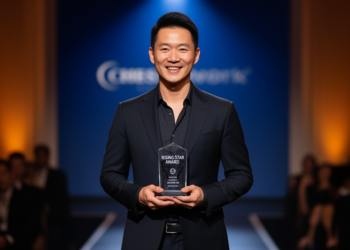
Justin Lui Receives 2026 CHEST Network Rising Star Award
Science Education

Justin Lui Receives 2026 CHEST Network Rising Star Award

October 20, 2026
Qualitative study finds gaps in trauma-informed perinatal care
Science Education

Qualitative study finds gaps in trauma-informed perinatal care

October 20, 2026
Principal reports flag serious student absenteeism in 43% of Moroccan schools
Science Education

Principal reports flag serious student absenteeism in 43% of Moroccan schools

October 20, 2026
Research report: Gender-transformative action as a strategy for health system strengthening: a framework for advancing equity, accountability, and resilience
Science Education

Research report: Gender-transformative action as a strategy for health system strengthening: a framework for advancing equity, accountability, and resilience

October 20, 2026
Cohort study links digital learning community to higher medical skills scores
Science Education

Cohort study links digital learning community to higher medical skills scores

October 20, 2026
Medical and Dental Institute Maps Barriers to Self-Directed Learning
Science Education

Medical and Dental Institute Maps Barriers to Self-Directed Learning

October 20, 2026
Next Post
Federal District survey links snail knowledge with government ratings

Federal District survey links snail knowledge with government ratings

  • Mothers who receive childcare support from maternal grandparents show more optimized

    Mothers who receive childcare support from maternal grandparents show more parental warmth, finds NTU Singapore study

    27656 shares
    Share 11059 Tweet 6912
  • University of Seville Breaks 120-Year-Old Mystery, Revises a Key Einstein Concept

    1061 shares
    Share 424 Tweet 265
  • Bee body mass, pathogens and local climate influence heat tolerance

    682 shares
    Share 273 Tweet 171
  • Researchers record first-ever images and data of a shark experiencing a boat strike

    546 shares
    Share 218 Tweet 137
  • Groundbreaking Clinical Trial Reveals Lubiprostone Enhances Kidney Function

    531 shares
    Share 212 Tweet 133
Science

Embark on a thrilling journey of discovery with Scienmag.com—your ultimate source for cutting-edge breakthroughs. Immerse yourself in a world where curiosity knows no limits and tomorrow’s possibilities become today’s reality!

RECENT NEWS

  • Two new deep-sea isopods recorded in southwestern Atlantic
  • CT-measured carotid fat density linked to recent ischemic events
  • Research report: Research on the evolutionary characteristics of hot topics in online public opinion of Chinese universities based on Weibo texts
  • White blood cell shifts may predict actionable sepsis sequencing results

Categories

  • Agriculture
  • Anthropology
  • Archaeology
  • Athmospheric
  • Biology
  • Biotechnology
  • Blog
  • Bussines
  • Cancer
  • Chemistry
  • Climate
  • Earth Science
  • Editorial Policy
  • Marine
  • Mathematics
  • Medicine
  • Pediatry
  • Policy
  • Psychology & Psychiatry
  • Science Education
  • Science News
  • Social Science
  • Space
  • Technology and Engineering

Subscribe to Blog via Email

Enter your email address to subscribe to this blog and receive notifications of new posts by email.

Join 5,150 other subscribers

© 2025 Scienmag - Science Magazine

Welcome Back!

Login to your account below

Forgotten Password?

Retrieve your password

Please enter your username or email address to reset your password.

Log In
No Result
View All Result
  • HOME
  • SCIENCE NEWS
  • CONTACT US

© 2025 Scienmag - Science Magazine

Discover more from Science

Subscribe now to keep reading and get access to the full archive.

Continue reading