

Sunday, July 26, 2026
Science
No Result
View All Result
  • Login
  • HOME
  • SCIENCE NEWS
  • CONTACT US
  • HOME
  • SCIENCE NEWS
  • CONTACT US
No Result
View All Result
Scienmag
No Result
View All Result
Home Science News Medicine

ENVnet launches global molecular resource for dissolved organic matter data

July 26, 2026
in Medicine
Reading Time: 2 mins read
0
ENVnet launches global molecular resource for dissolved organic matter data

ENVnet launches global molecular resource for dissolved organic matter data

65
SHARES
587
VIEWS
Share on FacebookShare on Twitter
ADVERTISEMENT

Dissolved organic matter (DOM) is a major component of Earth’s carbon cycle, but its molecular complexity has long resisted full characterization. The same chemical “mixture” can behave very differently depending on microbial activity and environmental conditions, yet the structures inside DOM remain poorly mapped. That gap has limited efforts to connect specific molecules to how ecosystems process carbon.

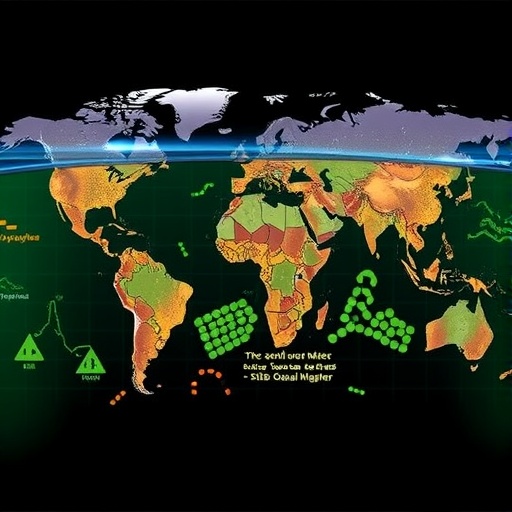
In a new study in Nature Biotechnology, researchers report ENVnet, a global repository of dissolved organic matter molecules derived from tandem mass spectrometry. The resource integrates data collected from 13 types of terrestrial and aquatic environments and adds 419 newly generated samples to broaden the coverage of habitats that were previously underrepresented in public metabolomics collections.

A key advance is computational deconvolution of chimeric mass spectra—signals where multiple molecules fragment together, obscuring which fragments belong to which precursor. By untangling these mixed spectra, ENVnet reconstructs high-quality fragmentation patterns that can be used to identify and compare molecular features across samples.

Using this approach, the team recovers more than 22,000 distinct molecular features, each defined by a specific precursor mass and a characteristic fragmentation pattern. These features provide a molecular-level “fingerprint” for DOM constituents that is more informative than precursor-only measurements.

With ENVnet, the authors investigate how DOM composition varies across environments. They identify both conserved molecular patterns—suggesting shared biochemical pathways—and environment-specific signatures that likely reflect distinct sources and processing histories in rivers, soils, wetlands, and other systems.

Beyond mapping composition, the study links molecular features to biogeochemical function. The patterns they observe point toward underlying microbial and ecosystem processes that shape DOM turnover, rather than treating DOM as a single uniform pool.

To translate these signatures into predictive capability, ENVnet-derived features are used to train models of DOM persistence. The resulting framework estimates how long specific molecular constituents may persist, providing a way to assess microbial turnover in independent environmental systems without relying solely on bulk measurements.

The work offers an actionable tool for environmental metabolomics, enabling researchers to move from “what DOM looks like” toward “how DOM is processed.” By combining expanded spectral data with deconvolution and predictive modeling, ENVnet could accelerate efforts to understand carbon cycling at molecular resolution.

Crucially, the release of this global molecular resource helps standardize DOM metabolomics analyses and supports cross-study comparisons. For viral science news audiences, the headline is simple: a better molecular map of DOM is emerging, and it is ready for downstream testing in real-world ecosystems.

Subject of Research: Dissolved organic matter (DOM) molecular characterization and microbial turnover
Article Title: ENVnet provides a global molecular resource of dissolved organic matter.
Article References: Bowen, B.P., Harwood, T.V., de Raad, M. et al. ENVnet provides a global molecular resource of dissolved organic matter. Nat Biotechnol (2026). https://doi.org/10.1038/s41587-026-03230-0
DOI: https://doi.org/10.1038/s41587-026-03230-0
Image Credits: AI Generated
Keywords: dissolved organic matter, mass spectrometry, tandem MS, tandem mass deconvolution, metabolomics, microbial turnover, carbon cycle, molecular persistence, computational reconstruction

Tags: carbon cycle and ecosystem processescomputational deconvolution of mass spectraDissolved organic matter molecular databaseenvironmental metabolomics data collectionglobal DOM resourcehigh-resolution molecular featuresmicrobial influence on organic mattermolecular complexity of dissolved organic mattermolecular fingerprinting of DOMtandem mass spectrometry for organic moleculesterrestrial and aquatic environment samplingunderrepresented habitats in metabolomics
Share26Tweet16
Previous Post

Aerosols temporarily intensify deep convection in a new study

Next Post

Europa Shows Limited Fluid Exchange Between Deep Ocean and Shallow Layer

Related Posts

Structure Reveals How Trypanosome Mitochondria Coordinate RNA Editing Cascade
Medicine

Structure Reveals How Trypanosome Mitochondria Coordinate RNA Editing Cascade

July 26, 2026
Focal Astrocyte Loss Shows Nuclear Translocation During Lesion Repopulation
Medicine

Focal Astrocyte Loss Shows Nuclear Translocation During Lesion Repopulation

July 26, 2026
Mitochondrial Metabolism Predicts Chemotherapy Sensitivity in Colorectal Cancer
Medicine

Mitochondrial Metabolism Predicts Chemotherapy Sensitivity in Colorectal Cancer

July 26, 2026
ACSS2-KAT5 drives histone crotonylation to trigger MASLD-to-MASH inflammation
Medicine

ACSS2-KAT5 drives histone crotonylation to trigger MASLD-to-MASH inflammation

July 26, 2026
Androgen receptor targeting radiosensitizes glioblastoma by rewiring TGF-β/Smad3 signaling
Medicine

Androgen receptor targeting radiosensitizes glioblastoma by rewiring TGF-β/Smad3 signaling

July 26, 2026
Maternal Wildfire Exposure Linked to Neonatal Outcomes in 28-Year Chile Study
Medicine

Maternal Wildfire Exposure Linked to Neonatal Outcomes in 28-Year Chile Study

July 26, 2026
Next Post
Europa Shows Limited Fluid Exchange Between Deep Ocean and Shallow Layer

Europa Shows Limited Fluid Exchange Between Deep Ocean and Shallow Layer

  • Mothers who receive childcare support from maternal grandparents show more

    Mothers who receive childcare support from maternal grandparents show more parental warmth, finds NTU Singapore study

    27656 shares
    Share 11059 Tweet 6912
  • University of Seville Breaks 120-Year-Old Mystery, Revises a Key Einstein Concept

    1061 shares
    Share 424 Tweet 265
  • Bee body mass, pathogens and local climate influence heat tolerance

    682 shares
    Share 273 Tweet 171
  • Researchers record first-ever images and data of a shark experiencing a boat strike

    546 shares
    Share 218 Tweet 137
  • Groundbreaking Clinical Trial Reveals Lubiprostone Enhances Kidney Function

    531 shares
    Share 212 Tweet 133
Science

Embark on a thrilling journey of discovery with Scienmag.com—your ultimate source for cutting-edge breakthroughs. Immerse yourself in a world where curiosity knows no limits and tomorrow’s possibilities become today’s reality!

RECENT NEWS

  • JMIR News Highlights Health Tech Industry Trends and Innovations
  • Satellite Sentinel-2 Drought Forecasting in Austria Using Random Forest and Deep Learning
  • Cafeteria Menu Revamp Could Lower Students’ Sugar and Salt Consumption
  • How Quantum Computers Lose Power and Halt Calculations

Categories

  • Agriculture
  • Anthropology
  • Archaeology
  • Athmospheric
  • Biology
  • Biotechnology
  • Blog
  • Bussines
  • Cancer
  • Chemistry
  • Climate
  • Earth Science
  • Editorial Policy
  • Marine
  • Mathematics
  • Medicine
  • Pediatry
  • Policy
  • Psychology & Psychiatry
  • Science Education
  • Social Science
  • Space
  • Technology and Engineering

Subscribe to Blog via Email

Enter your email address to subscribe to this blog and receive notifications of new posts by email.

Join 5,146 other subscribers

© 2025 Scienmag - Science Magazine

Welcome Back!

Login to your account below

Forgotten Password?

Retrieve your password

Please enter your username or email address to reset your password.

Log In
No Result
View All Result
  • HOME
  • SCIENCE NEWS
  • CONTACT US

© 2025 Scienmag - Science Magazine

Discover more from Science

Subscribe now to keep reading and get access to the full archive.

Continue reading
