


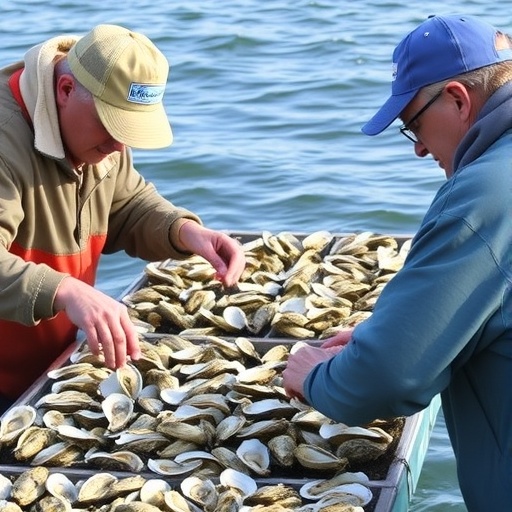
The intricate relationship between ecological health and community involvement is increasingly coming to the forefront of environmental science. A recent study highlights how oyster growers can play a pivotal role in community-based coastal monitoring programs. This investigation, led by Nelson et al., explores methodologies for integrating local oyster growers into scientific monitoring efforts, demonstrating the potential of this collaboration to enhance coastal resource management.
Oyster farming has seen a resurgence in popularity, not just as a source of food but also as a critical player in marine ecosystems. Oysters filter water, contribute to habitat formation, and enhance biodiversity. However, the scientific community often overlooks the potential contributions of these local growers to ecological monitoring. This research underscores the need to bridge the gap between scientific research and community practices, providing a blueprint for more inclusive monitoring processes.
The authors argue that involving oyster growers in monitoring programs significantly enriches data collection and enhances community engagement with scientific processes. By leveraging the knowledge and experience of growers, researchers can gain invaluable insights into local environmental changes that might otherwise remain unobserved. This participatory approach helps create a more comprehensive understanding of coastal ecosystems while fostering a sense of ownership and responsibility among local populations.
One of the key recommendations from the study is to establish training sessions for oyster growers on monitoring practices. These sessions should focus on providing the necessary skills and knowledge for both conducting scientific observations and reporting data effectively. Engaging oyster growers in this way not only empowers them but also builds a community of informed stakeholders who are more likely to advocate for coastal conservation and sustainable practices.
Additionally, the researchers emphasize the importance of effective communication strategies to maintain ongoing dialogues between scientists and oyster growers. Building networks through regular workshops, meetings, and collaborative projects can help foster trust and collaboration between these two groups. This relationship is essential for creating an adaptive management framework that can respond to changing environmental conditions and stakeholder needs.
Oyster growers possess unique insights into ongoing changes in their environments, which makes their participation vital for timely and relevant monitoring efforts. The study notes that growers can detect shifts in water quality, species composition, and habitat conditions much earlier than traditional monitoring approaches. By documenting their observations, they can contribute to a more nuanced understanding of coastal dynamics, potentially revealing trends that may not be evident through conventional scientific methods.
Moreover, the presence of oyster farms can significantly influence local ecosystems. By collecting data on the interactions between their farms and surrounding habitats, growers can assist researchers in understanding how aquaculture practices affect marine environments. This collaborative research approach not only informs better management strategies but also aligns with broader conservation goals by promoting sustainable farming practices.
The authors also highlight the importance of adapting monitoring programs to local contexts. Coastal ecosystems vary significantly across regions, and what works in one area may not be suitable for another. By tailoring monitoring efforts to specific localities, the integration of oyster growers can yield more applicable data, thus enhancing the relevance of scientific findings to community stakeholders. This localized approach can increase the efficacy of conservation measures and ensure that they resonate with the people most affected.
Beyond ecological benefits, engaging oyster growers in monitoring programs can result in economic advantages for the community. The study suggests that by prioritizing local knowledge, scientists can help develop a more resilient coastal economy. Sustainable oyster farming practices can attract tourism and create jobs, contributing to the overall health of coastal communities. By recognizing the roles oyster growers play both ecologically and economically, a more holistic approach to coastal management can be achieved.
The research team’s recommendations also advocate for incorporating technology into monitoring practices. Utilizing tools such as mobile applications for data reporting and remote sensing technologies can streamline the monitoring process, making it easier for growers to participate. Such tools can enhance data accuracy while reducing the time commitment required from growers, thereby promoting greater participation in monitoring initiatives.
As climate change continues to impact coastal ecosystems, the urgency for effective monitoring has never been greater. By integrating oyster growers into these efforts, communities can build resilience against environmental changes. The knowledge and local experience they provide can inform adaptive management strategies that address the specific challenges posed by rising temperatures, ocean acidification, and habitat loss.
Notably, this study contributes to an emerging body of literature that advocates for the democratization of scientific research. By redefining the roles of community members as active participants rather than passive subjects, we can create a more equitable science-practice relationship. Such an approach fosters innovation and creativity in environmental management while recognizing the vital contributions of local knowledge.
In conclusion, the study by Nelson et al. marks a significant step towards reforming how coastal monitoring is conducted. By harnessing the passion and expertise of oyster growers, we can elevate the quality of environmental data and empower communities. The recommendations outlined in this research pave the way for robust collaborative frameworks that ultimately protect and enhance coastal ecosystems. As we look towards the future of environmental monitoring, the inclusion of local stakeholders will be crucial in navigating the complexities of our changing planet.
Nelson, N.G., Ardón, M., Ben-Horin, T. et al. See Salt: Recommendations for engaging oyster growers in community-based coastal monitoring programs.
Environ Monit Assess 197, 1109 (2025). https://doi.org/10.1007/s10661-025-14560-y
Cite Scienmag News
Violet Maxwell. (September 12, 2025). Engaging Oyster Growers in Coastal Monitoring Initiatives. Scienmag. https://scienmag.com/engaging-oyster-growers-in-coastal-monitoring-initiatives/
Violet Maxwell. "Engaging Oyster Growers in Coastal Monitoring Initiatives." Scienmag, 12 September 2025, https://scienmag.com/engaging-oyster-growers-in-coastal-monitoring-initiatives/. Accessed 4 September 2026.
Violet Maxwell. "Engaging Oyster Growers in Coastal Monitoring Initiatives." Scienmag. September 12, 2025. https://scienmag.com/engaging-oyster-growers-in-coastal-monitoring-initiatives/


