


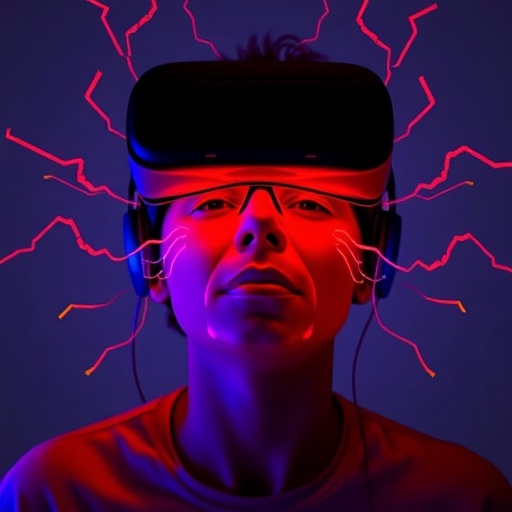
In recent years, the use of virtual reality (VR) in clinical psychology has surged, offering innovative approaches to treat some of the most challenging mental health conditions. A groundbreaking study published in 2026 by Glenthøj, Vernal, Mariegaard, and colleagues in Schizophrenia examines an essential question: can emotion regulation be identified as a primary mechanism driving the efficacy of virtual reality-assisted therapy for auditory hallucinations? This investigation, a secondary analysis stemming from the CHALLENGE randomized clinical trial, shines a new light on how immersive technologies might not just help manage symptoms but actively transform the neuropsychological processes underlying psychosis.
Auditory hallucinations, or hearing voices that are not present, are among the most debilitating symptoms experienced by individuals with schizophrenia and related disorders. Conventional treatments, while somewhat effective, often leave patients with residual symptoms, significantly impairing their quality of life. The advent of VR-assisted therapy offers a promising frontier by immersing patients in controlled, yet highly realistic environments where they can confront and modulate their hallucinatory experiences under therapeutic guidance. The CHALLENGE trial represents one of the largest and most comprehensive efforts to rigorously assess these interventions and tease apart the psychological factors mediating their success.
This study’s unique contribution lies in its focus on emotion regulation as the potential key mechanism of therapeutic change. Emotion regulation refers to the complex set of cognitive and behavioral processes through which individuals influence their emotional experiences, expressions, and responses. In psychosis, dysregulated emotional reactions to hallucinations can exacerbate distress and dysfunction, creating a vicious cycle of increased symptom severity. By using VR to simulate hallucinatory voices within a safe environment, patients may practice adaptive emotion regulation strategies that reduce the impact of their symptoms in daily life.
The methodology underpinning this secondary analysis involved sophisticated statistical modeling to track changes in patients’ emotion regulation capabilities alongside reductions in hallucination severity and distress over the course of VR therapy. Participants underwent multiple VR sessions designed to confront hallucinations through interactive avatars representing the voices, coupled with real-time coaching in cognitive reappraisal, mindfulness, and distress tolerance techniques. This allowed researchers to dynamically examine how improvements in managing emotions corresponded with clinical outcomes, offering evidence for causality rather than mere correlation.
Findings suggest that emotion regulation improvements significantly mediated the reduction of hallucination-related distress and overall symptom burden. Patients who demonstrated greater gains in their ability to reinterpret and modulate negative emotional responses to the voices subsequently reported notably diminished auditory hallucination severity. Such results provide compelling experimental support for emotion regulation as a central therapeutic mechanism in VR-assisted interventions, marking a pivotal advancement in psychosis treatment models.
From a neuroscientific perspective, these results align well with emerging understandings of the neural substrates involved in psychosis. Dysfunction within prefrontal-limbic circuits, which govern emotional control and executive function, is thought to underpin many psychotic symptoms. VR therapy may promote neuroplasticity within these networks by encouraging patients to engage in adaptive emotional strategies repeatedly in immersive, salient contexts, effectively rewiring maladaptive patterns that perpetuate hallucinations and distress.
Moreover, the immersive and interactive attributes of VR make it uniquely suited to facilitate experiential learning in emotion regulation. Unlike traditional talk therapy, VR creates visceral, multi-sensory exposures that can evoke authentic emotional responses. This experiential intensity may enhance the encoding and generalization of therapeutic gains, supporting transfer of emotion regulation skills into everyday challenging encounters with hallucinations. The personalized, graded nature of VR exposures further tailors treatment to individual patients’ needs and tolerance levels, optimizing clinical impact.
Importantly, this study also addresses critical questions about the durability and specificity of these effects. Secondary analyses revealed that emotion regulation gains were maintained at follow-up assessments several months post-therapy, suggesting lasting positive neuropsychological change rather than transient symptom suppression. Additionally, these improvements were specific to emotion regulation constructs rather than generalized cognitive or attentional abilities, underscoring the targeted nature of VR’s therapeutic impact.
These insights offer profound clinical implications. By pinpointing emotion regulation as a core mechanism, future interventions can increasingly focus on honing these skills within VR platforms, potentially integrating neurofeedback, bio-sensing, or adaptive difficulty adjustments to accelerate recovery. Furthermore, emotion regulation could serve as a predictive biomarker to identify patients most likely to benefit from VR-assisted therapy, enabling precision psychiatry approaches tailoring treatment plans according to individual emotional processing profiles.
The study’s implications extend beyond psychosis treatment per se, offering a conceptual framework for utilizing VR in other psychiatric domains where emotional dysregulation plays a pivotal role, such as anxiety disorders, PTSD, and depression. By demonstrating how immersive technologies can catalyze emotion regulation neural circuits, this research paves the way for wide-reaching applications of VR as a transformative therapeutic tool in mental health care.
Nevertheless, the authors acknowledge ongoing challenges in scaling VR therapies, including technological accessibility, patient engagement variability, and the need for standardized protocols to ensure intervention fidelity. Ethical considerations surrounding the intensity of VR experiences and the safeguarding of vulnerable patients also merit ongoing scrutiny as this field evolves. Continued randomized trials with larger samples and diverse populations will be essential to consolidate evidence and inform best practice guidelines.
In summary, the CHALLENGE trial secondary analyses present a landmark investigation revealing that emotion regulation improvements are not merely outcomes but active mechanisms driving symptom improvement in VR-assisted therapy for auditory hallucinations. This discovery heralds a new era where immersive therapeutics grounded in robust neuropsychological theory have the potential to reshape mental health treatment paradigms fundamentally.
As virtual reality continues to infiltrate clinical settings, the intersection of technology and psychology promises unprecedented opportunities to unlock healing mechanisms once obscured by conventional approaches. This pioneering research by Glenthøj et al. charts a visionary pathway—one where harnessing the brain’s intricate emotional machinery through immersive digital environments can rewrite the narratives of suffering for individuals grappling with psychosis worldwide.
The convergence of virtual environments, cognitive science, and clinical innovation showcased in this work highlights a future where mental illness is not merely managed but dynamically transformed through mechanistic precision in therapy design. For patients burdened by the relentless voices of auditory hallucinations, the promise of VR-assisted emotion regulation offers a beacon of hope toward reclaiming agency, resilience, and meaning in their lives.
Cite Scienmag News
Glenn Wilkins. (June 21, 2026). Emotion Regulation Drives VR Therapy for Auditory Hallucinations. Scienmag. https://scienmag.com/emotion-regulation-drives-vr-therapy-for-auditory-hallucinations/
Glenn Wilkins. "Emotion Regulation Drives VR Therapy for Auditory Hallucinations." Scienmag, 21 June 2026, https://scienmag.com/emotion-regulation-drives-vr-therapy-for-auditory-hallucinations/. Accessed 5 September 2026.
Glenn Wilkins. "Emotion Regulation Drives VR Therapy for Auditory Hallucinations." Scienmag. June 21, 2026. https://scienmag.com/emotion-regulation-drives-vr-therapy-for-auditory-hallucinations/


