


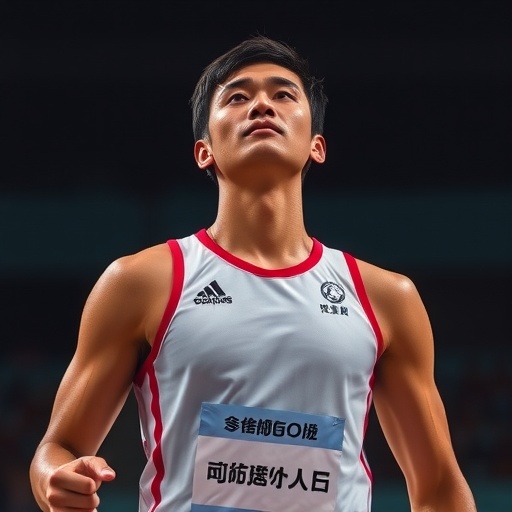
In the high-stakes world of competitive sports, athletes are often pushed to their physical and emotional limits. A groundbreaking new study conducted by Zuo and Bai, published in BMC Psychology in 2025, delves into the intricate interplay between emotion regulation, coping strategies, and burnout among Chinese competitive athletes. This research illuminates how psychological resilience and adaptive mechanisms could play crucial roles in sustaining athletes’ mental health and career longevity amid relentless pressures.
Emotion regulation—the ability to modulate and manage emotional responses—has increasingly been recognized as a pivotal factor in athletic performance and wellbeing. Zuo and Bai’s investigation uncovers the nuanced ways in which this psychological process influences how athletes confront stressors such as intense training regimens, performance expectations, and public scrutiny. Employing a mixed-methods design, the researchers combined quantitative measures with qualitative interviews, allowing for a richer, more textured understanding of the mental landscape athletes navigate.
The phenomenon of burnout, characterized by emotional exhaustion, depersonalization, and diminished accomplishment, is alarmingly prevalent among athletes. This syndrome not only jeopardizes athletic achievement but also poses severe risks to long-term mental health. Through their rigorous analysis, Zuo and Bai expose the critical connection between inadequate emotion regulation and elevated burnout symptoms. Their findings suggest that when athletes cannot effectively manage negative emotions, they become vulnerable to a cascade of psychological and physical fatigue.
Coping strategies, the behavioral and cognitive efforts employed to handle stress, emerged as another focal point of this research. The study categorizes these strategies broadly into adaptive and maladaptive types, each yielding markedly different impacts on burnout. Adaptive strategies—such as problem-solving, cognitive reframing, and seeking social support—were strongly linked to lower burnout levels. Conversely, maladaptive strategies—including avoidance, denial, and rumination—correlated with heightened emotional strain and a faster decline in mental stamina.
One of the study’s most compelling insights lies in the cultural specificity of coping mechanisms employed by Chinese athletes. The researchers highlight the influence of sociocultural norms and expectations embedded within Chinese society, which shape how athletes perceive and respond to stress. For instance, a tendency toward emotional suppression, often valorized in collectivist cultures, can complicate effective emotion regulation and exacerbate burnout. This cultural context adds a vital dimension to understanding burnout beyond universal psychological theories.
Zuo and Bai employed psychometrically validated instruments alongside semi-structured interviews to gather comprehensive data from a diverse cohort of competitive athletes across various sports disciplines. The quantitative data provided measurable indices of emotion regulation capacity, coping strategies, and burnout severity. Simultaneously, qualitative findings enriched these metrics by revealing personal narratives of struggle, resilience, and psychological adaptation—highlighting the complexity behind the numbers.
From a neuropsychological standpoint, the study underscores the interaction between emotional processing centers in the brain—such as the amygdala and prefrontal cortex—and behavioral outcomes relevant to burnout. Efficient emotion regulation hinges on executive functioning and attentional control, processes shown to be trainable through interventions like mindfulness and cognitive-behavioral therapy. Zuo and Bai’s research thus points to potential neurocognitive targets for enhancing resilience among athletes.
Notably, the investigation also draws attention to the temporal dimension of burnout development. This longitudinal perspective reveals that chronic exposure to stressors, combined with poor coping efficacy, leads to an insidious buildup of mental fatigue. It challenges the notion of burnout as a sudden breakdown and instead frames it as a progressive syndrome that could be intercepted through timely psychological support and skill development.
Beyond individual factors, the study critiques systemic issues within sports organizations that may exacerbate burnout. High-performance environments often prioritize physical output over mental health, neglecting the emotional toll on athletes. Zuo and Bai advocate for the incorporation of psychological education programs focused on emotion regulation and adaptive coping as standard practice, emphasizing their role in sustainable athlete development.
The implications of this research extend beyond competitive sports to other high-pressure domains where burnout is prevalent. By dissecting the components that safeguard mental health under duress, the study provides a framework applicable to military, healthcare, and corporate sectors alike. The mixed-methodological approach serves as a model for future investigations seeking both breadth and depth in psychological research.
Among the recommendations emerging from the study is the integration of individualized mental coaching with team-based support systems. Emotion regulation training tailored to athletes’ cultural backgrounds and personal circumstances could enhance relevance and efficacy. Moreover, fostering open dialogues around mental health may reduce stigma and encourage proactive management of burnout symptoms.
Importantly, Zuo and Bai’s findings resonate with ongoing discussions in sports psychology about the balance between mental toughness and emotional vulnerability. Their nuanced portrayal challenges traditional paradigms that valorize stoicism, illustrating that acknowledging and regulating emotions is a strength rather than a weakness. This paradigm shift may inspire coaches, athletes, and support personnel to adopt more empathetic, evidence-based practices.
In conclusion, the study by Zuo and Bai represents a significant advance in understanding the psychological dynamics underpinning burnout in competitive athletes. Their mixed-methods investigation illuminates how emotion regulation and adaptive coping serve as critical buffers against the mental health risks inherent in elite sports. By providing a culturally grounded, scientifically robust analysis, this research paves the way for innovative prevention strategies that can enhance the welfare and performance longevity of athletes globally.
As the pressures on competitive athletes continue to intensify worldwide, insights like these are invaluable in shaping a future where mental health is prioritized as fundamentally as physical conditioning. The journey toward optimal athletic performance must, therefore, include a committed focus on emotional well-being, recognizing that resilience arises not only from muscle and stamina but also from mind and heart.
Cite Scienmag News
Glenn Wilkins. (October 16, 2025). Emotion Regulation and Burnout in Chinese Athletes. Scienmag. https://scienmag.com/emotion-regulation-and-burnout-in-chinese-athletes/
Glenn Wilkins. "Emotion Regulation and Burnout in Chinese Athletes." Scienmag, 16 October 2025, https://scienmag.com/emotion-regulation-and-burnout-in-chinese-athletes/. Accessed 4 September 2026.
Glenn Wilkins. "Emotion Regulation and Burnout in Chinese Athletes." Scienmag. October 16, 2025. https://scienmag.com/emotion-regulation-and-burnout-in-chinese-athletes/


